
Skip to content
Apply
Stories

Africa has suffered fewer COVID-19 deaths than predicted. Richard Wamai knows why.

People in this story

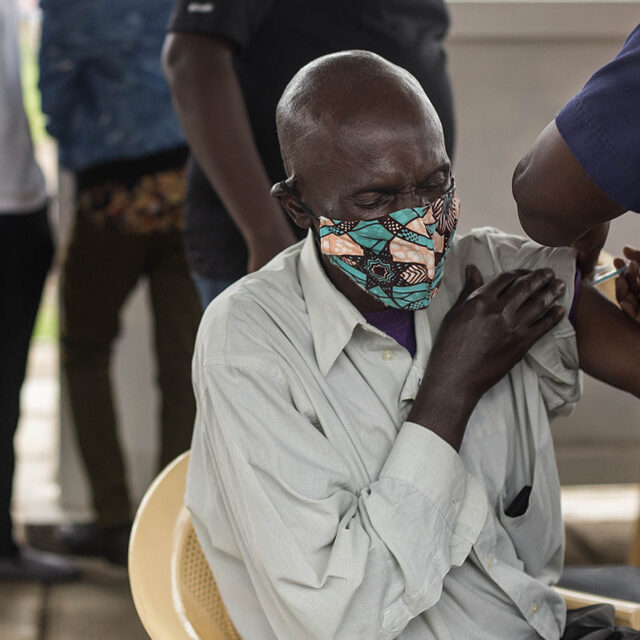
Africa has accounted for a relatively small number of deaths during the COVID-19 pandemic. Richard Wamai, a Northeastern associate professor of cultures, societies, and global studies, wanted to know why the official numbers differed so widely with projections from the early days of the pandemic that Africa would be especially vulnerable to the disease.

“The predictions of mass COVID casualties were based on a misunderstanding of the continent,” says Wamai, who has co-authored a new paper that details why the gloomy predictions have largely gone unrealized. “There are lessons we can learn about how the continent has handled the pandemic, or how the pandemic has manifested in the continent.”

Not only has Africa utilized unrecognized strengths to help fend off COVID-19, says Wamai, but it also offers clues that can be applied against future pandemics. Africa represents 12.5 percent of the global population, but it accounted for just 4 percent of the 3.4 million deaths that had been reported around the world as of May 18. 

Continue reading at News@Northeastern.

More Stories

Director and actor Timothy Busfield looks on before a hearing in the Second District Judicial Court at the Bernalillo County Courthouse, Tuesday, Jan. 20, 2026, in Albuquerque, N.M. (Sam Wasson/Pool Photo via AP)

Why prosecutors allege that actor Timothy Busfield groomed a community to cover up child sexual abuse 

04.21.2026
President Donald Trump talks to the media on the South Lawn before departing on Marine One at the White House, Saturday, April 11, 2026, in Washington. (AP Photo/Jose Luis Magana)

From Donald Trump to Jacob Frey — has politics lost its profanity filter?

04.21.2026
Hands, parent and child with plant soil of gardening, earth day and learning of agriculture care. Family, kid and closeup with leaf for sustainable growth, teaching and environment wellness of nature

It’s hard to make people more eco-friendly. New research finds a potential solution: children

04.22.26
Northeastern Global News