
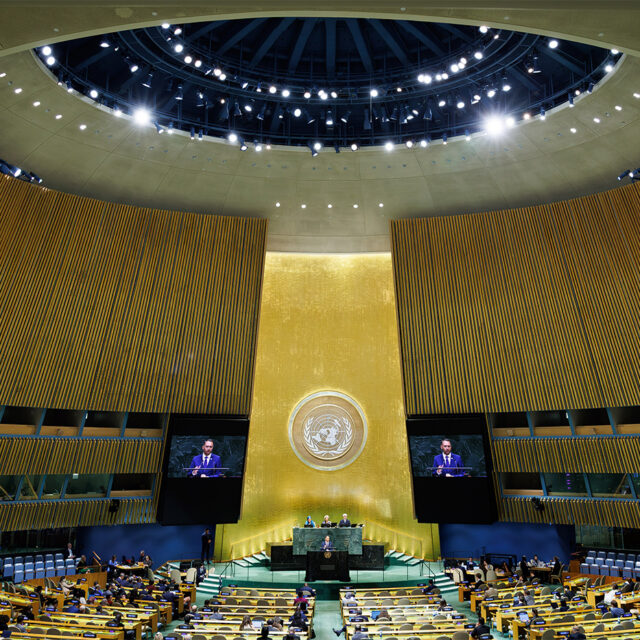
The world’s leaders are gathered in New York this week for the United Nations General Assembly amid a plethora of escalating global challenges. Iranian President Masoud Pezeshkian delivered what amounted to a fiery defense of Tehran’s position Wednesday amid its ongoing seven-month conflict with the United States. Officials from both sides resumed talks aimed at ending hostilities and reopening the Strait of Hormuz. President Donald Trump met with Ukrainian President Volodymyr Zelenskyy on the sidelines to discuss the war in Ukraine and was also scheduled to meet Wednesday with Chinese President Xi Jinping, according to the White House.
But even as government officials use the occasion to flash their diplomatic bona fides, age-old questions persist about the role of an institution that functions as an organ of soft power and consensus. Is the United Nations, created in 1945 to maintain international peace and security through collective action and diplomacy, the “toothless tiger” that some politicians and observers claim it is? Fiona Creed, associate professor at Northeastern, who formerly served as executive director of the United Nations Association of Greater Boston, thinks there is certainly room for critique. The “toothless tiger” label, referring to the fact that the U.N. lacks the power to ensure states adhere to its decisions, captures “something real,” she said.