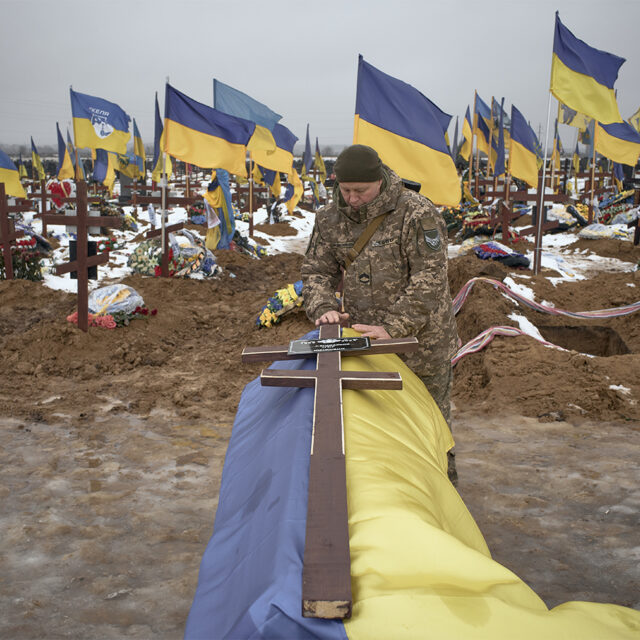
War inevitably exacts a toll in human lives. But quantifying loss amid new technologies, vast streams of data and competing online narratives has become one of the most contested and consequential questions in many of today’s conflicts. From Ukraine to Gaza, governments, armed groups, independent analysts and newsrooms around the world are wrestling for control over those narratives: whose statistics are credible, and how to frame the sheer scale of human loss in an information environment swarming with bad actors, Northeastern University experts say. “In many ways, war statistics are a battleground themselves in the information space,” said John Wihbey, an associate professor of journalism at Northeastern University and co-founder of the Internet Democracy Initiative.
Take the war in Ukraine, for example. Russian authorities have released almost no official casualty figures since September 2022, when the Kremlin reported roughly 6,000 of its troops had been killed. By contrast, Ukraine and think tanks such as The Center for Strategic and International Studies, estimate Russian losses at over 1.2 million, including up to 325,000 deaths, while Ukrainian military casualties total around 600,000, with roughly 140,000 killed.