The Boston Globe, September 2026
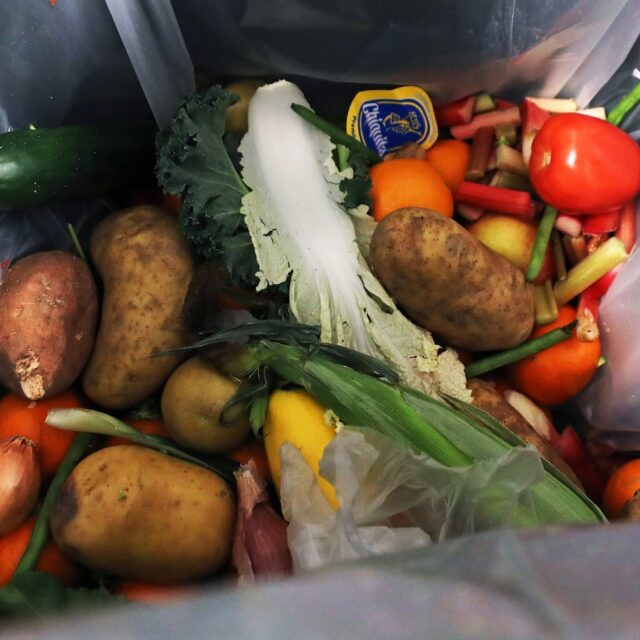
For Bostonians who participate, it’s possible to separate food waste from other household garbage and have it picked up and made into compost. The curbside pickup program was launched in May 2022 as a key component of Boston’s goal of diverting at least 80 percent of the city’s waste from landfills and municipal incinerators by 2035. As the Globe recently editorialized, Massachusetts needs to get more organic waste out of the trash stream because we are running out of landfill space and because food waste is the largest source of methane, a potent greenhouse gas, in landfills. The problem is that Boston’s composting program is far from universal. And that makes it inefficient.
The program’s initial 10,000 slots were quickly filled, so the city expanded it to 30,000 slots in 2023. The program now has a waiting list. But according to Tyler Frank, president of Garbage to Garden, the curbside composting company that has a contract with the city, of the roughly 148,000 Boston households eligible for the program (residents living in buildings of six units or fewer) only about 27,000 are currently enrolled (about 18 percent). The total program cost is not huge — $3.3 million a year. But the city has not allocated funds to expand the program.
This creates a chicken-and-egg problem. There’s no point in publicizing it in the absence of funding to allow more Bostonians to participate. But low participation makes the program more expensive per household, making expansion harder to fund.