
Skip to content
Apply
Stories

Four years later: The Russia-Ukraine war by the numbers

People in this story

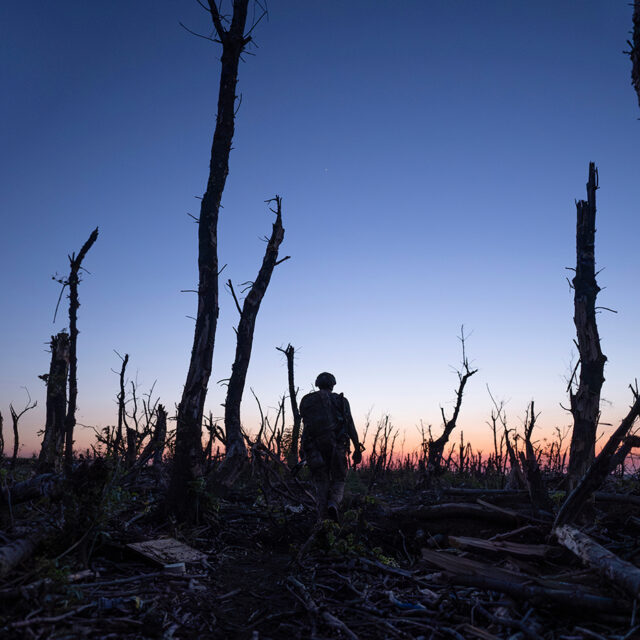
Ukrainian servicemen walk through a charred forest along the front line, a few kilometers from Andriivka, Donetsk region, Ukraine, Saturday, Sept. 16, 2023. (AP Photo/Mstyslav Chernov, File)

The Russia-Ukraine war is entering its fifth year this week as both sides remain locked in a grinding stalemate. What began as what the Kremlin calls a “special military operation” has hardened into Europe’s largest and deadliest conflict since World War II, a protracted conflict in which neither side appears willing to give ground on the battlefield, experts say. “It’s been sort of a slow drag-out, or what many call a war of attrition,” said Peter Fraunholtz, assistant teaching professor in history and international affairs at Northeastern University, adding that it has, and will continue to be, “a very resource-intensive conflict.” 

Here is a look at the war as it’s played out over four years, by the numbers.

Continue reading at Northeastern Global News.

More Stories

Race to deploy AI data centres in space raises safety concerns

03.12.2026
A Palestinian youth collects water at a desalination plant in Khan Younis, southern Gaza Strip, Friday, Feb. 6, 2026. (AP Photo/Abdel Kareem Hana)

Attacks on desalination plants in the Middle East threaten vital freshwater supplies for civilians

03.12.2026
The American black bear (Ursus americanus) is a medium-sized bear endemic to North America. It is the continent's smallest and most widely distributed bear species. American black bears are omnivores, with their diets varying greatly depending on season and location.

Spotted a bear lately? You’re not alone — why sightings are on the rise

03.13.26
Northeastern Global News