
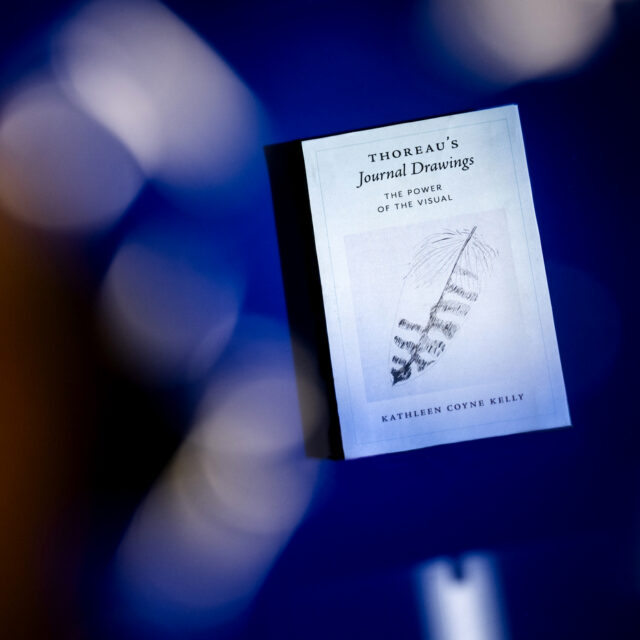
Hear the name Henry David Thoreau and people might immediately think of his nature writing, thoughts on civil disobedience and his journaling during his time at Walden Pond. While Thoreau’s writing gets much of the spotlight, his drawings also paint a vivid picture of how the transcendentalist writer and natural historian viewed the world, Northeastern University experts say. In her latest book, “Thoreau’s Journal Drawings: The Power of the Visual,” Kelly, an English professor at Northeastern University, peels back the layers of the often-ignored drawings in Thoreau’s journal.
What she finds hidden in Thoreau’s often rough sketches of plants, animals, landscapes and nature’s many details is a legendary American writer discovering the limits of words and becoming a scientist who catalogued New England’s 19th-century environment in shocking detail. They might not measure up to the complexity of Charles Darwin’s detailed renderings of finches. But in analyzing what Thoreau called his “rude outline drawings,” Kelly’s book sees the writer working to make a new sense of meaning out of the natural world he felt humanity was so deeply connected to.