
Nina Sylvanus, Associate Professor of Anthropology
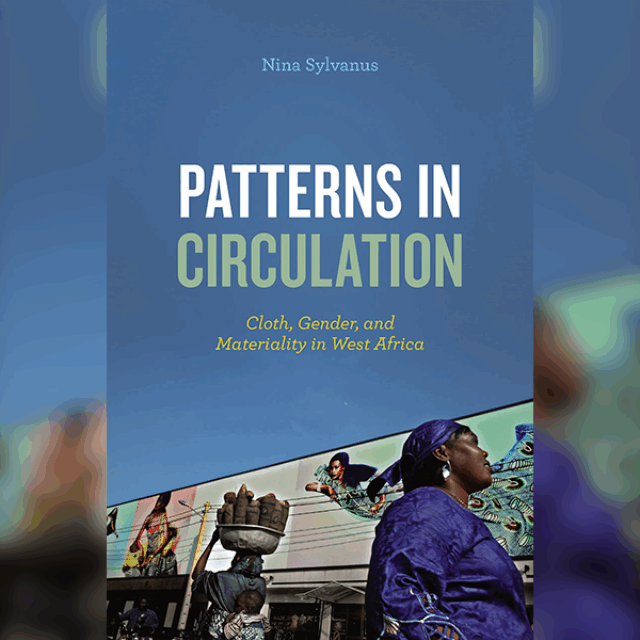
In this book, Nina Sylvanus tells a captivating story of global trade and cross-cultural aesthetics in West Africa, showing how a group of Togolese women—through the making and circulation of wax cloth—became influential agents of taste and history. Traveling deep into the shifting terrain of textile manufacture, design, and trade, she follows wax cloth around the world and through time to unveil its critical role in colonial and postcolonial patterns of exchange and value production.
Sylvanus brings wax cloth’s unique and complex history to light: born as a nineteenth-century Dutch colonial effort to copy Javanese batik cloth for Southeast Asian markets, it was reborn as a status marker that has dominated the visual economy of West African markets. Although most wax cloth is produced in China today, it continues to be central to the expression of West African women’s identity and power. As Sylvanus shows, wax cloth expresses more than this global motion of goods, capital, aesthetics, and labor—it is a form of archive where intimate and national memories are stored, always ready to be reanimated by human touch. By uncovering this crucial aspect of West African material culture, she enriches our understanding of global trade, the mutual negotiations that drive it, and the how these create different forms of agency and subjectivity.