Skip to content
Apply
Stories

Political texts can boost voter turnout, but only slightly, study finds

A text is viewed on a mobile device Wednesday, Oct. 30, 2024, in Washington, as across the U.S., people's phones are pinging with text messages from Donald Trump, Kamala Harris and their allies in the presidential campaign's final days. (AP Photo/Jon Elswick)

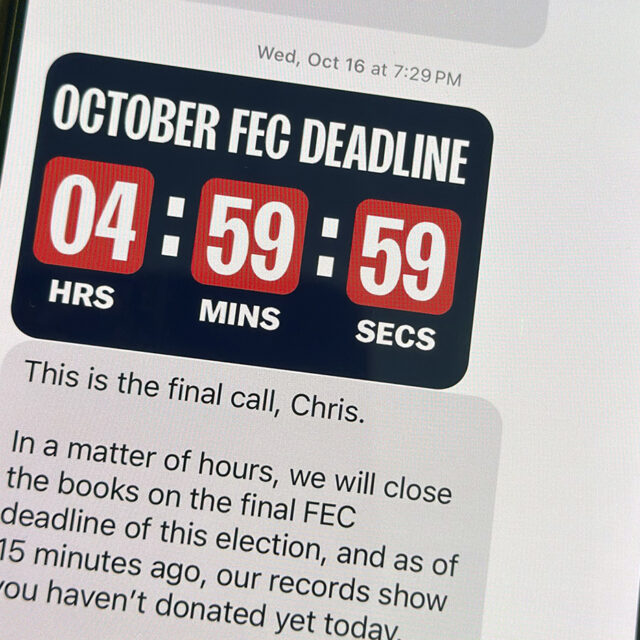
With fewer than 100 days until the midterms, there’s a lot of buzz about election season — including the literal buzzing of cellphones. Political operatives have taken to texting voters to get the word out about key races, dates and other bits of information in the days leading up to the midterms. But just how effective is texting as a strategy for galvanizing voters? New research suggests that it can move the needle in getting voters to turn out — but only slightly.

Published recently in Political Behavior, researchers found that Short Message Service, or SMS, messages increased turnout by 0.25 percentage points during the 2018 U.S. midterms — or an additional 2.5 voters per 1,000 people — when compared to a control group that received no messages. “Text messages are effective, but we’re finding that the effects are relatively small,” said Katherine Haenschen, assistant professor in Northeastern University’s departments of communication studies and political science, an author on the study.

Continue reading at Northeastern Global News.

More Stories

09/09/26 - BOSTON, MA. - Leonie Ruehe, who studies political science and international affairs, poses for a photo on Sept. 9, 2026. Ruehe recently completed their co-op at a think tank in Greece. Photo by Matthew Modoono/Northeastern University

This student’s co-op in Greece provided lessons in modern slavery

10.26.2026

Donald Trump’s Midwest Approval Rating Is a Warning Sign for GOP

10.26.2026
01/10/24 - BURLINGTON, MA. - Stock photography of the Colosseum which is operated by the Institute for the Wireless Internet of Things (W-IoT) at Northeastern University, and housed at the Northeastern Innovation Campus in Burlington, Massachusetts on Jan. 10, 2024. The Colosseum at is the world's largest RF emulator with 256 programmable software radios which enables academic, government, and industry researchers to perform scalable and repeatable experimentation in wireless systems in a large-scale emulation environment. Photo by Matthew Modoono/Northeastern University

Democrats, Republicans support government intervention to train workforce on AI tools, Northeastern University survey finds

10.26.26
Northeastern Global News