
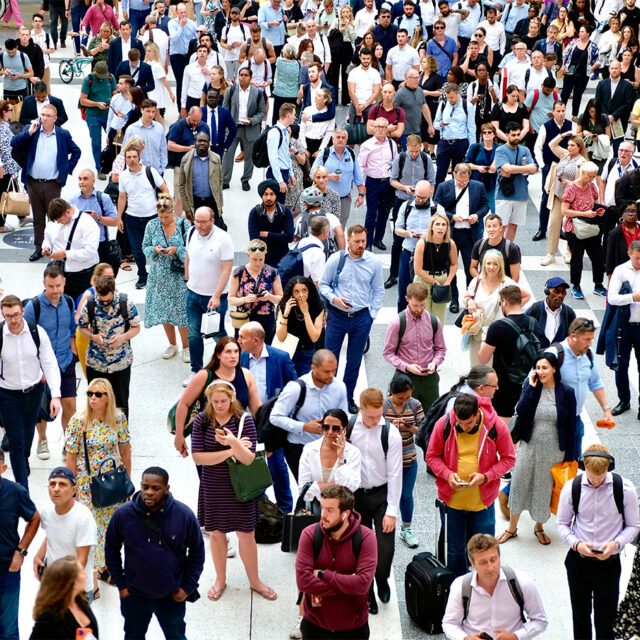
For millenia, people have been drawn to cities for opportunities, jobs and the possibility of sharing a sidewalk with diverse and interesting groups of people. But does urban mixing, or the opportunity to meet people from different income levels, social and ethnic groups and backgrounds, still exist in modern, global cities and other highly populated areas? Especially cities with legacies of strong ethnic neighborhoods, segregation, and decades of suburbanization? New research from Northeastern University finds mixing still occurs, but the mixing depends less on the place where you live than the places you visit each day.
“Most of the mixing that people experience throughout the day is not because of where they live … [it’s] because of what they do,” said Esteban Moro, a professor of physics who leads the Social Urban Networks group at Northeastern’s Network Science Institute. The research was published in late July in Nature Cities, a journal that publishes research, commentary, and analysis on urban environments and human-nature-technology dynamics in cities.