
NU Nexus, April 2026
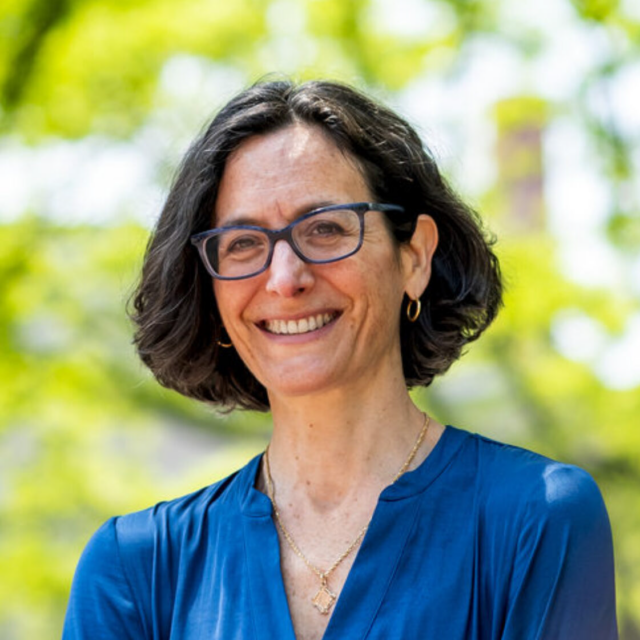
As a computational modeler, the Director of Participatory Modeling and Data Science in the College of Social Sciences and Humanities, and Co-Director of Northeastern’s NULab for Digital Humanities and Computational Social Science, Professor Moira Zellner’s career has been built on using simulations and models to help communities navigate complex problems. From stormwater management to urban resilience planning to delta land management, she has secured millions of dollars in research funding from the NSF, the EPA, the Andrew Mellon Foundation, and others to support her impactful, interdisciplinary work.
During my recent interview with Professor Zellner, I asked her about the role of AI in society, its implications for governance and education, and what gaps her work seeks to fill.
Professor Zellner generally spoke with an urgency that challenges the optimist narrative that has dominated conversations about artificial intelligence–especially at Northeastern University. Her primary concern is not that AI is too powerful, but that the dialogue around it is too shallow. In other words, we are too focused on what the technology can do and not on what it can and is doing to us.