
The New York Times, July 2023
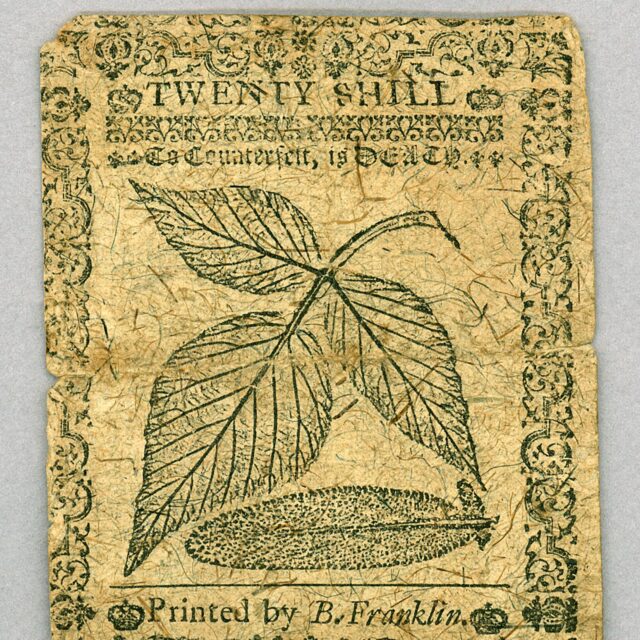
When Benjamin Franklin moved to Philadelphia in 1723, he got to witness the beginning of a risky new experiment: Pennsylvania had just begun printing words on paper and calling it money.
The first American paper money had hit the market in 1690. Metal coins never stayed in the 13 colonies long, flowing in a ceaseless stream to England and elsewhere, as payment for imported goods. Several colonies began printing bits of paper to stand in for coins, stating that within a certain time period, they could be used locally as currency. The system worked, but haltingly, the colonies soon discovered. Print too many bills, and the money became worthless. And counterfeiters often found the bills easy to copy, devaluing the real stuff with a flood of fakes.
Franklin, who started his career as a printer, was an inveterate inventor who would also create the lightning rod and bifocals, found paper money fascinating. In 1731, he won the contract to print £40,000 for the colony of Pennsylvania, and he applied his penchant for innovation to currency.