The Washington Post, July 2025
For centuries, Catholics have sought divine wisdom from prayer, sacred texts and the writing of theologians. Now, a tech firm wants the faithful to get additional counsel from an AI chatbot.
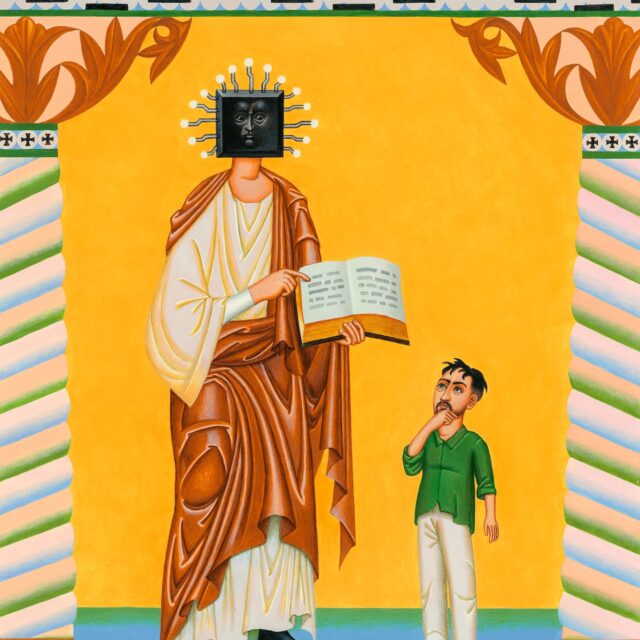
Behold: Magisterium AI. Think of it as ChatGPT for Catholicism, an opportunity to ask a chatbot questions about the faith instead of seeking out a human. But the only sources in this large language model are 27,000 documents connected to the church, which has been reckoning with the effects of artificial intelligence on humanity. The company behind Magisterium AI, Longbeard, claims up to 100,000 monthly users and proclaims its mission on its homepage in a huge font: “We’re building Catholic AI.”
Longbeard founder Matthew Harvey Sanders — himself a believer in both AI and Catholicism — says Magisterium AI and other Catholic AI bots give people a new avenue to understand the faith’s basics and its more arcane principles. But others argue that the cold technology of AI ruins what they view as the beautiful wrestling match of meaning-making, either in a community or inwardly. And some ethicists worry that an AI platform dedicated to a single religion further fragments an already divided world.