Skip to content
Apply
Stories

Data privacy is already a challenge–and the metaverse could make it worse

People in this story

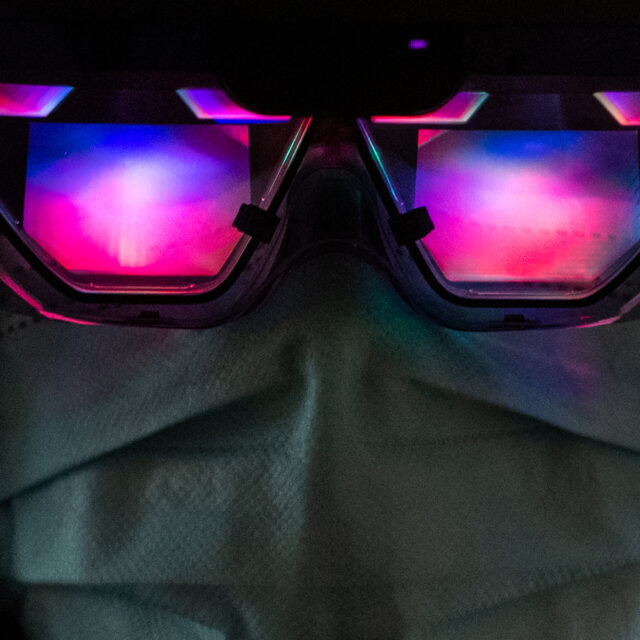
Photo by Matthew Modoono/Northeastern University

The metaverse is more than the latest obsession of Facebook founder Mark Zuckerberg. It’s a three-dimensional world of virtual and augmented reality that we will be exploring—via our digital avatars—over the next decade.bAmid the unlimited possibilities of what may be coming, consider this reality. If our privacy is already under siege in the two-dimensional internet, imagine how vulnerable we may be in 3D?

“It’s going to aggravate the preexisting privacy issues that we’re not currently dealing with very well,” says Caglar Yildirim, an assistant teaching professor and director of the Mixed Reality research group at Northeastern. “And then we’ll have to deal with the more dire consequences of not paying enough attention to those issues.”

It’s bad enough that cookies track our online movements today; in the future, our personal health data may be chronicled by virtual reality headsets. How will financial transactions be managed? If we’re purchasing virtual real estate, how can we avoid being suckered into buying a digital version of the Brooklyn Bridge? 

Continue reading at News@Northeastern.

More Stories

FILE - Elon Musk arrives to speak at an indoor Presidential Inauguration parade event in Washington, Jan. 20, 2025. (AP Photo/Matt Rourke, File)

What do campaign ads buy you in 2026? It may not be much, experts say.

10.29.2026
01/10/24 - BURLINGTON, MA. - Stock photography of the Colosseum which is operated by the Institute for the Wireless Internet of Things (W-IoT) at Northeastern University, and housed at the Northeastern Innovation Campus in Burlington, Massachusetts on Jan. 10, 2024. The Colosseum at is the world's largest RF emulator with 256 programmable software radios which enables academic, government, and industry researchers to perform scalable and repeatable experimentation in wireless systems in a large-scale emulation environment. Photo by Matthew Modoono/Northeastern University

Democrats, Republicans support government intervention to train workforce on AI tools, Northeastern University survey finds

10.26.2026
10/31/17 - BOSTON, MA. - Stock images of pumpkins on Halloween on Oct. 31, 2017. Photo by Adam Glanzman/Northeastern University

Halloween originated in Scotland 2,000 years ago – so how did it become so big in America? Northeastern historians explain

10.29.26
Northeastern Global News