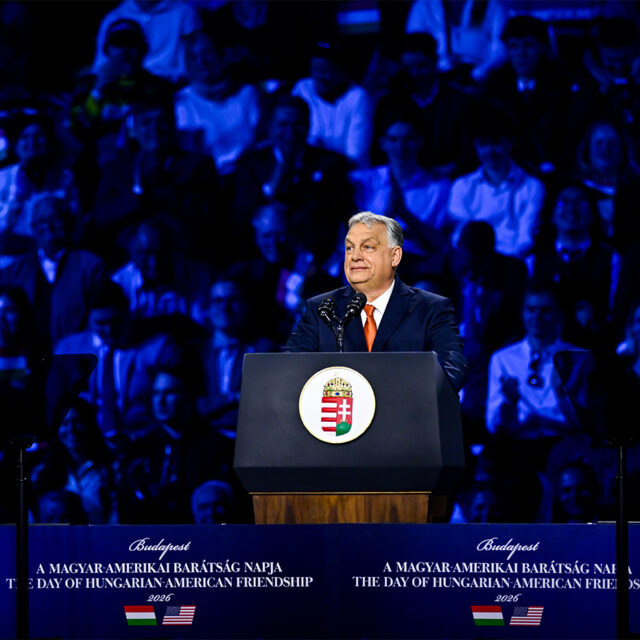
Sunday’s defeat of Viktor Orbán, a populist far-right leader and Hungary’s longest-serving prime minister, signals a monumental shift in Europe’s political landscape that could bolster the European Union’s unity and steel its resolve in the face of Russian influence in the region, Northeastern University experts say. Results Sunday showed a decisive lead for the opposition Tisza party and its candidate Péter Magyar. Turnout surpassed 77%, the highest since the end of communism in 1989, according to Hungary’s National Election Office, underscoring the election’s unusually high stakes, analysts said.
Orbán acknowledged Sunday evening that he was too far behind to stage a comeback, stating that the election results are “painful for us, but clear.” Magyar said in a social media post that Orbán personally called him to congratulate him on the victory. “The responsibility and possibility of governing was not given to us,” Orbán said in a televised address to supporters. “I have congratulated the winner.”