Skip to content
Apply
Stories

Here’s why we need a PSA for the COVID-19 vaccine

People in this story

(Photo by Shelley Lipton/Icon Sportswire) (Icon Sportswire via AP Images)
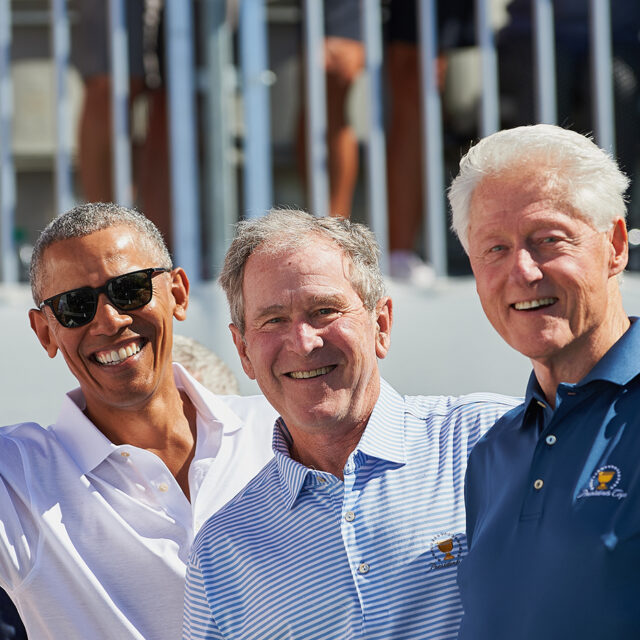
Presidents Obama, G.W. Bush, and Bill Clinton smile and wave while on the first tee during the first round of the Presidents Cup at Liberty National Golf Club on September 28, 2017 in Jersey City, New Jersey.

As COVID-19 vaccines begin making their way from science labs to doctors’ offices, three former U.S. presidents—Bill Clinton, George W. Bush, and Barack Obama—have said they’re willing to get their shots on camera in order to encourage skeptical Americans to do the same. The move is “a good first step,” says psychology professor Lisa Feldman Barrett, but a broader, sustained public service campaign may be needed to get a critical mass of the United States’ diverse population on board with being vaccinated.

“Leaders are missing the scope of what’s required here,” says Barrett, university distinguished professor of psychology at Northeastern. “The fact that three presidents who are on different sides of the political divide are standing together in a photograph, proclaiming dedication to being vaccinated together, is inspiring. But if we really want a program of vaccinations to work, we have to target all sectors of the population with a coordinated influencer campaign.”

Different messages, Barrett says, delivered by different people of power or prestige, will resonate with different segments of the population. While she found the presidents’ message heartwarming, those who are politically disaffected might have been unmoved, Barrett says.

A campaign that enlists influencers from a variety of media—YouTube stars, movie and music stars, politicians, physicians, and the like—is more likely to impact more people, she says.


Continue reading at News@Northeastern.

More Stories

09/09/26 - BOSTON, MA. - Leonie Ruehe, who studies political science and international affairs, poses for a photo on Sept. 9, 2026. Ruehe recently completed their co-op at a think tank in Greece. Photo by Matthew Modoono/Northeastern University

This student’s co-op in Greece provided lessons in modern slavery

10.26.2026
A woman in a calm space plays crystal and metal sound bowls surrounded by candles and lights, symbolizing feminine energy, relaxation, mindfulness, and healing meditation at a retreat.

Students and NGN take a sound bath for Mental Health Week

10.22.2026
01/10/24 - BURLINGTON, MA. - Stock photography of the Colosseum which is operated by the Institute for the Wireless Internet of Things (W-IoT) at Northeastern University, and housed at the Northeastern Innovation Campus in Burlington, Massachusetts on Jan. 10, 2024. The Colosseum at is the world's largest RF emulator with 256 programmable software radios which enables academic, government, and industry researchers to perform scalable and repeatable experimentation in wireless systems in a large-scale emulation environment. Photo by Matthew Modoono/Northeastern University

Democrats, Republicans support government intervention to train workforce on AI tools, Northeastern University survey finds

10.26.26
Northeastern Global News