Newsweek, January 2026
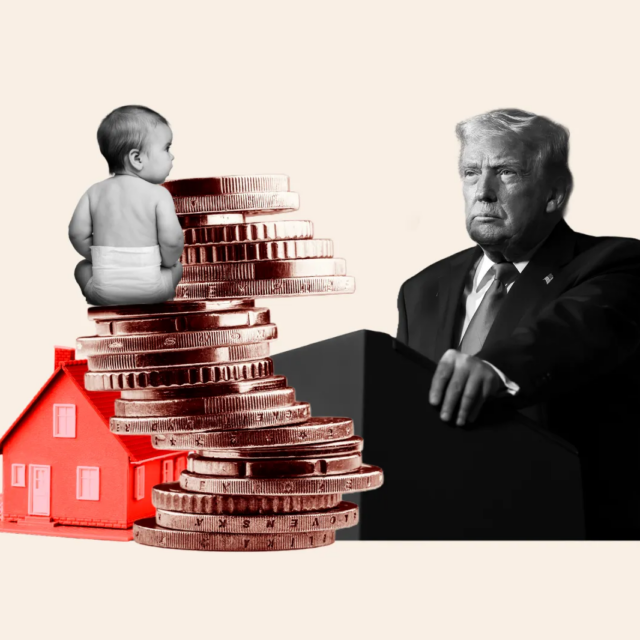
Since the start of his second term, President Donald Trump has made it clear he’s concerned about America’s low birth rates, and the country’s aging population. His administration passed a number of policies at the start of 2025 aimed at boosting birth rates, including an executive order expanding access to in vitro fertilization (IVF) and a Department of Transportation directive to give precedence to “communities with marriage and birth rates higher than the national average.” However, after a recent report highlighted that financial and other kinds of uncertainty are continuing to hinder birth rates in America, experts have weighed in on what more the administration should be doing about the population crisis.
Why It Matters
Lower birth rates, resulting in an aging population, can pose a number of economic challenges, such as placing greater strain on Social Security and Medicare services, even though they can also lead to a rise in nationwide education levels and a drop in poverty rates. They can also strain the health care system, and as a result, some see low birth rates as a serious concern in America. That said, this is not just the case for the U.S., as birth rates have been falling worldwide since the 1970s, according to a National Bureau of Economic Research paper. Also, while some say low birth rates pose a problem for the country from an economic perspective, others warn that calling low birth rates a “problem,” is problematic in itself, as a significant factor behind the decline in birth rates worldwide is the rise in “female autonomy.”