Skip to content
Apply
Stories

How the warehouse boom devoured America’s workforce

People in this story

Ralph D. Freso/Reuters

Business Insider, October 2022

Never in its history — perhaps even in the midst of the Great Depression — has America lost as many jobs in a few short weeks as it did at the beginning of the coronavirus pandemic. In April 2020, more than 20 million Americans from all walks of life suddenly found themselves out of work. The country, like most of the world, was closed for business — and it took until August of this year for employment to finally return to pre-pandemic levels. Even today, staffing hasn’t fully bounced back in many sectors, from hospitality to healthcare.

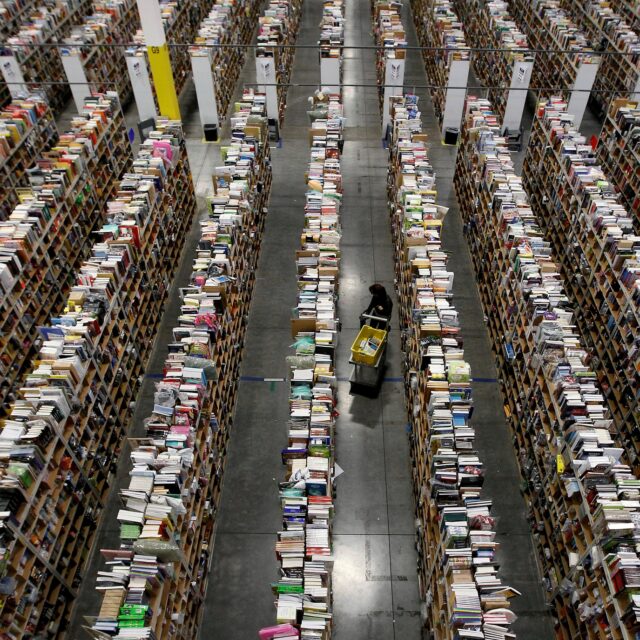
But not at America’s warehouses. Thanks to the pandemic-driven boom in online shopping, the country’s fulfillment and distribution centers continued to staff up at a furious pace. Today they employ 1.8 million Americans — up 37% since January 2020 and up 183% from January 2010.


Continue reading at Business Insider.

More Stories

04/27/26 - BOSTON MA. - Scenes during the College of Social Sciences & Humanities Graduate and Undergraduate Commencement held at the Leader Bank Pavilion on April 27, 2026. Photo by Matthew Modoono/Northeastern University

CSSH graduates are ready to enter ‘the world as we know it’

04.28.2026

Donald Trump Faces Becoming the President He Ridiculed: Jimmy Carter

04.28.2026
Lawrence Cheng, left, whose family owns seven Wendy's locations south of Los Angeles, works with part-time employee Adriana Ruiz at his Wendy's restaurant in Fountain Valley, Calif., June 20, 2024. When California’s minimum wage increase went into effect in April, fast food workers across the state went from making $16 to $20 overnight. It's already having an impact, according to local operators for major fast food chains, who say they are reducing worker hours and raising menu prices as the sudden increase in labor costs leaves them scrambling for solutions. (AP Photo/Jae C. Hong)

What happened after the fast-food pay raise in California? New data explains

04.28.26
Northeastern Global News