
Skip to content
Apply
Stories

Is it ethical to bioengineer plants and animals to stop or reverse extinction? Questions raised during 60th annual Klein Lecture.

People in this story

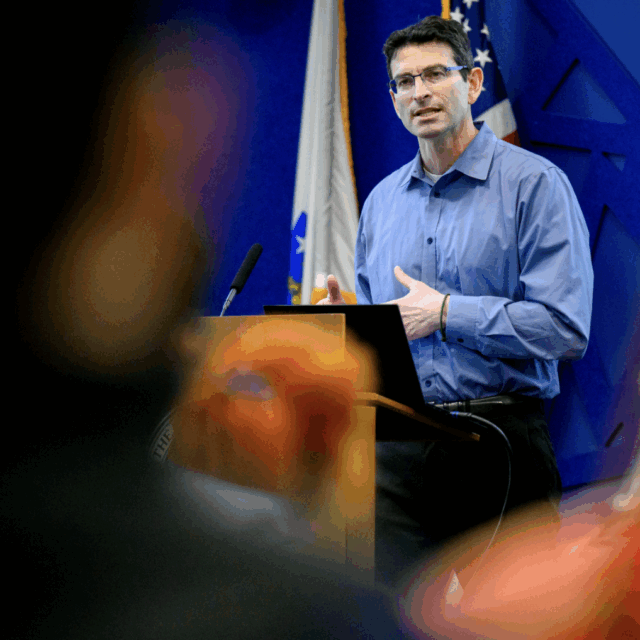
image of professor ronald sandler speaking in front of crowd at john d o'bryant institute

Just because we could conceivably bring the wooly mammoth back to life, should we? That was among the many questions raised by Ronald Sandler, professor of philosophy and director of the Ethics Institute at Northeastern University, during the 60th annual Robert D. Klein lecture. The lecture was given Monday afternoon at the Cabral Center in the John D. O’Bryant African-American Institute on Northeastern’s Boston campus. Sandler began with what he said was an “uncontroversial” premise: “that anthropogenic extinctions (extinctions caused by humans) should be avoided because species and biodiversity are valuable.”

And as a result of this accepted precept, Sandler explained that conservationists favor place-based strategies — for example, protecting important habitats, restoring degraded environments, removing invasive species, etc. “The problem is this paradigm is under stress from the scale and the nature of the extinction crisis,” Sandler says. Indeed, Sandler says that species extinction rates have increased to hundreds or thousands of extinctions a year primarily because of habitat loss and direct taking of species (for example, industrialized fishing). And that’s even before climate change really starts to have an effect and puts even place-based conservation for many species at risk.


Read more at Northeastern Global News.

More Stories

Rear view of two multiracial police officers patrolling a community on foot. They are standing at a street corner looking toward an empty intersection. The policewoman is mixed race, African-American, Asian and Hispanic, in her 40s. Her partner is a young Hispanic man in his 20s.

Police recruits learn a lot from their field training officers, including use of force

03.04.2026
Plumes of smoke rise following reported explosions in Tehran on March 1, 2026, after Iran's supreme leader, Ayatollah Ali Khamenei, was killed a day earlier in a large U.S. and Israeli attack, prompting a new wave of retaliatory missile strikes from Iran. (Photo by Mahsa / Middle East Images / AFP via Getty Images)

The US says its war with Iran could last weeks. But what if Congress intervenes?

03.03.2026
Sustainable green rooftop architecture in eco-friendly modern urban cityscape

Making green space ‘part of the game’: How considering urban forestry at multiple scales can improve city planning

03.05.26
Northeastern Global News