

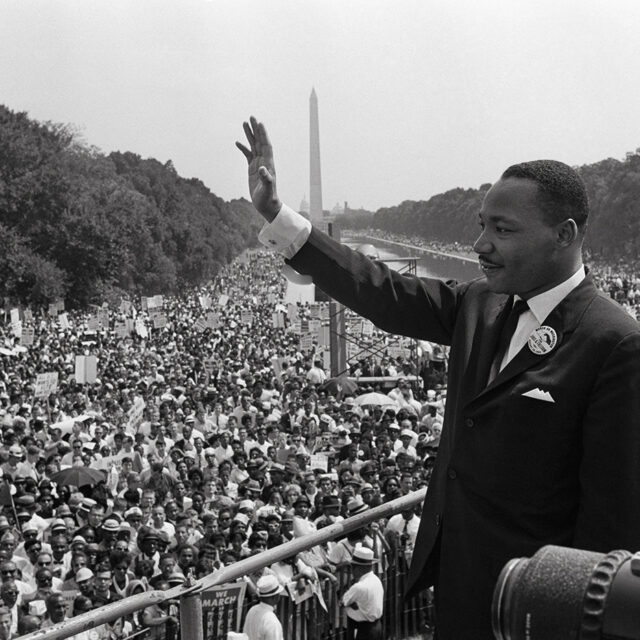
Sixty-three years ago, Northeastern University professor Ted Landsmark stood among the throngs of 250,000 people at Washington’s Lincoln Memorial and listened as the Civil Rights movement’s most distinguished preacher, the Rev. Dr. Martin Luther King Jr., delivered a call for social justice in his famed “I have a dream” speech. It was 1963. Landsmark was 17, and witnessing the historic March on Washington – at the time, the largest rally ever to be held in the nation’s capital, and an action that would succeed in helping to pressure a hesitant President John F. Kennedy to propose federal civil rights legislation.
“It was apparent to me as a 17-year-old that I couldn’t stand on the sidelines and watch other people put their lives on the line to support equal rights,” said Landsmark, now 80, and a longtime distinguished professor of public policy and urban affairs. On Friday, Aug. 28 – the 63rd anniversary of King’s speech – Landsmark is heading to D.C. to rally again at the new “March on Washington 2026: Defend the Vote,” because he feels society is again in deep trouble. “In many respects the times feel more dire now than then, because the efforts to roll back the progress that had been made are far more wide ranging,” he said in an interview with Northeastern Global News.