Skip to content
Apply
Stories

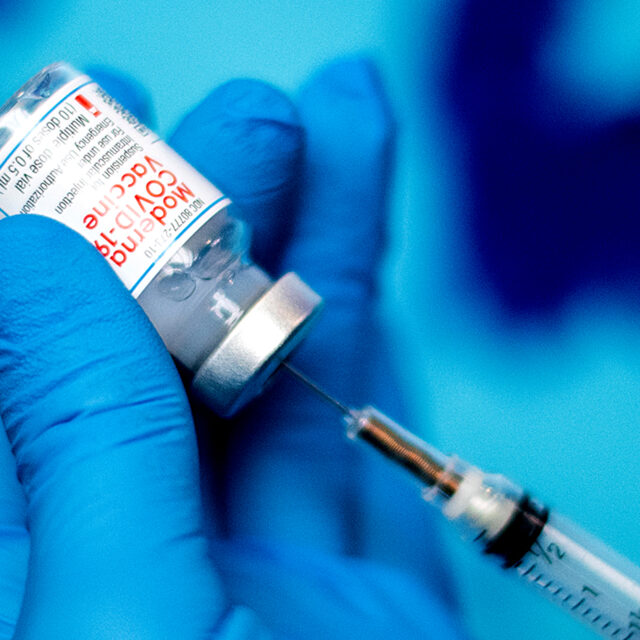
People are receiving unapproved extra COVID-19 vaccine doses. Is it a problem?

People in this story

Photo by Matthew Modoono/Northeastern University

For many immunocompromised people, the COVID-19 pandemic has been a living nightmare—and the omicron variant may make life even more unsettling. Authorities and drug manufacturers alike have warned that the protection conferred from being fully vaccinated may not be sufficient to ward off the omicron variant in certain immunocompromised groups, deepening fears of what infections might look like for the more than 7 million Americans with weakened immune systems. Being fully vaccinated means you’ve either had two doses of the Pfizer-BioNTech/Moderna vaccines plus a booster, or one dose of the Johnson & Johnson vaccine plus a booster. 

With cases surging again, some people with weakened immune systems have been skirting guidelines in order to receive unapproved vaccine doses, an effort to bolster immunity and avoid infection, The New York Times reports. So-called off-label dosing has been going on for some time, with the Centers for Disease Control and Prevention reporting over the summer that as many as 1.1 million people in the U.S. received unauthorized extra doses of the vaccine.

Continue reading at News@Northeastern.

More Stories

FILE - Elon Musk arrives to speak at an indoor Presidential Inauguration parade event in Washington, Jan. 20, 2025. (AP Photo/Matt Rourke, File)

What do campaign ads buy you in 2026? It may not be much, experts say.

10.29.2026
01/10/24 - BURLINGTON, MA. - Stock photography of the Colosseum which is operated by the Institute for the Wireless Internet of Things (W-IoT) at Northeastern University, and housed at the Northeastern Innovation Campus in Burlington, Massachusetts on Jan. 10, 2024. The Colosseum at is the world's largest RF emulator with 256 programmable software radios which enables academic, government, and industry researchers to perform scalable and repeatable experimentation in wireless systems in a large-scale emulation environment. Photo by Matthew Modoono/Northeastern University

Democrats, Republicans support government intervention to train workforce on AI tools, Northeastern University survey finds

10.26.2026
10/31/17 - BOSTON, MA. - Stock images of pumpkins on Halloween on Oct. 31, 2017. Photo by Adam Glanzman/Northeastern University

Halloween originated in Scotland 2,000 years ago – so how did it become so big in America? Northeastern historians explain

10.29.26
Northeastern Global News