Skip to content
Apply
Stories

Police encounters get moment-by-moment analysis in new study

People in this story

(AP Photo/Julio Cortez)
Newark Police officer Veronica Rivera wears a body camera during a news conference at the Panasonic headquarters unveiling body cameras for officers, Wednesday, April 26, 2017, in Newark, N.J. The cameras, which will be worn by officers as part of a federal monitoring agreement, are provided by Panasonic. Newark's police were put under a five-year federal monitoring program last year after a Department of Justice investigation found officers made unconstitutional street stops and engaged in the excessive use of force.

On Dec. 25, 2019, a New Haven, Connecticut, police officer approached a man whose car was parked illegally, and told him to go sit on the sidewalk. 

Within just a few minutes, the situation had escalated to violence. In a video posted on YouTube by a Hartford news station, the officer can be seen slamming the man to the ground, kicking him and pulling his hair. Because the officer was wearing a body camera, it was all caught on tape, and the officer, Jason Santiago, was later charged with third-degree assault.

How do simple police-civilian interactions like this become violent so quickly?

Continue reading at News@Northeastern.

More Stories

Bay bridge of San Francisco, USA

Gridlocked communities in California offer lessons on curbing emissions

03.11.2026
Sustainable green rooftop architecture in eco-friendly modern urban cityscape

Making green space ‘part of the game’: How considering urban forestry at multiple scales can improve city planning

03.05.2026
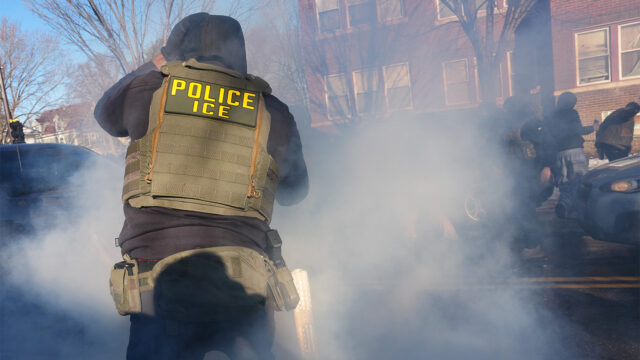
Tear gas is deployed amid protesters near the scene where Renee Good was fatally shot by an ICE officer last week, Tuesday, Jan. 13, 2026, in Minneapolis.(AP Photo/Adam Gray)

National survey finds massive ‘partisan chasm’ on immigration

03.11.26
Northeastern Global News