Grist, January 2024
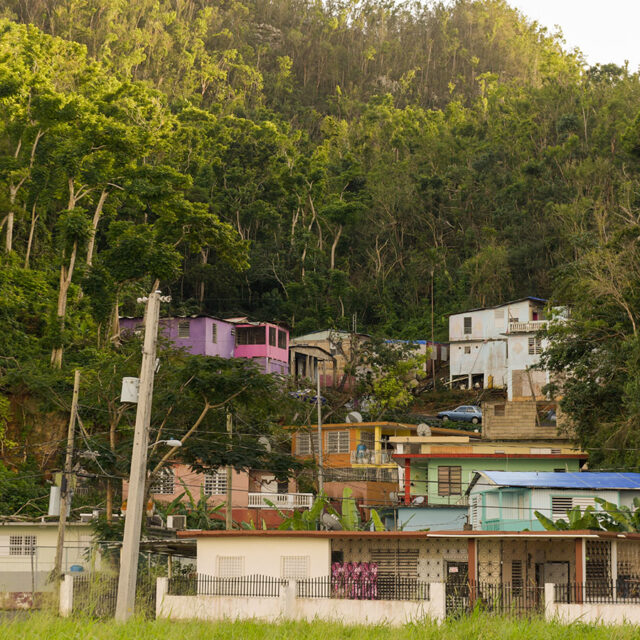
When Eduardo Lugo hears trucks rumble by his home in southwestern Puerto Rico, there is a moment when he wonders if it’s the sound an earthquake makes just before it hits. An associate professor of psychology at the University of Puerto Rico at Mayagüez, Lugo says this type of traumatic trigger is just one of the legacies of living through years of devastating hurricanes and earthquakes.
When the power goes out, people often lose access to water, food spoils, Lugo says, “It’s like a domino effect for people. And it’s definitely affecting people’s mental health.”
The last several years have brought disasters to the island that have killed and displaced thousands of people, and highlighted fissures of inequality that did not heal when the power came back on. “Whenever some sort of natural disaster affects Puerto Rico,” Lugo says, “it seems to highlight a problem, and how inefficient the government was in attending those situations.” When Hurricane Maria struck in 2017, for example, cutting people off from medical care and crippling the electric grid for months, it worsened child poverty in Puerto Rico.