
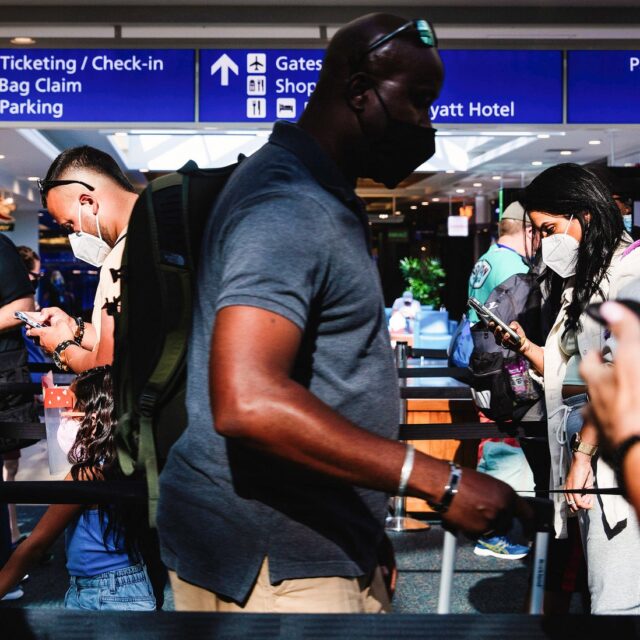
The Atlantic, December 2021
Variants are a little bit like breakups: There’s never a great time for one to strike, but there absolutely are terrible times. With Omicron, it’s hard to imagine a worse possible moment. The promise of this holiday season has long been that Americans would finally get to make up for all the getaways and family reunions that didn’t happen last winter. That’s exactly what Americans have been banking on: The country is entering its biggest travel moment of the entire pandemic.
Omicron introduced itself to the world only a few weeks ago, but it’s made quite an impression. In the United Kingdom, COVID-19 cases hit an all-time record on Thursday. And Friday. There’s much we still don’t know about the new strain, but as my colleague Sarah Zhang has written, we know enough to see that Omicron is about to tear through the United States. Here, Omicron cases are now doubling every two days, and the variant’s contagiousness—and knack for duping our vaccines—is ratcheting up breakthrough infections. Sports leagues have started rescheduling games, restaurants are closing for a little while, and some schools are going remote.
All of this has left many would-be travelers nervously glancing at their calendar and asking themselves another round of terrible pandemic questions: How bad will things be by Christmas? By New Year’s? And when do things get so bad that I need to cancel my holiday plans?