

Project Overview
This project seeks to understand bias motivated victimization among marginalized populations such as Latinos, and particularly Latinos who are or who are perceived to be immigrants. VJRL researchers have implemented specialized victimization surveys in communities with high Latino populations. Major problems have plagued researchers attempting to measure bias motivated crimes perpetrated against immigrants or those who are perceived to be immigrants. The first is accessing populations of potential victims. Bias motivated crime is a relatively rare phenomenon. It is additionally challenging to identify rare events such as bias motivated victimization within populations who cannot be easily accessed through traditional population surveying mechanisms because they do not have a permanent address, do not have access to land-line phones, and are fearful of outsiders. The second challenge is capturing information about bias motivated victimization once a person is identified for data collection. Bias crimes are not well understood among the general population and may seem to be an even more foreign concept for populations who expect to face discrimination, hostility and harassment due to their status or perceived status as immigrants. As a result, it is necessary to ask questions about bias motivated victimization in a way that captures a broad range of bias events, from harassment and micro-aggression to violent or property crime that is motivated by bias.
Latino Experiences Survey Team
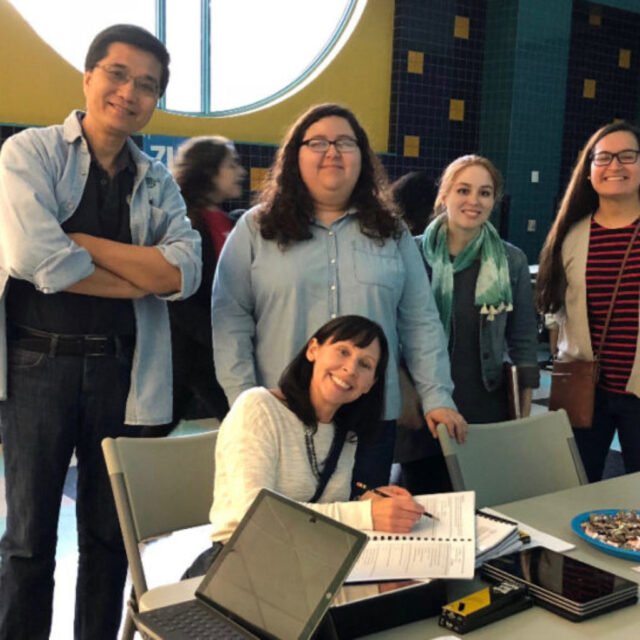
Surveys were administered and data were collected by the Latino Experiences Survey Team–a group of researchers within the Violence and Justice Research Lab at Northeastern University and their partners at UMass Lowell and University of Texas Medical Branch (UTMB). The team aims to understand the prevalence of hate crimes and bias motivated crimes against Latinos and how these crimes impact Latino communities.
Collaborators and Funders
- Carlos Cuevas, Professor of Criminology and Criminal Justice; Co-Director of the Violence and Justice Research Lab
- Amy Farrell, Director and Professor of Criminology and Criminal Justice; Co-Director of the Violence and Justice Research Lab
- Jack McDevitt, Professor of the Practice in Criminology and Criminal Justice; Director, Institute on Race and Justice
- Jesenia Robles
- Sarah Lockwood
- Jeff Temple, University Texas Medical Branch
- Sheldon Zhang, University of Massachusetts Lowell