The National Desk, March 2024
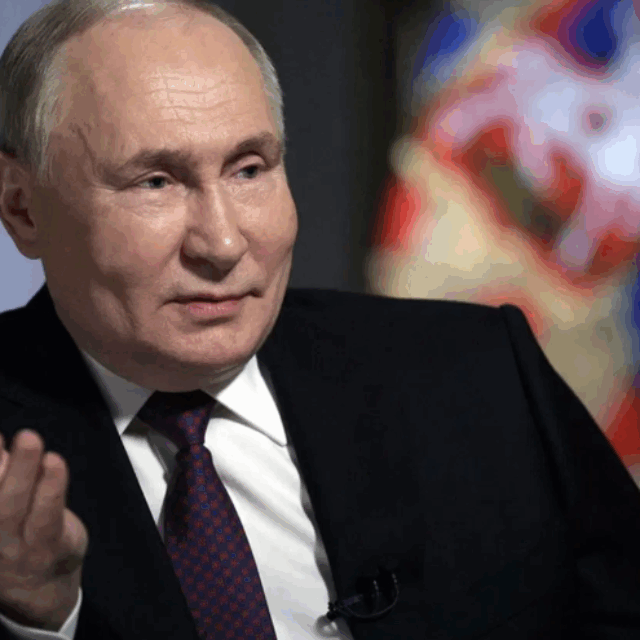
Russian President Vladimir Putin made more references to his readiness to use nuclear weapons as the country prepares for elections that are essentially guaranteed to elect him to another six-year term. In an interview with state media, Putin said that he is prepared to use his nuclear arsenal if its sovereignty or independence is threatened, references he has frequently made to justify the invasion of Ukraine and prevent NATO allies from getting more involved in Kyiv’s defense effort.
When asked about the potential for using nuclear weapons against Ukraine in the interview, Putin said there was never a need. “We have our own principles — what do they say?” Putin said, referencing Russia’s nuclear doctrine. “That we are ready to use weapons, including any weapons, including those you mentioned, if we are talking about the existence of the Russian state, about doing damage to our sovereignty and independence.”
His comments in the interview were a step back from rhetoric used in his annual address last month, where he described any deployment of troops from NATO countries to Ukraine as an escalatory step in that could lead to nuclear war. “All this truly threatens a conflict with the use of nuclear weapons, and therefore the destruction of civilization,” he said in his address.
But Putin has repeatedly made references to Russia’s nuclear arsenal and his willingness to use it since launching the invasion of Ukraine in February 2022 to discourage the West from sending military support and troops to Ukraine. “Putin’s strategy overall is to stoke obfuscation or confusion. Basically, to act in in somewhat unpredictable ways and it is part of the overall strategy,” said Mai’a Cross, a professor of political science and international affairs and the director of the Center for International Affairs at Northeastern University. “It’s just part of this overall strategy of what he calls escalating to deescalate, trying to hold onto some form of control over how that plays out and how Russia’s image is perceived in the world by taking the upper hand with threats.”