Skip to content
Apply
Stories

Meta’s move away from fact-checking could allow more false or misleading content,content moderation expert says

People in this story

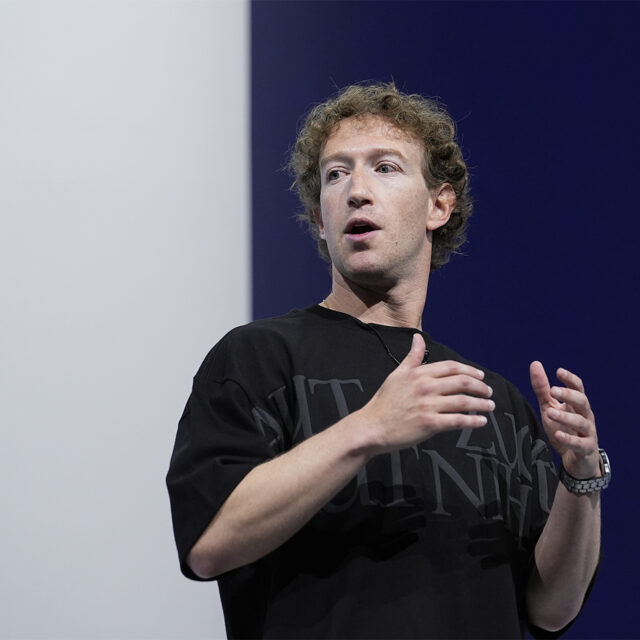
FILE - Mark Zuckerberg talks about the Orion AR glasses during the Meta Connect conference on Sept. 25, 2024, in Menlo Park, Calif. (AP Photo/Godofredo A. Vásquez, File)

Meta’s move away from fact-checking in content moderation practices could potentially allow more hate speech or mis- or disinformation, a Northeastern University social media expert says. Meta is adopting a model similar to the one used by X, called Community Notes. John Wihbey, an associate professor of media innovation and technology at Northeastern University, sees the move as the company repositioning itself ahead of President-elect Donald Trump’s inauguration. But third party fact-checking, while difficult to scale on a platform with billions of users, “is an important symbol of commitment to trust and safety and information integrity,” Wihbey says. It is “dangerous,” he says, to break from those norms at a moment when “the winds of authoritarian populism are blowing across the globe.”

In a video message, Meta founder and CEO Mark Zuckerberg described the shift as part of an effort to “get back to our roots around free expression,” noting, among other things, that the company’s fact-checking system has resulted in “too many mistakes and too much censorship.” 
Continue reading at Northeastern Global News.

More Stories

UNITED STATES - MARCH 24: Sen. Mitch McConnell, R-Ky., is seen after the Senate luncheons in the U.S. Capitol on Tuesday, March 24, 2026. (Tom Williams/CQ Roll Call via AP Images)

Nearly ten weeks later, what’s ailing Mitch McConnell?

08.20.2026
Robert Gilman, a 28-year-old former US Marine already serving a prison sentence for attacking a police officer while drunk and now facing new assault charges, is escorted before a hearing at Central District Court in Voronezh, Russia. Andrey Arhipov / Sputnik via AP

Gershkovich, Griner, Gilman: How Americans became bargaining chips in global power struggles

08.19.2026
US civil rights leader Martin Luther King (C) waves to supporters on August 28, 1963 on the Mall in Washington DC (Washington Monument in background) during the

Northeastern professor weighs in on why marching still matters

08.27.26
Northeastern Global News