George Washington is lionized as a general and president. But to Northeastern University historian William Fowler, perhaps the greatest insight into Washington’s role as the “father of his country” comes not from accomplishments on the battlefield or behind his presidential desk, but from the years in between at his Mount Vernon home.
“I was very interested in what this man was doing from the end of the Revolution until he traveled to New York to take the oath of office,” says Fowler, distinguished professor emeritus of history at Northeastern. “Was he just sitting at home? Was he just talking to his grandchildren? Was he just overseeing his plantation? I was curious, and that is what drives historians.” Fowler is the author of nearly a dozen books on American history, including “The Baron of Beacon Hill: A Biography of John Hancock,” “Samuel Adams: Radical Puritan,” and “Rebels Under Sail: A History of the American Navy in the Revolution.”
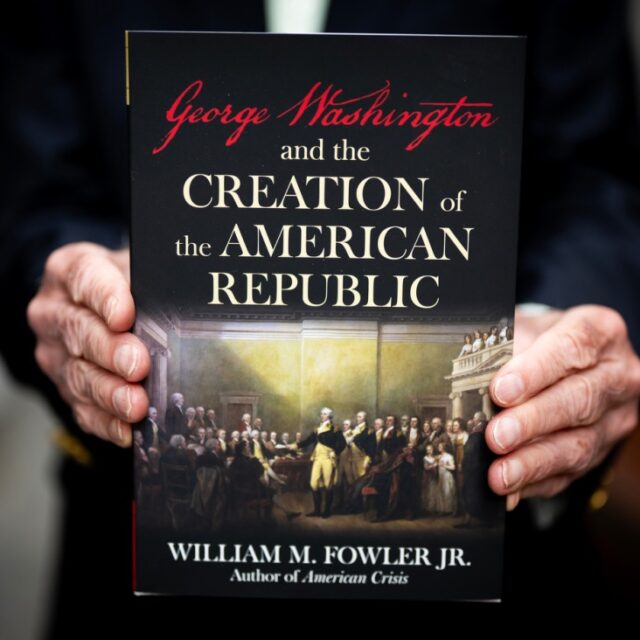
His latest book, “George Washington and the Creation of the American Republic,” was released this month. Fowler says the book arose from his wish to “continue the story” from his previous book, “American Crisis: George Washington and the Dangerous Two Years After Yorktown, 1781–1783.” As such, the new book covers the time between the end of the Revolution in 1781 and the beginning of Washington’s presidency in 1789. “He took the presidency at probably the most tumultuous period in American history,” Fowler says.