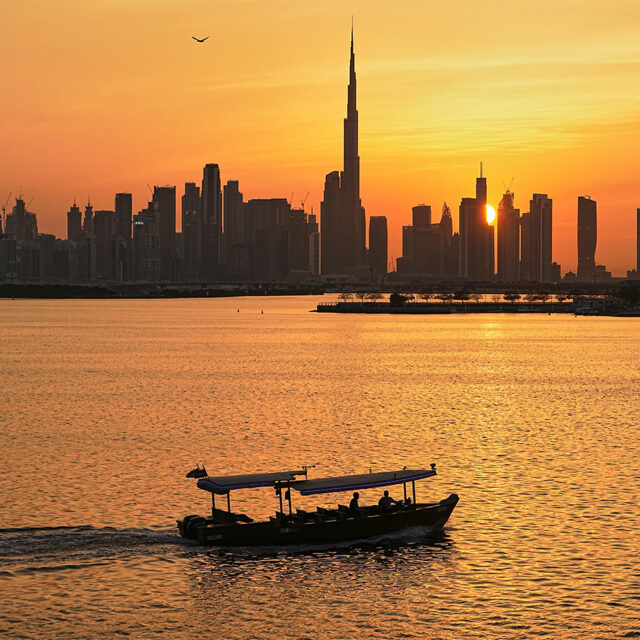
In less than a century, Dubai has grown from a small fishing and trading port to the home of the world’s tallest building, manmade archipelagos filled with luxury properties, and two of the world’s largest trading ports. But the “City of Gold” hasn’t been without its controversies and is now staring down some major sustainability challenges that are only amplified by the war in Iran, Northeastern University urbanists said.
“They’ve really built themselves a global image of being open, tax-free, good for business, good for a holiday destination, etc. that’s worked until now,” said Jonathan Rock Rokem, associate professor of politics and sustainability at Northeastern University London. “But they were always afraid of Iran ruining that image.” Serena Alexander, associate professor in public policy and urban affairs and civil and environmental engineering, said that a lack of natural resources like fresh water and a reliance on modern technology and engineering puts the city’s future at risk — particularly amid geopolitical instability.