Ekaterina Botchkovar
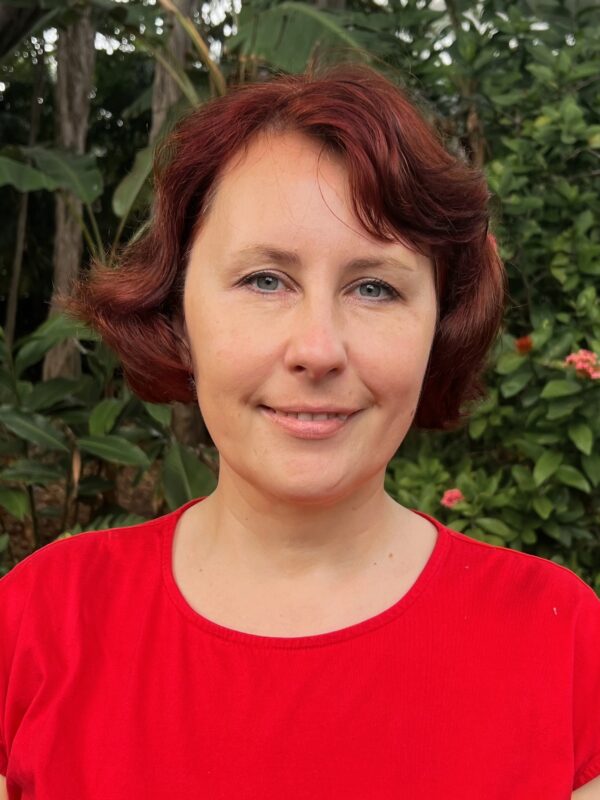
PhD Program Director; Professor of Criminology and Criminal Justice
Professor Botchkovar examines crime through a cross-cultural, global lens, focusing on how social contexts influence criminal behavior. Much of her earlier work explored how political, cultural, and socioeconomic changes shaped the lives of Russians and Ukrainians before the 2022 Russo-Ukrainian war. This included studies of various criminological theories and ways in which established predictors influenced individual behavior in Russia and Ukraine.
Professor Botchkovar’s current research incorporates both traditional and online forms of crime. One of her ongoing projects seeks to understand how exposure to the Russo-Ukrainian war influences the psychological well-being and behavioral patterns of adults residing in Ukraine. Her work seeks to identify both the short- and long-term effects of war-related stressors, as well as the resilience strategies individuals use to mitigate these challenges.
Another major focus of her research is the intersection of social context and cybercrime. Professor Botchkovar explores how the ecosystems of dark web forums enable and sustain various forms of online crime, including fraud, malware production, and illicit trade. This project aims to uncover the socioeconomic and sociocultural factors that drive the proliferation of cybercrime within hidden online communities, providing insights into effective strategies for its disruption and prevention.
Professor Botchkovar publishes in leading journals in the fields of criminology and sociology. Her publications have appeared in Criminology, Journal of Quantitative Criminology, Justice Quarterly, Journal of Research in Crime and Delinquency, Social Forces, British Journal of Criminology, and others.
2022—Robert Sheehan Excellence in Teaching Award
Botchkovar, E., Kafafian, M., Timmer, A., Antonaccio, O., Hughes, L. A., & Johnson, R. J. (2024). When the World Falls Apart: How People Make Decisions in the Times of War. Crime & Delinquency. https://doi.org/10.1177/00111287241268371
Timmer, A., Johnson, R. J., Antonaccio, O., Botchkovar, E. V., & Hughes, L. A. (2023). Forced to flee out and down: Depression following the Russian invasion and displacement of the Ukrainian people. Peace and Conflict: Journal of Peace Psychology, 29(3), 266–275. https://doi.org/10.1037/pac0000689
Kafafian, M., Botchkovar, E. V., & Marshall, I. H. (2022). Moral rules, self-control, and school context: Additional evidence on situational action theory from 28 countries. Journal of Quantitative Criminology, 38(4), 861–889. https://doi.org/10.1007/s10940-021-09503-y
Johnson, R. J., Antonaccio, O., Botchkovar, E. V., & Hughes, L. A. (2022). War trauma and PTSD in Ukraine’s civilian population: Comparing urban-dwelling to internally displaced persons. Social Psychiatry and Psychiatric Epidemiology, 57(10), 1807–1816. https://doi.org/10.1007/s00127-021-02176-9
2019—2020 Northeastern University Humanities Center Fellow
1999—2000 George Soros Fellow, Central European University
-
Education
PhD, 2005, Sociology, North Carolina State University
-
Contact
617.373.5865 [email protected] -
Address
425 Churchill Hall
360 Huntington Avenue
Boston, MA 02115
-
Criminology and Public Policy
CRIM 7711
Provides detailed coverage of theoretical criminology and its implications for public policy. Approaches the understanding of crime from an interdisciplinary perspective, with special attention given to recent theoretical developments. Emphasizes evaluating theory in light of empirical research, understanding the implications of theory and research for programs and policies of crime prevention and control, and evaluating current approaches to crime prevention and control.
-
Gender, Crime, and Justice
CRIM 4010
Examines the topics of femininities and masculinities and their influence on participants in the criminal justice system. Also explores topics such as gender and criminological theory; the notion of gender and offending; women and men as victims of violence; and women and men as professionals within the criminal justice system. CRIM 4010 and WMNS 4010 are cross-listed.

Criminology
CRIM 2200
Describes the nature and extent of crime, explains its causes, and examines the reasons for and effectiveness of society’s responses to it. Defines the topic of criminology by discussing the different types of crime. Moreover, to establish the extent of crime in society, measurement issues are addressed. The second half of the course details different theories of criminal causation.