BARI Conference 2026: Greater Boston’s 10th Annual Insight-to-Impact Summit.
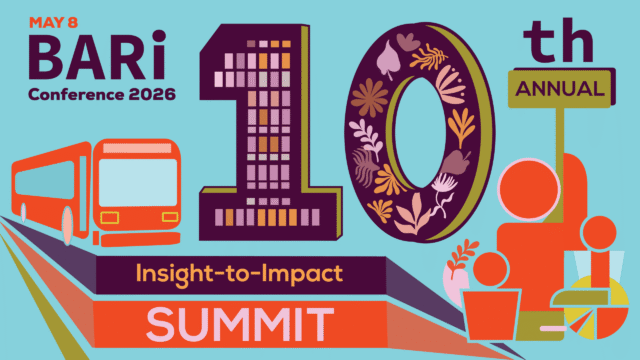
BARI Conference 2026: Greater Boston’s 10th Annual Insight-to-Impact Summit will occur on May 8th at Northeastern University!
Volunteer to be a part of BARI Conference 2026!
Conference Mission
BARI Conference is a unique forum for community leaders, practitioners, researchers, and policymakers to share how they advance data-driven research and policy in Greater Boston—and how we could do even more through collective action. To accomplish this, we prioritize the following values in the work we highlight and the design of sessions:
- Grounded in multiple forms of expertise, from generational knowledge to lived experience to formal training and everything in between.
- Innovations that use data and research to advance knowledge, policy, and practice in greater Boston.
- Collaboration, showcasing the power of collective action: the felt and meaningful impact we can accomplish when we combine our specialized knowledge and skills across individuals, organizations, institutions, or any combination thereof.
- Directly relevant and actionable for our communities.
Schedule
- 8:30 AM – 9 AM: Register
- 9 AM – 10:15 AM: Keynote Panel
- 10:15 AM – 10:30 AM: Coffee Break
- 10:30 AM – 12 PM: Session I
- 12:00 PM – 1:30 PM: Lunch/Poster Session and Showcases
- 1:30 PM – 3 PM: Session II
- 3 PM – 3:15 PM: Break
- 3:15 PM – 4:45 PM: Session III
- 4:45 PM – 6 PM: Reception
Keynote Panel
In This Economy? Tackling Affordability in Boston in 2026
A discussion of one of the most crucial issues facing our region and a challenge to the civic research community to seek solutions. The session will feature Dr. Karilyn Crockett from MIT and Janelle Nanos from The Boston Globe in a fireside chat moderated by Kristin McSwain, Chief of Policy and Research for the City of Boston.
Speakers
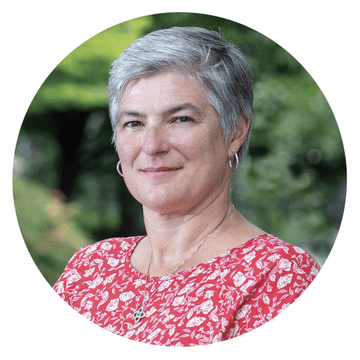
Kristin McSwain
Chief of Policy and Research, City of Boston
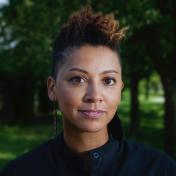
Karilyn Crockett
Professor of Urban History Public Policy & Planning, MIT

Janelle Nanos
Assistant Business Editor for News Innovation,Boston Globe
Panels
Session 1 (10:30AM – 12:00PM)
This panel explores how Boston youth navigate college and career pathways, highlighting strengths, challenges, and emerging opportunities. It examines cross-sector strategies to support persistence, workforce access, and more equitable outcomes.
Moderator: Heang Ly
“Coming From the Place that I Do…Pushes Me Harder:” How Background-Specific Strengths and Resilience Inform the College Experience of Public Housing Residents
Presenter: Lindsay Lanteri, Boston College
Co-Authors: Jenna Strauss and Rebekah Levine Coley, Boston College; Tara Mandalaywala, Boston University; Samantha Teixeira, Lacee Satcher, and Mariam Abdelhalim, Boston College
College completion is an important tool for social and economic mobility, but low-income students face barriers to attending and persisting in college and are less likely to complete college than higher-income peers. To understand the cultural capital resources that low-income college-going youth leverage, we used a strengths-based framework to examine how identity and social background inform Boston public housing youths’: (1) motivation to attend college, (2) development of a sense of belonging in college, and (3) persistence through college.
We conducted micro focus groups and in-depth interviews with a racially diverse sample of ten current college students (n=7) and recent graduates (n=3) who had grown up in the same Boston public housing development yet attended various universities. We used thematic analysis to analyze data from our semi-structured protocol, which elicited themes around youths’ motivations for attending college, support systems, experiences of exclusion and inclusion in higher education, and perceptions of strengths gained from growing up in the public housing development.
Participants reported being highly driven to attend and succeed in college, motivated by aspirations of social mobility and a desire to honor family members’ sacrifices. We found participants capitalized on background-specific strengths to persist in college and find spaces of belonging on campus. These strengths included resilience, flexibility, heightened social awareness, and maturity. Most participated in formal college transition programs through their institutions or Boston-based community organizations which acclimated youth to college and created community spaces on campus. Participants described finding belonging in college primarily through such programs and racial-ethnic affinity spaces where they developed friendships with peers from similar backgrounds.
Our findings suggest that youth growing up in public housing may come to college highly motivated, with a wealth of strengths that can be leveraged to support college completion. Nevertheless, the financial burden of higher education was an ever-present concern. With a wealth of local university resources, Boston is well positioned to lead a multi-systems effort between the public housing authority, universities, and community organizations to expand college transition programs and other supports for vulnerable students navigating the college-going experience.
Mapping Creative Sector Job Opportunities for Boston’s Youth
Presenter: LaVonia Montouté, EdVestors
Co-Authors: Ruth Mercado-Zizzo, EdVestors; Brittney Nichols, Nichols St. Consulting; Julia Gittleman, Mendelsohn, Gittleman, & Associates
EdVestors will share findings from an Arts Career Connected Learning Data Work Group to strengthen pathways from arts education to careers. This cross-sector group brought together education, workforce, philanthropy, and cultural partners to : (1) demonstrate that viable, living-wage careers exist across the creative ecosystem, and (2) ensure that Boston youth, from middle school through age 24, have equitable access to information, training, and experiences that lead to those careers. Work group accomplishments include a shared definition of the creative ecosystem, a preliminary landscape analysis of labor market data and youth-facing training opportunities within the creative ecosystem, and findings that will inform next steps to improve data systems, early exposure, mentorship, and cross-sector collaboration to build sustainable and equitable arts career-connected learning pathways for students.
Trends in College Enrollment, Persistence, and Completion of BPS Graduates: Implications for Citywide Career Pathway Planning and College Completion Initiatives
Presenter: Joseph McLaughlin, Boston Private Industry Council/MassHire Boston Workforce Board
Co-Authors: Antoniya Marinova, The Boston Foundation; Erik Barajas, Boston Private Industry Council/MassHire Boston Workforce Board
To help prepare and advise BPS students and recent graduates for a changing postsecondary education and training environment, it is important to have current information on their college enrollment, persistence, and completion experiences. In partnership with the Boston Public Schools (BPS), the Boston Private Industry Council (PIC) and the former Center for Labor Market Studies (CLMS) at Northeastern University began using the National Student Clearinghouse (NSC) to track the college enrollment and completion experiences of the BPS Class of 2000. The first study released by The Boston Foundation (TBF) in 2008, Getting to the Finish Line, found that only 35% of the college enrollees from the BPS Class of 2000 had completed a degree within seven years of high school. The findings led to the launch of the Success Boston initiative and the goals to increase the college completion rate for the BPS Class of 2009 to 52% and double the rate to 70% for the Class of 2011 and beyond. This presentation will share updated findings from a forthcoming 2026 report on the college enrollment, persistence, and completion outcomes for BPS graduates from the Classes of 2015-2024. This analysis will include six-year college completion rates for the Classes of 2018 and 2019, the classes that had just started college prior to the COVID-19 pandemic closures and shift to remote learning. The implications of the findings for education and workforce development policy and practice will be discussed.
Integrating High School Interns into University Research: The Boston Youth Advisory Research Council (BYARC)
Presenter: Cara Mattaliano, Boston University
Co-Authors: Mary Churchill, Boston University; Josh Bruno, Boston Private Industry Council (PIC)
Last summer, the Boston Private Industry Council (PIC) prepared and matched nearly 1,050 Boston Public Schools (BPS) students with paid internships and jobs with private sector and community-based organizations across Greater Boston. Despite this scale, institutions of higher education (IHEs) hosted only 20 PIC interns.
In this presentation, the Boston University Wheelock Strategic Partnerships & Community Engagement (SPACE) Office will share a scalable strategy to increase IHE participation in the PIC internship program by embedding interns directly into faculty research projects.
The Boston Youth Advisory Research Council (BYARC), which will be piloted by the SPACE Office in Summer 2027, enables faculty, postdoctoral scholars, and doctoral students to include a dedicated line for high school research interns within grant proposals and research budgets. This approach integrates structured youth engagement into the research lifecycle, reduces financial barriers, and ensures students participate in meaningful, supervised research experiences while providing departments with predictable capacity for summer programming. Researchers can tailor engagement, from one day per week to full-time summer placements, based on project capacity and available funding.
Embedding Boston youth into research creates a predictable, high-quality internship pathway that benefits all stakeholders. Labs gain dedicated capacity, while researchers gain direct access to authentic perspectives from high school students whose experiences in Boston’s schools and communities can strengthen research design, interpretation, and impact. Faculty, postdocs, and doctoral students benefit from engaged research partners and meaningful mentorship opportunities, and Boston youth gain hands-on experience that deepens learning and offers insight into the inner workings of university research.
This model advances a more equitable, collaborative, and impactful research ecosystem while creating sustainable pathways for Boston youth engagement on university campuses.
This panel explores innovative approaches to civic participation, highlighting youth-led research, community-driven data engagement, digital inclusion, and grassroots leadership. It examines how diverse communities access and act on information to drive more equitable and inclusive civic life.
Moderator: Josiehanna Colon
Student Change-makers: Research-Driven and Youth-Led Civic Projects in Greater Boston
Presenter: Amanda Chung, Rennie Center for Education Research & Policy
Co-Author: Chau Ngo, Rennie Center for Education Research & Policy
Student Changemakers is a youth-led, data-driven civic research initiative developed by the Rennie Center for Education Research & Policy in partnership with American Student Assistance and Massachusetts public schools. Grounded in Youth Participatory Action Research (YPAR), the program positions middle and high school students as researchers and change agents who investigate real issues affecting their schools and communities—ranging from housing insecurity and food access to school climate, substance use prevention, and access to mental health supports—and develop evidence-informed recommendations for action.
Over the past three years, Student Changemakers has been implemented across multiple Greater Boston–area schools, engaging students from historically marginalized communities alongside educators and community partners. Students collect and analyze both qualitative and quantitative data, including surveys, interviews, and observations, and present their findings to authentic audiences such as school leaders, community organizations, and local policymakers. This work blends lived experience with research tools, elevating youth expertise while building durable skills in data analysis, collaboration, and civic engagement.
Program evaluation data demonstrate meaningful impacts. Pre- and post-survey results show a 12% increase in students’ confidence across core research and communication skills, and a 36% increase in the proportion of students who report feeling empowered to influence decisions within their schools. Qualitative data from student reflections and educator feedback further illustrate how participatory research fosters belonging, leadership, and sustained engagement, particularly for students who have not traditionally experienced school as relevant or empowering.
The implications for Greater Boston are twofold. First, Student Changemakers offers a replicable model for civic research collaborations that authentically center community voice, specifically youth voice, in addressing pressing community challenges such as housing affordability, public health, and educational equity. Second, the initiative highlights how cross-sector partnerships between research organizations, schools, funders, and community stakeholders can translate data into action, with several student projects leading to ongoing community initiatives beyond the classroom.
This presentation will share insights from program data, lessons learned from collaborative implementation, and practical considerations for designing civic research partnerships that advance equity, youth-led civics projects, and collective impact in the Greater Boston region.
Connected at Every Age: Advancing Digital Literacy & Hybrid Access for Older Adults in Boston
Presenter: James Fuccione, Massachusetts Healthy Aging Collaborative
Co-Authors: Molly Evans, MA Executive Office of Aging & Independence; Jessica Moss, Needham Council on Aging; Isabella Santos, MA Executive Office of Aging & Independence, American Connection Corps
In an increasingly digital society, access to technology is no longer optional; it is foundational to participation in health care, public services, and community life. Yet many older adults remain on the wrong side of the digital divide, facing barriers not only to technology itself, but to the information, services, and social connections that depend on it. In Greater Boston, this gap has direct implications for civic engagement, equity, and healthy aging.
In 2024 and 2025, the Massachusetts Executive Office of Aging & Independence (AGE) partnered with municipal Councils on Aging (COAs) to expand digital literacy and hybrid programming through a statewide grant initiative funded by the American Rescue Plan. Of the 45 COA grantees, 13 were located in Greater Boston, collectively serving more than 12,000 older adults through investments in staffing, devices, and community-based programming.
Rather than implementing a single model, AGE supported locally driven approaches that responded to community-specific needs. In Needham, for example, grant funds supported tablet distribution paired with intergenerational learning, where local high school students led drop-in office hours to help older adults build digital skills and confidence, strengthening access to technology, social connection, and community engagement.
Across communities, several consistent insights emerged. Access to devices alone is insufficient; ongoing, trusted support is critical to sustained use. Local institutions such as COAs serve as essential entry points, particularly for older adults hesitant to engage with new technologies. Flexible, community-driven models are also key to advancing equity, enabling programs to address linguistic, cultural, and socioeconomic barriers.
These findings position digital literacy not as a discrete service, but as civic infrastructure, enabling access to information, strengthening connection, and expanding opportunities for participation. Bridging the digital divide among older adults is not only a matter of access, but a pathway to more connected, equitable, and participatory communities.
What Happens When Communities Embody Climate Data? Testing Civic Data Theatre in Greater Boston
Presenter: Dani Snyder-Young, Northeastern University Center for Design, Data Theatre Collaborative
Co-Authors: Michael Arnold Mages, Moira Zellner, and Jonathan Carr, Northeastern University, Data Theatre Collaborative
What if instead of reading charts, you could feel climate data in your body? Civic Data Theatre explores exactly that—and last year we tested it in Greater Boston. Partnering with Hyde Square Task Force, La Colaborativa, and the City of Boston’s Department of Environment, we ran workshops helping participants of all ages physically embody data from Boston’s Climate Action Plan. Our evaluation found two things: people genuinely liked it, and it made climate issues feel more personal and approachable—without requiring any technical background. Those workshop insights then shaped a fully devised theatre piece created with Northeastern students—running for 10 performances and drawing hundreds of audience members, including high schoolers and community members from the original workshops. This cross-sector model—city government, community organizations, university, and residents—offers a replicable approach to civic data engagement. We’re actively looking for new communities and partners to play with data.
A Collaborative Action Research Initiative on Women of Color Grassroots Leaders in Greater Boston
Presenter: Adanna Kalejaye, Center for Women in Politics and Public Policy, McCormack Graduate School, UMass Boston
Co-Authors: Laurie Nsiah-Jefferson, Center for Women in Politics and Public Policy; Jessica Martin, Independent Research Consultant; Amrith Fernandes Prabhu, Center for Women in Politics and Public Policy; Sneha Gantla, Boston Women’s Fund; Christa Kelleher, Center for Women in Politics and Public Policy; Aisha Woodruff, Boston Women’s Fund
As a collaborative action research project between the Boston Women’s Fund (BWF) and UMass Boston’s Center for Women in Politics and Public Policy (CWPPP), this project took an intersectional, anti-racist approach to examining systems and structures shaping grassroots leaders, their communities, and the nonprofit sector in Greater Boston. The leaders of small, grassroots organizations primarily serving women and girls of color are frequently invisible in large datasets, and quantitative data can only tell part of the story. Therefore, this collaboration centered lived experiences; the methodological approach combined qualitative data collected from focus groups and interviews with quantitative research that provided a snapshot on the state of BIPOC women-led grassroots organizations in Greater Boston.
The focus groups and interviews reflected first-hand experiences of BIPOC women grassroots leaders. We learned about unmet community needs, organizational growth and change since 2020, leaders’ personal and professional well-being, their relationships with funders, and the systemic challenges shaping their work. Leaders also shared the burnout and emotional challenges they have faced due to prolonged inequities, as well as the sources of what sustains their work as they navigate persistent challenges. Among key findings is that women and gender-expansive leaders of color carry a triple burden: they live the daily realities of racial and gender inequities, lead work to address those inequities, and do so with far fewer resources than their white and male peers. Their lack of visibility, and exclusion from traditional philanthropic models, create additional inequities and reinforce power dynamics.
Slated for release in March 2026, the report offers a first-of-its-kind, 360 view of Greater Boston’s BIPOC women and gender-expansive grassroots leaders—and how standard philanthropic practices often reproduce the very inequities the sector claims to solve. Calling for a shift in philanthropic practices to better support and more equitably fund women leaders of color within Greater Boston’s vital grassroots ecosystem, BWF and CWPPP provide essential action steps to transform the current ecosystem. It offers philanthropy a roadmap for showing up differently: staying when the spotlight fades, funding leadership that already exists, building trust, and resourcing change that lasts.
Presenter: Xiaofei Qin, Boston University
Co-Authors: Anne Short Gianotti, Boston University; Abigail Sullivan, Boston University & US Environmental Protection Agency (EPA)
Extreme heat is emerging as one of the most consequential climate risks confronting cities in Greater Boston, with profound implications for public health and equity. Trends in civil society and cities’ increased prioritization of heat planning have now created a unique and urgent window of opportunity for transformations in heat governance. However, many city governments continue to face challenges such as limited staff capacity and funding, inadequate data, and competing projects, and these constraints are particularly pronounced in smaller municipalities in Greater Boston. In this context, partnerships between cities and non-governmental organizations (NGOs) are emerging as a practical and innovative way to design effective climate responses and support policy implementation. This research moves beyond a city-centered perspective to examine the role of NGOs in heat governance, especially in addressing environmental justice concerns. Using 20 expert interviews with NGO staff and a systematic content analysis of organizational websites, the study analyzes how NGOs respond to, complement, and/or reshape municipal responses to heat. This research offers several key contributions and implications for heat governance in Greater Boston. First, it provides concrete, grounded evidence of how NGOs advance equitable heat governance, contributing to a more complete understanding of the region’s climate governance network. Second, it reveals NGOs’ partnership and other relationships with federal, state, and city governments, which can inform collaborative models that integrate resources and capacities across sectors to generate greater collective impact. Third, by identifying the opportunities and constraints NGOs face in driving system-level change, the study offers actionable insights into how non-governmental efforts can be more effectively supported and leveraged to consistently advance justice in future heat governance across Greater Boston.
Extreme Heat at Family Childcare Settings: A Pilot Monitoring Study in Boston, Massachusetts
Presenter: Beverly Ge, Department of Environmental Health, Boston University School of Public Health
Co-Authors: Pilar Botana Martinez and Yirong Yuan, Department of Environmental Health, Boston University School of Public Health; Paula Gaviria Villareal, Office of Early Childhood, City of Boston; M. Patricia Fabian, Department of Environmental Health, Boston University School of Public Health and Institute for Global Sustainability, Boston University
Many of the 37,000 children ages 0 to 5 in Boston regularly spend time at childcare facilities outside their homes, where they learn, sleep, and play. 40% of Boston’s licensed childcare providers are located in urban heat islands. Extreme heat exposure in children can cause heat-related illnesses and negatively impact physical activity levels, sleep, behavior, and learning. As temperatures rise worldwide, the 75% of Boston childcare providers that operate out of aging properties–the majority of which lack central air conditioning–face increasing risks from extreme heat. Family childcare (FCC) centers are particularly vulnerable, as they are typically smaller, lower-cost, and less well-resourced than center-based programs. In this work, Boston University (BU) researchers monitored heat and relative humidity in 18 Boston FCC centers during summer 2025 and 10 outdoor play sites, including public playgrounds and private backyards and driveways. Our work was conducted in partnership with the City of Boston Office of Early Childhood (OEC) to help inform a pilot Heat Action Plan, and prioritize cooling investments for FCC centers. We found that on the hottest day of the summer, maximum indoor temperatures ranged from 74ºF-88ºF. As expected, FCCs with air conditioning maintained comfortable temperatures the majority of the time, followed by FCCs with window air conditioning and FCCs without AC. On hot days, even FCCs with AC spent time above comfortable temperatures, while outdoor play areas reached Extreme Caution heat index thresholds 72%-88% of the time. Shade on the asphalt driveway reduced temperatures by 10ºF. Our results underscore the importance of monitoring temperatures and implementing targeted cooling interventions at FCC centers, where both indoor and outdoor play settings can overheat. Temperature monitoring data can help OEC advocate for the allocation and prioritization of resources to help FCC providers effectively protect themselves and the children in their care against extreme heat. These data also provide a baseline with which to evaluate future interventions, ranging from building retrofits to outdoor shade structures.
B-COOL: Evaluation of Shade Interventions on Heat Mitigation in Hot Neighborhoods of Boston
Presenter: Jonathan Lee, Boston University School of Public Health
Co-Authors: Isabella Gambill, A Better City; Zoe Davis, City of Boston Office of Climate Resilience; Julia Howard, The Boston Foundation; M. Patricia Fabian, Boston University School of Public Health and Institute for Global Sustainability, Boston University
In the summer of 2025, the B-COOL research collaboration investigated the benefits of various shade interventions on heat mitigation in public and private outdoor spaces around Boston. The B-COOL project is a multi-sector (non-profit, academic, government) research effort in collaboration with partners from Boston University School of Public Health, A Better City, the City of Boston’s Office of Climate Resilience, and the Boston Foundation. The project broadly aims to answer gaps in knowledge of extreme heat in Boston, identify potential solutions, and disseminate research findings by making them actionable to policymakers and decision-makers. Last summer, the research team conducted five field sessions of heat monitoring in multiple outdoor spaces to document the temperature benefits of shade structures, using state-of-the-art sensor technology that allowed us to directly measure the impact of the shade structures on Wet Bulb Globe Temperature, a physiologically-relevant measure of heat. In this presentation, we will report the quantitative results from the field sessions that demonstrate the degree of impact that shade structures can have on mitigating heat during hot days. In addition, we will highlight the various stakeholders and partners who made this research possible, including those who allowed us to use their space for research such as the Franklin Park Zoo, Boston Chinatown Neighborhood Center and more, and why they were interested in participating as well as how the results from this study could be useful as they tackle issues of heat resilience from their unique vantage points. The results from this research can be used by public and private institutions to advocate for investments on cooling infrastructure as well as guide future policy initiatives for heat resilience and mitigation where they matter most.
Feeling the Heat: Mitigating Heat Exposure
Presenter: Rose McCarron, Manager of Project Analysis and Applications, Boston Region Metropolitan Planning Organization
Co-Author: Brendan Kearney, Executive Director, WalkMassachusetts; Rounaq Basu, Boston Region Metropolitan Planning Organization
Extreme heat can make walking, biking, and rolling uncomfortable, dangerous, or even life-threatening. To better understand how people experience heat in outdoor environments, the Boston Region Metropolitan Planning Organization (MPO) in partnership with Georgia Institute of Technology (Georgia Tech) developed a new fine-grain regional dataset (1 meter resolution) that estimates perceived thermal comfort across the Boston metro region on hot summer days. The dataset is based on the Universal Thermal Climate Index (UTCI), which reflects how the human body experiences heat by integrating environmental factors, such as air temperature, humidity, wind speed, shade, and built environment materials, with physiological responses. Expressed in degrees Celsius, UTCI functions as a more spatially and temporally precise “feels like” temperature than those commonly reported in weather applications. The MPO combined the UTCI dataset with high-resolution mobility data to identify the heat risk that people walking, biking, and rolling are exposed to as they travel throughout the region. This work was conducted through a two-year Municipal Vulnerability Preparedness (MVP) Action Grant initiated in Summer 2024. During the second year, the MPO applied the UTCI dataset in combination with mobility data to identify priority locations for intervention. At these sites, the MPO in partnership with WalkMassachusetts, as well as other active transportation advocacy organizations, conducted walk-bike audits in the Cities Chelsea, Everett, Revere, and Framingham to ground truth the data and incorporate community feedback. This process informed the selection of three locations where heat-mitigating infrastructure is being installed to improve comfort and safety for people walking, biking, and rolling within the region.
This panel examines the evolving challenges facing the social safety net, including shifts in federal funding, nonprofit capacity, and economic instability for vulnerable communities. It highlights data-driven insights and local innovations aimed at strengthening support systems and promoting greater economic security.
Moderator: Mercy Robinson, South Boston en Accion
Leveraging Data-Driven Benchmarking to Strengthen Greater Boston’s Social Sector Impact: An Analysis of Local Nonprofits’ Government Grant Dependence
Presenter: Matt Leger, Senior Research Manager at International Data Corporation (IDC), Founder of Pharos Intelligence
Co-Authors: Curt Savoie, Pharos Intelligence; Ruthbea Yesner, IDC & Leading Cities; Kyle Harper, Anthology
Non-profits and foundations serve as a vital part of the community, often bridging the gap between government and people in need. But too often we lack a holistic view of the non-profit ecosystem in a region to see funding and service gaps or, in times like these, serious risks to government funded funds. We will examine the Boston regional nonprofit ecosystem, present data, and outline the potential risk to communities if funding priorities continue to shift. This highlights opportunities for local foundations to target their giving in order to create a more resilient Boston region.
The Dignity Dividend: Lessons Learned from Guaranteed Income Pilots in Massachusetts.
Presenters: Kelly Harrington, Boston Indicators; Rich Sheward, Children’s HealthWatch
Co-Authors: Luc Schuster, Boston Indicators; Charlotte Bruce and Riley Morris, Children’s HealthWatch
This presentation will share key insights from The Dignity Dividend: Lessons Learned from Guaranteed Income Pilots in Massachusetts, a 2025 report from Boston Indicators and Children’s HealthWatch. The report synthesizes evidence on guaranteed income (GI) programs across the Commonwealth and situates Massachusetts’ experience within the broader national research base. Massachusetts is among the richest states in the world’s richest country, yet far too many residents struggle to make ends meet amid low wages and soaring cost of living. In recent years, spurred in part by federal pandemic relief, cities and organizations across the state have responded with a surge of local experimentation in GI.
This presentation will take stock of what we have learned so far from this growing GI ecosystem. Drawing on a review of the national evidence, a synthesis of Massachusetts-based programs, and conversations with program administrators, we examine the impact of GI and what its limitations reveal about the broader policy landscape. We aim to contribute to conversations about how best to ensure every household in Massachusetts has the resources, security, and dignity they need not just to get by, but to thrive.
Community Building and Data as Tools in Economic Stability for Residents in Affordable Housing
Presenter: Gosia Tomaszewska, The Community Builders, Inc.
Co-Author: Katie Carroll, The Community Builders, Inc.
Residents of affordable housing face growing challenges, including low incomes, rising costs, mental health needs, language barriers, and increasing instability in federal supports like SNAP. As the social safety net weakens, local responses are becoming more essential. In response to these gaps, The Community Builders (TCB, a national nonprofit with strong roots in Boston) utilizes a place-based approach that combines community building and data to support residents’ economic stability. This combination creates a responsive, effective strategy—helping fill gaps left by the erosion of the federal social safety net and supporting residents in achieving their goals.
Session 2 (1:30PM – 3:00PM)
This panel explores how AI can be leveraged to advance community interests, highlighting applications in public engagement. It examines how community-centered approaches can make AI more accessible and responsive to local needs.
Moderator: Sabrina Mansur
Topic Modeling in Practice – From Resident Feedback to Service Design
Presenter: Bianca Lepe, Data Scientist, City of Boston
Co-Author: Joey Headley, Analyst, City of Boston
How can a small team meaningfully engage with 1,000+ participatory budgeting submissions or extract insights from over 250,000+ permit application descriptions? The City of Boston’s Analytics Team collaborated with departments across city government to apply topic modeling—a machine learning technique that identifies themes across large text datasets—to transform overwhelming volumes of resident feedback into concrete service improvements.
This cross-departmental collaboration addressed a critical capacity challenge facing small municipal teams: the growing gap between the volume of resident input we collect and our ability to act on it. Through two case studies, we demonstrate how NLP tools can preserve the richness of qualitative feedback while making it actionable:
Participatory Budgeting: We categorized 1,000+ resident submissions and validated discovered themes through community forums, ensuring our technical analysis aligned with resident intent and enabling staff to respond to patterns rather than isolated comments.
Permit Website Redesign: We analyzed 250,000+ permit descriptions to reveal the overarching project intent behind related but often unlinked permit applications, such as identifying connections between electrical and plumbing to signify intent to build or repair a kitchen, which enabled us to restructure our website around commonly referenced projects instead of regulatory categories.
This work demonstrates how internal analytics capacity can democratize advanced tools for service departments, making sophisticated techniques accessible across city government without requiring each department to have dedicated data science staff. The approach is transferable to other text-heavy processes like public comment periods, 311 requests, or survey responses—unlocking previously inaccessible stores of resident voice to advance equity and responsiveness across Greater Boston.
On The Porch: Co-creating Generative Chat Around Community Needs, Perspectives, and Assets
Presenter: Eric Gordon, Boston University
Co-Authors: Christopher Le Dantec, Northeastern University; Maridena Rojas, The Boston Project Ministries
The promise of AI tools in public administration has predominantly centered on increasing efficiencies in service delivery via new, more robust, swifter forms of data analysis and operational support (Kleiman, et. al, 2025). Meanwhile, community organizations often experience uneven access to these technologies, raising questions about equity, power, and the role of AI in civic life. Our project examines how AI tools might support novel modes of community sense making, how communities advocate with data, and how they collaborate with municipalities. To do this, we co-designed a series of experimental prototypes in partnership with the Boston Project Ministries and community advocates and residents from the Talbot-Norfolk Triangle civic group in South Dorchester. These prototypes use generative chat as an interface to city data and local knowledge about the area in an attempt to support natural language-based interactions for community sense- and decision-making. The aim of the project is to understand how a neighborhood-level AI assistant is used in a local community, how the community wants to maintain and govern it, and what its implications are for interfacing with local governance.
At the center of the project is a focus on the lived experiences of public safety within the TNT community, and the perceptions and narratives of public safety presented by the city government. Rather than turn to rote models of prediction, we collectively posed questions with residents and community leaders to understand how the affordances of generative chat interfaces can be leveraged to support advocacy and community representation. In order to effectively support advocacy, the tool needs to provide reliable information for coordination and collaboration within and across active community based organizations; supporting community representation demands a vernacular awareness of local history, relationships to neighboring regions of the city, and the implications of contemporary public policy. Underpinning all of this is an assets-based orientation that seeks to foreground the resources, programming, and initiatives already present in the neighborhood.
Our presentation will focus on describing the complex use cases we have begun to define and on the co-design approach we have used in partnering across academic institutions, community-based organizations, and local residents.
Surfacing Racially Restrictive Housing Covenants in MA: AI, Archives, and Racial Justice
Presenter: Nox Bei, Massachusetts Institute of Technology
Co-Authors: Justin Steil, Massachusetts Institute of Technology; Wonyoung So, University of Michigan; Catherine D’Ignazio, Massachusetts Institute of Technology
The Massachusetts Covenants Project is a collaborative effort between MIT, MassHousing, and the Boston Public Library’s Leventhal Map & Education Center to uncover racially restrictive covenants embedded in historical property deeds across the Commonwealth. These private legal instruments barred particular groups, namely Black residents, people of color, religious minorities, and immigrants, from homeownership, shaping patterns of segregation and inequality that remain visible across Greater Boston today. While redlining maps and exclusionary zoning are well-documented channels of historic housing discrimination, restrictive covenants have been subject to less empirical research, despite their role in constructing the legal architecture of racial exclusion and deepening racial wealth gaps. Our team has developed an analytical pipeline that employs machine learning and large language models to transcribe historical property deeds and detect restrictive covenant language across millions of deed records in the Commonwealth, transforming public but inaccessible archival documents into a novel dataset.
We will highlight early findings from our pilot counties (Northern Middlesex, Norfolk, and Worcester counties), including evidence that racially restrictive covenants in Massachusetts began earlier than commonly assumed and frequently intertwined anti-Black and anti-immigrant exclusion. We will also share our intended next phase of work: adapting our deed review platform for public participation through community workshops with residents, educators, and housing advocates.
Building AI Preparedness through Intergenerational Dialogue, Experiential Learning and Cross-Sector Collaborations
Presenter: Sulagna (Dia) Ghosh, Joint Family
As generative AI reshapes education, work, public services, and civic life, preparedness and understanding of risks remains uneven, particularly in communities most affected by these shifts – older adults, youth, creative professionals, immigrants, and low-income residents. Joint Family, a Cambridge-based social initiative, is responding to this urgent gap through an unconventional yet effective model grounded in intergenerational, cross-disciplinary dialogue, as a first step toward building trust, resilience, and collective agency around AI.
Since 2024, Joint Family has convened over 35+ community-centered sessions reaching more than 400 participants across Greater Boston. By creating inclusive learning spaces where technologists, educators, creatives, decision makers and community members can engage, these workshops provide a unique opportunity to integrate technical expertise with lived experience. Through interactive, hands-on programming, participants connect, learn and deliberate on real world implications of AI, including deep fake scams, cyberbullying, algorithmic bias, job disruption, environmental harms, and the mental health impacts of digital companions. Our programs empower attendees to critically and thoughtfully engage with the ethical challenges, benefits and risks posed by this rapidly evolving technology.
Community volunteers and cross-sector partnerships are integral to this work. Through a multi-semester collaboration with Northeastern University’s Community Engaged Teaching and Research program, students in ENGW 3314 & JRNL 3460, have translated insights from our workshops into accessible multimedia educational resources tailored for our intergenerational audiences. Similarly, we have partnered with the Racial Justice and Tech Policy program (RJxTP) at Brandeis University and MIT’s Constructive Communication Center to bring expertise from academia and tech to public conversations on AI. Such partnerships link emerging technology, creativity, experiential learning, and civic engagement, generating actionable insights into how communities, experts and students can learn with and about generative AI. In parallel, Joint Family is collaborating with multiple elder-care agencies and non-profit organizations in Greater Boston to co-develop curricula for staff and the communities they serve, focused on digital safety, responsible AI frameworks and ways to leverage technology to strengthen social connection.
This presentation will share data-driven findings, community insights, collaborative methods, and practical tools for designing inclusive and holistic AI literacy initiatives, offering a replicable civic engagement model for advancing equity, trust, and AI preparedness in Greater Boston and beyond.
This panel features multiple research-driven efforts to understand the region’s growing affordable housing crisis, from mapping neighborhood-level gaps to reimagining public institutions and building community-powered solutions.
Moderator: Amy Dain
Retooling Redevelopment Authorities for Social Housing Development in Greater Boston
Presenter: Becca Heilman, MIT Department of Urban Studies and Planning; Harvard Joint Center for Housing Studies
Co-Authors: Susanne Schindler and Chris Herbert, Harvard Joint Center for Housing Studies
In light of worsening housing affordability and a mismatch of housing types and household needs, proposals are emerging across the United States for a reinvigorated role for public development of “social housing.” While new programs like Chicago’s Residential Investment Corporation or Seattle Social Housing differ in detail, all proposals demand the creation of permanently non-market, mixed-income housing and a more direct role for the public sector. The last point has led to debates around whether new entities are needed, or whether existing players—from public housing authorities to nonprofit community development corporations—have the expertise to plan, develop, finance, and operate mixed-income housing.
In contrast to these new and existing actors, redevelopment authorities (RAs) have to date not been considered possible actors in the provision of social housing. This may be due to an often-negative perception of what are also known as “urban renewal agencies.” Created in the postwar years to address urban “blight” through large-scale clearance, RAs promoted the demolition of entire neighborhoods in the name of economic development. Often, redevelopment occurred to the detriment of displaced residents and with little priority given to creating new low-income housing. On the backdrop of past overreach and the end of federal funding for urban renewal, RAs across the country have been abolished, lie dormant, or have been reorganized as part of a city department. Nonetheless, RAs in Massachusetts continue to facilitate development, including of housing. Exemption from the state’s 30B procurement rules—not eminent domain—constitutes one of RAs’ most consequential powers.
The paper provides an overview of how Massachusetts municipalities are using their RAs in light of twenty-first century challenges, especially housing affordability. A closer analysis of recent initiatives in Boston, Cambridge, Lynn, and Somerville illuminates opportunities and challenges, as well as needed changes at the state level, if RAs are to be retooled and supported as key players in social housing development.
Data Opens Doors: Measuring the 441,000-Unit Gap and Building the Future of Research with the Data Exchange Network (DEN)
Presenter: Emma Rial, Housing Navigator Massachusetts
Co-Authors: Housing Navigator Massachusetts and Metropolitan Area Planning Council (MAPC)
In April 2025, Housing Navigator Massachusetts (HNMI) and the Metropolitan Area Planning Council (MAPC) published “Data Opens Doors: Measuring the Affordable Housing Gap. ” This collaboration leveraged HNMI’s inventory of more than 218,000 income-restricted units and MAPC’s demographic modeling to conduct the first rigorous “match” analysis between affordable housing supply and household need in the Commonwealth.
The results revealed a 441,000-unit gap, with current supply meeting only 32% of low-income renter needs. The analysis further identified where the gap is most acute: 81% of very low-income households (30–50% AMI) lack access to restricted units, and in a quarter of Massachusetts municipalities, over 75% of affordable stock is age-restricted, creating a severe shortage of units for families and non-elderly small households.
This research moves Greater Boston’s housing conversation from anecdotal to evidence-based. To make these findings actionable, HNMI built an Interactive Public Dashboard that allows policymakers, planners, and advocates to drill into state and municipal income-restricted housing by unit type, age restrictions, and rent types. Looking ahead, HNMI is developing the Data Exchange Network (DEN), a first-of-its-kind infrastructure that will evolve this resource from an annual effort into a near real-time data commons for the region.
Mapping the Affordable Housing Gap in Lynn, Massachusetts
Presenter: Shivaraj Thapa, Salem State University
Housing affordability is a major challenge in the United States, yet commonly used citywide statistics often fail to show where housing shortages actually occur. This study examines the spatial distribution of affordable housing gaps in Lynn, Massachusetts, a gateway City experiencing rising housing costs, limited income, and growing housing demand. The study integrates data from American Community Survey (ACS), Area Median Income (AMI), and Subsidized Housing Inventory (SHI) to examine housing conditions at the census-tract level using a GIS-based demand-supply framework. Housing need was measured through the concentration of income-eligible households (≤80% AMI) and housing cost burden, while affordable housing supply is represented by SHI units. These indicators are mapped and analyzed spatially to identify patterns of mismatch between low-income housing demand and affordable housing availability. Hot spot analysis is applied to detect statistically significant areas with especially high housing stress across the city.
Results reveal a significant citywide affordability deficit. Although Lynn meets the state’s 10% SHI requirement, there is a huge deficit to access to affordable housing. The spatial analysis shows intra-urban inequality, with low-income households concentrated primarily in southern and southeastern census tracts, while subsidized housing is unevenly clustered in central areas. Hot spot analysis further identifies localized clusters characterized by high rent burden, high low-income concentration, and limited affordable housing supply, confirming that housing stress is spatially concentrated rather than uniformly distributed. This study highlights the limitations of compliance-based and citywide affordability metrics and emphasizes the need for neighborhood-scale, place-based housing strategies and targeted intervention in high-need areas.
This panel explores how communities are taking the lead in shaping research that reflects their lived experiences by turning data and narratives into tools for real change.
Moderator: Patricia Krueger-Henney; Tara Gully
Right-Sized Rigor, Real-Time Use: Principles for Applied Civic Research
Presenter: Keri-Nicole Dillman, Independent Learning & Evaluation Consultant
Co-Authors: Allison Barron, Principal, Allison Barron Consulting; Hadaryah T. Morgan and Gregg Ellenberg, Hildebrand Family Self-Help Center
What if the data and insight you already have could more directly shape real decisions in your work?
This session shares an approach to civic research drawn from practice and illustrated through a recent collaboration with Hildebrand Family Self-Help Center to design a new economic mobility program. By centering frontline staff and families, the work brought together administrative data, qualitative insights, and peer learning to support real-time decisions and secure new funding.
Participants will leave with two practical ideas: start with real decisions shaped by the people closest to the work, and right-size rigor to match those decisions. The session offers a grounded, usable way to design research that is timely, credible, and directly supports action in nonprofit and public sector settings.
Centering Community in Collaborative Civic Engagement Partnerships with Youth
Presenter: Joan Arches, Professor Emerita, College of Education & Human Development, University of Massachusetts Boston
Co-Authors: Queenette Santos, Vice President of Teen Programing Boys & Girls Club Dorchester; Sam Washington, formerly of the University of Massachusetts Boston; Brittany Gay, Arthur Jones, Takhiry Funches, and Paul Tabuteau, former youth participants
This presentation shares findings from oral history research on the long-term impact of a community-university partnership applying positive youth development, groupwork theories, civic engagement, and social action, a type of participatory action research. The youth involved in Hic Cup (Healthy Initiative Collaborative: Community University Partnership) were enrolled in a five-year after-school service-learning program in the community adjacent to the University of Massachusetts Boston twenty years ago.
Our research was based on archival products and notes going back twenty years, written materials, history, literature reviews, current reunion meetings, and individual interviews of former participants. It recognizes the essential role of community narratives in shaping change and building equitable partnerships. The messages on the impact of methodology, and personal narratives provide insights into the challenges and opportunities of community-university partnerships for youth civic engagement, social emotional development, and service-learning.
Hic Cup youth described the significant role it played in their lives. They felt their involvement kept them off the streets, provided opportunities to learn skills, gave them confidence, and allowed for valuable time with, and at, the University. They felt we cared, that they belonged, and they trusted us. When they were in Hic Cup, they were not being told what to do but encouraged to think and act. The University was not disappearing after a semester. They expressed positive thoughts about their collective capacity, over what they had accomplished together which included community mapping, creating surveys and proposals, presenting at conferences, sending letters to the Mayor and their own governing board, fundraising, and community service.
The insights from the youth, an adult community partner and former University student offer diverse perspectives about their fears, hopes, wants, and needs. Powerful lessons on trust, relationships, youth development, community, representation, and Community- University partnerships emerged. The implications extend to engaged, in-depth civic, social, and personal learning and a sense of agency for university students, faculty, and community youth as they learned skills and developed knowledge that took them from theory to action, and impact.
Tools for the partnerships include guides for developing authentic partnerships, Social Action with youth, training materials, and curriculum.
Justice Journeys: Lifting up Community Narratives and History
Presenter: Anisha Patil, Healthy Neighborhoods Study, Conservation Law Foundation
Co-Authors: Shinelle Kirk, Will Justice, Cliff Bennett, Eldric Abreu, Gail Rodrigues, Karen Alves, Arielle Anicet, Andrew Bassett, and Sebatian Joseph, Healthy Neighborhoods Study
Rapidly gentrifying neighborhoods and communities of color have rich histories that shape the community today. Yet the mainstream narratives of neighborhood, reinforced by traditional academic research, often take a deficit perspective that frames problems in communities as a result of individuals, rather than systemic barriers. As part of the Healthy Neighborhoods Study, a long term Participatory Action Research consortium, resident researchers of Roxbury, Brockton, and New Bedford, created walking and oral history tours. These tours, aptly named Justice Journeys, highlight community history and contextualize research and data about these neighborhoods.
The complete story of neighborhoods includes stories of community strength, culture, and organizing, alongside challenges that are a direct result of unjust systems that intentionally disinvest and exclude communities. Community residents are well positioned to share these stories and how they tie together history, culture, data, and research, in order to tell the full narrative of the community and enable action. These Justice Journeys tell the stories of systemic harm through a desire-based or asset-based framing that highlights the strengths, desires, and hopes of communities as both an important context for the challenges and a pathway for solutions.
The Roxbury Redlining Justice Journey is an oral history project that links data about the current context of housing affordability and displacement with history of policies and government actions. In the process, it highlights the history of community organizing and culture in Roxbury. The New Bedford Environmental Justice Journey is a walking tour and children’s picture book that shares research about the impact of pollution from industries and how they impact land and local wildlife, then encourages residents to share their lived experience, memories, and give input on the redevelopment on previously contaminated land. In Brockton, “The Hidden Side of the Spotlight” is a virtual tour of a city that usually receives negative news attention, but has a beautiful culture and music that is often overlooked.
Together, these Justice Journeys demonstrate how community knowledge of neighborhoods adds important context to mainstream research. These projects aim to reclaim the narrative and build community pride.
Insight-to-Impact: A Participatory Evaluation of Community Voice
Presenter: Abayomi Munro, Roxbury YMCA &
Boston University Clinical and Translational Science Institute
Co-Authors: Rebecca Lobb, Boston University Clinical and Translational Science Institute; Kareem Kim, Charles R. Drew University School of Medicine and Science
This work centers on a participatory evaluation of the Advancing Equity in Health Research Community Advisory Board (CAB), a body of 11 community leaders from Greater Boston. Established by the Boston University Clinical and Translational Science Institute (BU CTSI), the CAB provides strategic guidance to ensure health research is equitable and grounded in community needs. Between 2021–2023, seven research teams consulted with the CAB; our project investigated how these teams implemented CAB recommendations and the systemic facilitators and challenges they encountered.
Utilizing a participatory approach where CAB members co-designed the study and interpreted qualitative data, we found that community voice reshaped research in three key ways:
Protocol Evolution: Teams shifted designs to reduce barriers, such as implementing remote visits and home-based medication reconciliation.
Relational Infrastructure: Consultations prompted a shift from transactional recruitment to long-term community relationship building during the grant-planning phase.
Inclusive Communication: Investigators gained critical experience in communicating with diverse audiences, including a necessary acknowledgement of how structural racism and social context influence research participation.
We also identified multi-level factors influencing implementation, including project funding mechanism, federal regulations, and institutional coordination. Our findings demonstrate that when community members are positioned as thought partners, they hold academic medical systems accountable and improve research quality. This work offers a model for integrating community expertise into research governance and practice.
This panel features creative approaches to public procurement, exploring how cities and institutions are leveraging AI, human rights frameworks, data science, and cross-sector collaboration to make government purchasing smarter, faster, and more equitable.
Moderator: Mark Fine, MA OSD
Evaluating a Generative AI Procurement Assistant in the City of Boston
Presenter: Sebastian Olascoaga, City of Boston
Co-Authors: Santiago Garces, Lydia Chew, and Laura Melle, City of Boston; Simon Friis, Harvard Business School; Jeffrey Liebman, Harvard Kennedy School of Government; Mitch Weiss, Harvard Business School; Michael Evans, City of Boston; Elena Hoffnagle, Partners for Public Good
City governments depend on administrative processes that are necessary but slow, rule-bound, and often hard for staff who use them only occasionally. Procurement is a good example. Across departments, employees must draft specifications, choose sourcing methods, and prepare scopes of work that comply with local, state, and federal requirements. These tasks consume staff time and can slow program delivery. Because they are text-heavy, structured, and governed by established rules and templates, they are also a plausible setting in which generative AI might improve performance. Yet cities still have limited evidence on whether such tools can do so without compromising compliance or quality.
This project evaluates BidBot, a procurement assistant developed by the City of Boston, in a randomized field experiment involving City employees closely involved in procurement. BidBot is a retrieval-based generative AI tool grounded in a curated corpus of procurement rules, templates, and guidance. Access to BidBot led participants to complete the exercise more quickly, produce more developed procurement documents, and report greater confidence in the quality of their writing. It also increased the perceived usefulness of AI for speed, quality, and accuracy in procurement work.
For Greater Boston, the findings provide concrete evidence on where and how generative AI can support public-sector work. The results suggest that carefully scoped, domain-specific AI tools can reduce administrative burden, potentially accelerating program delivery while maintaining institutional safeguards. More broadly, the study offers a model for how cities can test emerging technologies using credible methods before making large-scale investments.
Smart Human Rights Cities: Advancing Human Rights Through Technology Procurement
Presenter: Aleja Jimenez Jaramilo, City of Boston Department of Information Technology
Co-Authors: Martha F. Davis, Northeastern University School of Law; Kimberly Lucas, Northeastern University College of Social Science and Humanities; Dan Jackson, NuLawLab – Northeastern University School of Law
Our Smart Human Rights Cities project tackles the old problem of centering community in public policy while navigating the trade-offs of a new technology frontier: AI and other technologies employed to create “smart cities.” This work confronts the false dichotomy between human rights and technology and advances the possibility for cities to employ a human rights framework through smart cities knowledge and understanding. We see smart city technology as an opportunity for municipalities to advance human rights principles, as opposed to approaching the problem as merely a question of restrictions that human rights norms place on smart city technology deployment. At the same time, we recognize that many smaller municipalities in the U.S. lack the knowledge and resources to rigorously assess the human rights implications of their smart city technology purchases. To address this gap, the current phase of our project is focused on developing technology procurement guidelines for small and mid-size regional municipalities that seek to promote human rights through their technology policy and implementation. This is imperative at a time when human and civil rights are under assault by our federal government and state and local governments must take greater responsibility to hold the line. By the time of the 2026 BARI conference, we expect to have our first iteration of the guidelines completed and hosted on a public website, through which we will invite conference participants to offer feedback.
Amazon Web Services (AWS)/Harvard Data Science Initiative (HDSI) Impact Computing Alliance (ICP) and Community Stakeholders
Presenter: Lawrence Weissbach, Harvard University/Harvard Data Science Initiative
The Amazon Web Services (AWS)/Harvard Data Science Initiative (HDSI) Impact Computing Project (ICP) alliance provides a structural framework for catalyzing the development and application of data science methodologies to achieve meaningful societal benefit. Through this unique and ambitious academic-industry framework, Harvard University data science researchers spanning many disciplines can pose new questions for exploration, supported by vast resources from AWS, including funding, high performance cloud computing, and commercial expertise. This collaboration strives to mitigate and solve complex human and environmental global crises brought on by accelerating and intensifying (i) climate and environmental ecosystem changes; (ii) food insecurity; (iii) human diseases (including environment-derived etiologies); and (iv) social determinants of health (i.e., societal and environmental conditions that affect health, functioning, and quality-of-life outcomes and risk). Importantly, some ICP studies involve close collaboration with stakeholders in local governments and communities to address urgent community-wide issues.
Moreover, a key goal of the ICP is to identify, support and facilitate real world tools, resources, and applications (i.e., outputs) that yield meaningful societal benefit (i.e., outcomes), including software-based artifacts such as algorithms, databases and AI-enhanced web-based portals, made available for broad open access.
Maximizing societal outcomes/real world benefit from the ICP should consist of raising awareness by socializing scholarly advances and software artifacts generated by the ICP to community stakeholders (including non-scientists, e.g., community leaders, social activists, health advocates, city government policy makers) who can work with specialists (e.g., non-governmental organizations, foundations, corporations, academic institutions) to implement ICP-derived scientific advances “on the ground”, particularly in urban settings. Ultimately, dissemination of ICP findings should not be restricted to scientific literature, but rather, be discussed on diverse platforms, including social media, to achieve the societal benefits imagined by the architects of the ICP.
Social impact can be described and defined by different metrics, but communities such as the Boston metropolitan area that contend with these urgent crises should be updated of any relevant ICP-generated advances in almost real time rather than years later. Implementing such a communication/implementation pipeline from computational lab to community residents (analogous to bench-to-bedside) may be a lofty goal, but worthy of investment.
Bring New Renewable Energy Projects Alive Through Collaboration and Perseverance
Presenter: Meghan Shaw, City of Cambridge
The City of Cambridge contracted for two new renewable energy projects that are now built and operational in two different US states with carbon-intensive grids. The renewable energy certificates generated will eliminate the City’s municipal electricity GHG emissions and increased the amount of renewable energy in our community electricity aggregation program to 75%. Despite the high percentage of renewable content in the community electricity supply, our electricity prices for Cambridge residents and businesses are now lower than Eversource’s Basic service product.
Cambridge collaborated with Harvard, MIT, MGH and PowerOptions to jointly procure one the projects through the Consortium for Climate Solutions.
This endeavor took five years and persistent collaboration and public-private innovation to come to fruition.
Read more: https://www.cambridgema.gov/sustainable/cleanenergycambridge
Session 3 (3:15PM – 4:45PM)
This panel features diverse perspectives on how cities and communities are rethinking transportation, from mapping safe bike routes for students and embedding an artist inside the MBTA, to advancing Vision Zero in a small city and charting the future of micro-mobility across the Commonwealth.
Moderator: Christian MilNeil
“Can I Get a Ride?” Art Research, Embedded Ethnography, and Life as a Bus Operator for the MBTA
Presenters: Daniel Keating, MBTA Bus Operator & Independent Researcher
In July 2025, artist and civic researcher Daniel Keating Jr. began driving as an MBTA bus operator, completing a deliberate circuit through all three levels of urban systems analysis: Research/theory, administration, and now service delivery.
This embedded positioning grounds a durational art performance in a new approach to art-based research and production. By creating art that is itself a byproduct of public service, Keating inverts extractive community engagement and relational aesthetic work.
Every working day produces at least one poem documenting embodied operator knowledge, overlapping infrastructures, and complex systems dynamics that resist capture through traditional research, policy analysis, or administrative metrics.
Over 10 months across more than 200 poems and 10 multimedia synthesis artworks, Keating has systematically indexed and reflected operational challenges, deeply human expressions of care and the ineffable qualities of urban transit in Boston.
This talk offers a window into an ongoing embedded practice — theoretical framework, methodology, selected syntheses, and a closing poetry reading surfacing the gaps between what the institution measures and what operators know.
Why Johnny and Mary Can’t Ride to School: Identifying Barriers to Safe Bicycle Access at Boston Public High Schools
Presenter: Peter Furth, Civil and Environmental Engineering Department, Northeastern University
Co-Author: Nathan David Obeng-AmoakoP, Civil and Environmental Engineering Department, Northeastern University
Despite years of investment in bicycle infrastructure, most Boston students cannot safely bike to their public high schools. This isn’t all because schools are too far away; it’s because invisible barriers in our street network make low-stress routes impossible. Our analysis reveals which neighborhoods are cut off, why they’re cut off, and which infrastructure improvements could reconnect them.
We have mapped low-stress bicycle access from every residential block in Boston to all public schools based on the Level of Traffic Stress method developed by Northeastern’s Professor Peter Furth. Our analysis adds a further dimension, accounting not just for bike lanes but for the intersection crossings that cyclists must navigate. Because Boston allows students living anywhere in the city to attend any school, good bike access would mean access from any given home to multiple, if not most, high schools. Boston’s bike network is still far from delivering this. We also examine school-based accessibility: from a given school, how many residents have safe bike access? To cite a few examples, it’s 34,326 (about 5% of city residents) for Boston Latin School in the Fenway, while only 2,884 (about 0.7% of city residents) for Boston Latin Academy in Roxbury and zero for Brighton High School
What’s blocking students? Our analysis identifies dangerous arterial crossings without signals or refuge islands, missing protected bike lanes on key corridors, and critical gaps in the low-stress network that force students onto high-traffic streets. We map which intersections are the problem and where network gaps occur.
The analysis also reveals solutions. For example, by adding protected bike lanes to Columbia Road, Malcolm X Boulevard, Hyde Park Avenue, and Cummins Highway (expected in late 2026!) and completing the long-stalled Roxbury-Fens Connector, the O’Bryant School’s accessible population increases eight-fold from 7,590 to 61,690 residents, and the Boston Teachers Union School in Forest Hills sees its accessible population grow from 10,443 to 76,533 residents.
Implementing Vision Zero: A Small-City Approach from Chelsea, MA
Presenter: Sara Han, Department of Housing and Community Development, City of Chelsea
Vision Zero is one of the biggest influences in traffic safety, ensuring cities with a bold promise to entirely eliminate traffic deaths and serious injuries. Translating this idea into day-to-day municipal practice requires a systems-based approach that reshapes how local governments collaborate, use data, and make decisions. In small cities like Chelsea, where institutional resources and department specializations are limited, reaching this goal depends on building strong relationships across City departments and the community, and on creating regular feedback loops that align decision-making, implementation, and accountability around shared safety outcomes. Chelsea formally committed to Vision Zero in November 2025, positioning the City to operationalize a systems-based approach through breaking silos by creating new opportunities for cross-departmental collaboration and engaging with community members as part of an ongoing process not limited to an immediate project.
During our one year of collaborative development of a Vision Zero Action Plan, we engaged a steering committee comprised of municipal staff, regional transportation agency, community-based organizations, small business representative, community members, and youth to help define community goals and priorities for the Plan. Building on this foundation, the City developed a detailed analysis of crash data, identified High-Injury Network corridors, and proposed a set of near- and long-term safety actions to improve traffic safety. In addition to the steering committee, Chelsea residents were actively engaged throughout the planning process through a public survey, walk audits, and volunteer-led painting of street art features for quick-build safety projects. This presentation will share how departments and groups worked together differently during Action Plan development compared to post-plan implementation; provide context and high-level strategies for how our Department of Housing and Community Development approaches the creation of an Inter-departmental Vision Zero Task Force; and highlight some of our early wins for Vision Zero impact. We’ll also cover how community members, in the post-plan adoption phase, will take on a new role through a Community Advisory Council to support ongoing engagement and accountability as implementation of Vision Zero advances. We hope this presentation will offer critical takeaways for other smaller communities working to advance Vision Zero beyond adopting the Plan.
Micromobility Potluck: The Recommendations are on the Table
Presenter: Jaclyn Youngblood, The Lab @ MassDOT
Co-Authors: Kris Carter, The Lab @ MassDOT; Galen Mook, MassBike; Naroá Coretti, MIT Media Lab
The Special Commission on Micromobility met five times in 2025 to discuss a complex topic: how to improve regulation and encourage growth of micromobility use in the Commonwealth. Micromobility typically includes devices smaller than a golf cart and can be powered (by gas or battery) or not. This includes devices like e-scooters, e-bikes, pedal bikes, and mopeds. Given its charge by the legislature, the 15-person Commission grappled with a series of micromobility issues: confusing legal definitions; data gaps in crash reporting; battery safety; needed investment in infrastructure; popularity of shared mobility systems. After hearing from subject matter experts and sharing experiences from their various perspectives, Commission members brought their recommendations to a public meeting potluck, where the most popular “dishes” (aka recommendations) advanced to the next round for further debate and discussion. Through this process, 16 recommendations made it onto the menu. The Commission’s mandate was to submit these recommendations to the Legislature. As we await next steps, Commission members remain committed to spreading awareness of current laws, device safety best practices, and educating users and non-users alike in their communities. If the Legislature moves on the Commission’s recommendations, the anticipated implications could be beneficial to communities across the Commonwealth: legal clarity; streamlined education materials; better crash data; increased investment for infrastructure and mobility share systems; integration of micromobility with mass transit systems. No one has yet solved the riddle posed by micromobility: the potential to unlock accessible first- and last-mile mobility at a price point many can afford, while not increasing traffic crashes or requiring burdensome registration programs. We will discuss what we see as opportunities and challenges coming out of the Commission’s final report and highlight what we see as the immediate work ahead. Commission members are invited to be in the audience for Q&A.
This panel features community-driven approaches to data, technology, and research, exploring how organizations and residents are using storytelling, sensor networks, energy education, and civic listening tools to build power and drive meaningful change from the ground up.
Moderator: Beth Milewski, BPS
Data Practices for Building Movements and Channeling Community Power
Presenter: Cole Gibson, Reclaim Roxbury
Co-Authors: Elizabeth Whitcher, Evaluation Practitioner; Trevor LaFauci, Urban Edge; Meira Downie, Consensus Building Institute; Hassan Lubega, Data+Soul Research
How can we use data, strategy, and storytelling to channel community power? The Roxbury Collective for Housing Affordability is a group of nine local organizations collaborating to organize and empower current and displaced residents of Roxbury to ensure access to affordable, stable, and quality housing. Over the past two years, the Collective has worked alongside the statewide coalition Homes for All Massachusetts to build a grassroots movement for rent stabilization to combat the housing crisis. From the formation of the Roxbury Collective to the movement building wins we have been a part of, community voice and data have been pillars of our approach. We’re excited to share four key ways we have worked with data that we hope can support other community-led movements and campaigns, and move towards the future we all deserve.
Training Trusted Messengers: Advancing Energy Equity Through Community Partnerships
Presenter: Riddhima Dave, All In Energy
Co-Author: Christina Lau, All In Energy
This work explores how community-rooted engagement can function as a powerful tool for advancing equitable energy access. In response to persistent barriers faced by low-income households, renters, and immigrant communities, All In Energy and its collaborators scaled Energy Bill Checkups led by trained community members to improve energy literacy and connect residents to cost-saving resources. Drawing on nearly 500 consultations conducted across Massachusetts and using real-time behavioral tracking, we examine post-consultation follow-through behavior. The talk demonstrates that “cutting-edge” research tools are not only technical, but also relational. By centering trust, community knowledge and behavior change, this model offers a framework for advancing climate and equity goals in community-centered spaces, particularly when addressing inaccessible challenges like energy burden.
realtalk@Boston: Building Civic Listening Infrastructure Through Community-Led Data and Storytelling
Presenters: Marina Rakhilin, MIT Media Lab, Boston College
Co-Authors: Cassandra Lee and Maya Detwiller, MIT Media Lab; Elissa Carrillo, MassBay Community College; Dimitra Dimitrakopoulou, MIT Media Lab
realtalk@Boston, led by the MIT Center for Constructive Communication in partnership with 11 Boston community-based organizations, built a citywide listening infrastructure that transformed lived experience into actionable civic knowledge. Over two years, community partners conducted small-group conversations within their own communities, gathering rich qualitative data about what it feels like to live in the city and dream for a better future.
Rather than extracting stories, the project invested in community expertise by training facilitators in qualitative research practices. Partners co-created a unified conversation guide adaptable across communities, developed and applied shared qualitative analysis methods, collaboratively built a cross-site codebook, and rigorously tagged and analyzed conversation data with ongoing support. This process enabled organizations to interpret their own data while strengthening internal capacity for community-led research and evaluation.
The project introduced innovative tools to make large-scale qualitative sensemaking accessible and ethical. Using human-in-the-loop sensemaking, AI-assisted summarization, and RAG search tools, partners explored new ways to navigate their data while maintaining community ownership and interpretive authority. The goal was not automation, but confidence, balancing human bias against AI-bias and discussing the issues that arose, ultimately ensuring organizations could responsibly use emerging AI tools to deepen understanding of their own communities.
Insights from dozens of conversations were then shared through realtalk.boston, a public portal connecting stories and themes across neighborhoods. A citywide launch event brought together conversation participants, community leaders, artists, technologists, academics, and government representatives to disseminate both findings and methods. Artists extended the stories’ impact through performances and tools, including poetry, an opera addressing housing in Boston, and Analogia, a card game designed to spark community conversations about finding belonging in Boston and all that might get in the way.
By convening diverse forms of expertise – community knowledge, artistic practice, research, and public leadership – the project fostered new collaborations and civic connections. realtalk@Boston demonstrates how qualitative data, storytelling, and technology can work together to strengthen relationships, surface shared concerns, and support collaborative solutions. The model offers a replicable approach for cities seeking to pair community voice with data-informed action to advance equity and opportunity across urban communities.
Co-Designing Sensor Networks with Communities
Presenter: Tayte Adderley, Boston Area Research Initiative, Northeastern University
Sensor networks are valuable for tracking localized levels of air pollution, heat, noise, and other hazards. Such networks have especially become prevalent in urban communities where differences in hazard exposure emerge from land cover and infrastructure. Initial applications of sensor networks driven by scientists and government agencies focused on measuring hazards trends in ecosystems or specific facilities to address specific questions. However, in community contexts, such questions need to be developed and answered by community members to build sensor networks that inform their goals. This presentation presents a process of co-designing the creation of a sensor network with communities in Roxbury and Dorchester. Through activities designed collaboratively with community and municipal partners, the Common SENSES project designed a sensor network that informed community interests. The process consisted of cataloguing the lived experiences of community members, learning from these stories, and collaboratively and iteratively building the network. Consequently, seventy-five sensors were placed across Roxbury and Dorchester measuring multiple hazards, representing one of the densest networks in the world. The co-design process was valuable in that it surfaced community priorities and knowledge. The community’s expertise contextualized the considerations for sensor network design within the local lived experience. Our process revealed how the community perceives exposure and sensitivity in their neighborhood, highlighting both specific locations and systematic relationships.
This panel features community-centered approaches to public health, highlighting efforts to expand access to mental health care, support LGBTQ+ youth of color, improve opioid use disorder treatment, and build trauma-informed systems within city government.
Moderator: Rachel Weidenfeld, Justice Resource Institute
Building Trauma-Informed and Equitable City Systems: Lessons from Boston’s City Learning Collaborative
Presenter: Bronwen White, Boston Public Health Commission
Co-Authors: Krupa Boradia, NYC; Kim Mendoza Iraheta and Samara Grossman, Boston Public Health Commission; Baker Center Evaluation Team, The Baker Center
City governments play a critical role in supporting communities most impacted by trauma, inequity, and structural violence, yet the public sector workforce itself is deeply affected by these same conditions. In response to the COVID-19 pandemic and longstanding inequities, the Boston Public Health Commission’s Capacity Building and Training Initiative (CBTI) launched the City Learning Collaborative, a multi-year, trauma-informed and equity-centered capacity-building model designed specifically for City of Boston programs. This Collaborative engaged seven City programs using a model adapted from healthcare quality-improvement frameworks. This presentation will describe the outcomes of a mixed-methods case study evaluating the implementation of the City Collaborative. Our presentation will provide insights that move beyond the theoretical benefits of trauma-informed care (TIC) to explore potential implementation drivers within real world settings that may predict TIC’s successful program integration, focusing on readiness and capacity, acceptability, and self-care practices. Our findings reveal the complexities of implementing multi-level change initiatives within this sector, particularly during a period of increased macro-level stressors facing the public workforce. This presentation will explore the gap between evidence-based interventions and their practical operationalization and evaluation in novel contexts, including providing tangible examples of our process and outcomes. We will share exploratory findings of our strategies focusing on this underserved workforce and their constituents, the successes and challenges of which may offer useful insights for other practitioners, policymakers and researchers navigating similar complexities.
Problem Management Plus (PM+) as a Low-Barrier Community-Based Intervention for People with Mental Health Distress in Massachusetts
Presenter: Shanyin Yang, Institute for Community Health
Co-Authors: Nithershini Narayanan, Alex Kornblum, and Ranjani Paradise, Institute for Community Health
Problem Management Plus (PM+) is a brief, low-intensity mental health intervention developed by the World Health Organization (WHO) to address treatment gaps in low- and middle-income countries. The intervention can be delivered by trained non-clinical workers and consists of four core strategies delivered over five sessions: stress management, problem solving, behavioral activation, and strengthening social support.
The Blue Cross Blue Shield of Massachusetts Foundation funded five community-based organizations (CBOs) in Massachusetts, including one in Boston, to adapt PM+ to local contexts and build implementation capacity. This study examines the reach and effectiveness of the Massachusetts implementations of PM+.From January 2024 to October 2025, clients completed the PSYCHLOPS assessment at each PM+ session and the PHQ-9 depression scale at the first and last sessions. The PSYCHLOPS is a client-centered assessment in which clients rate how much their self-identified problems have affected them and impacted their functioning, and PHQ-9 is a standardized assessment of depression severity. Demographic information was collected at enrollment.
Descriptive analyses were run to understand the client population. Paired t-tests were run to assess changes in PSYCHLOPS and PHQ-9 scores from the first to last session.
A total of 262 clients engaged in the intervention, with 62% completing the program. The intervention reached a diverse population: 38% Black non-Hispanic, 22% White non-Hispanic, 20% Asian, 18% Hispanic/Latino/a/e/x, and 1% other races. Almost 80% of participants were women. 13 languages other than English were identified as the preferred language for clients.
Comparing assessment scores from the first to the last session, there was a statistically significant decrease for both PSYCHLOPS and PHQ-9, indicating improvements in problem impact and depression severity.
PM+ is a low-barrier, scalable mental health intervention that can be effectively adapted to diverse community settings and delivered by non-clinical providers. Successful implementation across five CBOs in Greater Boston and throughout Massachusetts demonstrates the feasibility of this adaptation. Significant improvements in scores indicate meaningful reductions in problem impact and depressive symptoms. Together, these findings highlight PM+ as a promising strategy for expanding accessible mental health support in the Greater Boston area.
The Boston GLASS Model: Delivering Holistic, Culturally, and Structurally Responsive Care to LGBTQ+ Youth of Color in Boston
Presenter: Sam Quest-Neubert, Boston GLASS
Co-Authors: Davine Holness, Alafia Center, LLC; Shoba Ramanadhan and Emmilie Aveling, Harvard T.H. Chan School of Public Health; Morgan Mulhern, Isabella De Sa, and Breanna Wheeler, Harvard T.H. Chan School of Public Health
LGTBTQ+ communities possess a range of assets, including community connection, resource-sharing, collective action, pride in identities, resilience, and health-protecting behavior. Yet many LGBTQ+ youth experience profound mental health disparities as a function of intersecting stigma, discrimination, healthcare access limitations, and structural exclusion.
While evidence-based interventions (EBIs) for mental health exist, much of the evidence base was not developed with and for LGBTQ+ communities and relies on individual-level models of behavior change. As a result, these interventions inadequately address the multi-level stressors experienced by LGBTQ+ youth of color. At the same time, innovative, successful community-driven solutions by community-based organizations (CBOs) are often excluded from the evidence base because these organizations rarely possess the resources to establish ‘evidence’ in an academic sense.
To contribute to an evidence base that centers CBO expertise, we conducted a three-year qualitative case study of Boston GLTBQ+ Adolescent Social Services (referred to as GLASS throughout), a CBO providing a continuum of services, including sexual and behavioral health, case management, and peer leadership, tailored for LGBTQ+ youth of color. Our aims were to understand how GLASS practitioners conceptualize high-quality care, characterize the GLASS model of care, and understand why it is effective for LGBTQ+ youth of color. Using a community-based participatory approach, we drew on interviews and a focus group with current and former staff, site observations, and a review of public-facing documents and social media.
Participants defined high-quality mental health care as care that is holistic and responsive to individuals’ preferences, values, and needs, as well as to broader structural influences on mental health. We identified three characteristics central to GLASS’s ability to deliver holistic, culturally and structurally responsive care: 1) connection to broader social movements; 2) emphasis on joy, community, and human-ness, and 3) centering local expertise and lived experience. GLASS’s vital work with LGBTQ+ youth underscores the need to invest in and retain LGBTQ+ people of color as practitioners. The project builds an evidence base for the GLASS model that can strengthen the organization’s sustainability and offers an example of research-practice partnerships that codify CBO expertise in a way that benefits peer CBOs.
Improving MOUD Access and Outcomes: Lessons from a Community Behavioral Health Center Model
Presenters: Mindy D’Ippolito, Casa Esperanza, Inc.; Thérèse Fitzgerald, Community-Led Solutions, LLC
Co-Authors: Diliana De Jesús and Emily Stewart, Casa Esperanza, Inc.; Lena Lundgren, University of Denver; Meaghan Clifford and Jessica Mateo of Casa Esperanza, Inc.
Medication for Opioid Use Disorder (MOUD) is a lifesaving treatment, yet many who would benefit do not initiate or stay on the medication. This presentation examines MOUD initiation, retention, and outcomes within Casa Esperanza, Inc. (“Casa”), a bilingual and bicultural behavioral health center that provides Spanish language services in Massachusetts, highlighting how data was used to develop strategies to improve treatment engagement.
Results are from a program evaluation examining MOUD uptake and outcomes among a primarily Latine, dual diagnosis client group. Using data from intake and six-month follow-up interviews, the evaluation included 701 clients, 189 of whom were diagnosed with opioid use disorder (OUD). Of those with OUD, 85% accessed MOUD, exceeding national benchmarks for MOUD treatment engagement. While initial engagement was strong, continuity declined over time. Among clients with complete follow-up data (n=90), just over half remained engaged in MOUD at six months, while others discontinued or never initiated treatment. Findings showed that Black clients were significantly less likely to enroll in MOUD than non-Black clients, and engagement varied across Latine subgroups, with Puerto Rican clients more likely to engage than Dominican clients. Despite these challenges, participants experienced substantial improvements in abstinence from substance use, self-reported health and quality of life, housing stability, and employment/ training participation. Overall engagement in MOUD treatment fell short of Casa’s targets, given the persistently high rates of overdose deaths in minoritized communities.
The results from the evaluation analysis informed a robust strategy that Casa implemented to promote services, reduce stigma, and reach those who would benefit from MOUD treatment. Collaboration with Casa’s evaluation partners, as well as intra-agency cross department collaboration including staff representing grants management, payer relations, communications, and internal research and evaluation, worked to increase community visibility of MOUD services available, identify targeted referral partners, and better connect clients to insurance coverage of services.
This panel features research on how families in Greater Boston navigate complex systems from homelessness prevention and school choice to educational equity and neighborhood gentrification and what policymakers and practitioners can do to make those systems work better for everyone.
Moderator: Nicole Mack, Conservatory Lab Charter School
Early Homelessness Intervention and Prevention Partnership: Preliminary Findings and Policy/Practice Impacts
Presenter: Jessica K. McCabe Johnson, Boston College School of Social Work
Co-Authors: Indrani Saran and Tom Byrne, Boston College School of Social Work; Larry Seamans, FamilyAid; Brian S. Marques and Kedan A. Harris, Boston Public Schools; Ellen Dickenson, United Way of Massachusetts Bay
Family homelessness is a critical problem in Massachusetts, and particularly in the City of Boston. Approximately 10% of students at Boston Public Schools (BPS) experience homelessness, which is linked to lower attendance, grades, test scores, and graduation rates. The presentation will describe the preliminary findings from an evaluation of the Early Homelessness Intervention and Prevention (EHIP) program. This initiative connects BPS families at risk of homelessness with the human services agency FamilyAid for services. Since 2019, the program has served 2,941 families, and housed 1,328 families.
Our study included surveys and qualitative interviews with EHIP participants, surveys of BPS staff, and analyses of administrative data from BPS and FamilyAid. We recruited a sample of 116 EHIP households and surveyed them at three time points: soon after referral (baseline) and then 1 year and 2 years after referral. One year after referral, EHIP households experienced a 57% increase in housing stability, 23% decrease in parents’ anxiety and depression levels, and a 17% decrease in children’s chronic absenteeism rate; these changes were maintained at the 2-year time point. A second analysis used BPS administrative data to show that children in EHIP households had a 5-percentage point increase in attendance relative to a matched comparison group of students at risk of homelessness who did not receive EHIP services. Qualitative interviews with EHIP participants complemented these findings as several parents noted the positive impacts of improved housing on their children. Many BPS staff, however, reported experiencing problems identifying students at risk of homelessness, which presents a challenge to scaling up this program. This has motivated ongoing work to develop and test a school-based homelessness risk screener.
Evidence from this study has already had policy and practice impacts. For example, it has helped (1) generate support from school district leadership to sustain the program; (2) expand EHIP to include initiatives like City of Boston’s Access to Counsel pilot program for families facing eviction; (3) spur hiring at FamilyAid and intensify training of BPS staff; (4) reinforce philanthropic fundraising for EHIP; and (5) support the establishment of Massachusetts- and Boston-based housing policy and coordination deliberation bodies.
Getting to School: School Choice and the Complexities of Family Decision Making in Boston, Massachusetts
Presenter: Samantha Teixeira, Boston College School of Social Work
Co-Authors: Jenna Strauss, Boston College School of Social Work; Lindsay Lanteri and Rebekah Levine Coley, Boston College Lynch School of Education and Human Development
School choice policies are increasingly prevalent, yet limited research examines school choice in compulsory choice districts like Boston. To better understand families’ experiences of Boston’s unique school choice system, we explored, through in-depth qualitative interviews, mapping, and administrative data, how families in a Boston public housing community chose their children’s schools and the day-to-day repercussions of those choices.
This study drew on data from the HOME Study, a longitudinal study of the impact of public housing redevelopment in one of Boston’s oldest and largest public housing communities. We conducted semi-structured interviews with a racially and ethnically diverse sample of 22 parents and 22 youth (ages 12-24). We analyzed interview transcripts using Reflexive Thematic Analysis and used GIS to map participants’ school locations and characteristics.
Families’ school choice decisions fell into three categories: constrained choosers, school switchers, and choosers. Constrained choosers (n=7) reported limited agency in school choice, with decisions driven by constraints including proximity or schedule demands. School switchers (n=8) began as constrained-choosers, but later transferred schools, due to dissatisfaction with the original school. Choosers (n=11) based school choice decisions on school reputation (e.g., exam schools) and holistic assessments of school features. Families across categories faced challenges in the wake of school choice, including poor educational quality and lengthy commutes that interfered with school engagement and complicated caregivers’ lives. Only 39% of schools attended by children in our sample were demonstrating success in meeting state-defined school performance targets, and many were located far from home.
We found that BPS’s policy of compulsory, yet constrained choice provided most families in our sample with a choice set of suboptimal schools, often far from their homes and academically underperforming. A clear policy implication is the need for improved school quality and accountability across all district schools. In the short term, our findings call for enhanced efforts to support informed and equitable school choice for Boston families. Findings like ours, that speak to the lived experience of school choice policies, can be drawn on to design more rigorous approaches to assess and address inequities in school choice systems.
Telling Data Stories to Improve Equity in Education
Presenters: Katie Singer, Massachusetts Education-to-Career Research and Data Hub
The Massachusetts Education-to-Career Research and Data Hub (E2C Hub) is a multi-agency statewide project that makes public data easier to find, use, and interpret. Through its Data Stories, the E2C Hub is providing context and insights from published data and research on some of the Commonwealth’s equity initiatives and policy priorities — including early literacy, college and career pathways, and educator diversity. These Data Stories are providing a baseline of understanding to guide educators, policymakers, and parents and caregivers in their decision-making. The stories draw from state data sources and trusted research partners, use interactive charts to explore by program and student group, and often feature a school or district exemplar. Stories on MCAS results and chronic absenteeism are reaching thousands of stakeholders, with the potential to expand data literacy and inform advocacy to improve educational equity and outcomes in Greater Boston and across the Commonwealth.
Remaking of a ‘Hidden Gem:’ Gentrification & Schools in East Boston
Presenters: Danielle Mulligan, Initiative on Cities, Boston University
Co-Authors: Natalie Smith, Initiative on Cities, Boston University; Kimberly Landaverde Guillen, Community Youth Organizer, City Life Vida Urbana
In 2011, a public elementary school in East Boston was closed as part of a district-wide shuttering of 13 schools. According to Boston Public School (BPS), this thriving school (measured by rising enrollment and academic achievement) did not meet typical criteria for closure, leaving many unanswered questions about the loss of this well-loved ‘hidden gem’. Only three years later, in response to the advocacy of a group of predominantly white, middle-class, and new-to-East Boston parents, the building was reopened as a public Montessori school. Though the school had a growing Hispanic population when closed, since reopening, it has a growing white and shrinking low-income population. Meanwhile, the neighborhood has seen significant private and public investment, driving rapid gentrification and displacement. At a time when urban districts nationwide are struggling with sharp enrollment declines and school closures, and cities are facing a housing crisis, this study examines the relationship between gentrification and a shifting educational landscape. Our case study particularly examines how this school’s closure and reopening mirrors the disinvestment and then reinvestment in the neighborhood’s urban fabric, contributing to a small body of literature at the intersection of gentrification and schools. We ask, what role do schools play in driving and responding to neighborhood change? In what ways are urban educational institutions changed in gentrifying neighborhoods? Without a deeper understanding of this relationship, policymaking cannot mitigate the harmful impacts of these processes on students and communities. Given the significant focus in gentrification literature on childless gentrifiers, this case study also illustrates the key stakeholders – in particular gentrifying families – who are often active in these shifting landscapes. This work draws on 38 interviews with current and former educators, parents, and students, including Latine parents and former students. This project is also informed and spurred by the experiences of one member of the research team, a lifelong East Boston resident who experienced this school’s closure. Through our work, we seek to address the many unanswered questions she and others in the community have about the school’s history; while multiple interviewees displaced by the closure shared confusion and frustration about seeing the school shuttered and their community scattered, families and educators affiliated with the reopened school are uninformed or misinformed about the closure, further erasing this community’s history of displacement. Our work aims to respond to and address these gaps.
Lunch and Poster Sessions
Led by Maxcy Grasso, Senior Policy Associate, Scholars Strategy Network, alongside Dr. Tiffany Joseph, Associate Professor of Sociology and International Affairs, Northeastern University; Dr. Mary Churchill, Associate Dean, Strategic Initiatives & Community Engagement, Boston University Wheelock; Stephane Labossiere, PhD Student in Public Policy, Northeastern University.
Join the Scholars Strategy Network (SSN) Boston chapter for a lunch session on how researchers can engage more effectively with policy and public audiences! Hear from SSN national staff and Boston chapter leaders as they share:
- Pathways for scholars to connect their research to policy and public impact,
- The resources and opportunities SSN offers to support engaged scholarship,
- Ways to get involved with the Boston chapter and broader network.
We are excited to see you there, whether you are a researcher looking to expand your impact, someone interested in policy engagement, or simply curious to learn more about SSN and its work!
There will be an opportunity during lunch for presenters to demo and share new tools in data science and civic research.
MAPLE 3.0: Enhancing Massachusetts’ Digital Civic Infrastructure for Ballot Initiatives and Oral Hearings
Presenter: Nathan Sanders, MAPLE Project; Harvard University, Berkman Klein Center
Co-Authors: Matt Victor, MAPLE Project; Harvard University, Berkman Klein Center
The Massachusetts Platform for Legislative Engagement (MAPLE) is a free and open source website that maks it easier for constituents to participate in forming state legislation and policymaking. First launched in 2023, MAPLE’s core functionality is a database of pending legislation and functionality for conveying constituent comments on those bills to legislative committees, which has been used to submit more than 1,000 constituent testimonies to the legislature to date. MAPLE and this corpus comprises the first digital public archive of legislative testimony in Massachusetts. Launched in 2025, MAPLE 2.0 added important new features for following (to receive automated updates) bills and organizations submitting testimony, and adding contexts to bills by using AI to generate plain language summaries of their proposed impacts. This talk will introduce the exciting new functionality in development to release in MAPLE’s next major version, 3.0, in 2026. This includes the integration of new kinds of testimony, including commentary from oral hearings in the legislature (transcribed automatically using AI) as well as an expansion of our legislative database to include ballot initiatives. MAPLE’s 3.0 features will provide an important new forum for public dialog about ballot initiatives and direct democracy in Massachusetts that we hope will become an important facilitator of the 2026 election cycle.
20 Years of DataCommon – Help us Chart What’s Next for Open Civic Data in Greater Boston
Presenter: Stephan Larrick, Digital Services Manager, Metropolitan Area Planning Council (MAPC)
Co-Author: Alexa DeRosa, MAPC (UX research, product management and design)
Presenters: Hamish Gibbs, Northeastern University; Network Science Institute; Social Urban Networks Lab; and Sarah Sanchez, Northeastern University; School of Public Policy and Urban Affairs; Boston Area Research Initiative; Social Urban Networks Lab
Co-Authors: Bijin Joseph, Northeastern University; Department of Physics; Social Urban Networks Lab; Esteban Moro, Northeastern University; Network Science Institute; Social Urban Networks Lab; Dan O’Brien, Northeastern University; School of Public Policy and Urban Affairs; Boston Area Research Initiative
Development Matchmaking: Leveraging Public Lands for Affordable Housing
Presenter: Zoe Iacovino, Metropolitan Area Planning Council
Co-Authors:Casey Williams, Emma Battaglia, and Lily Perkins-High, Metropolitan Area Planning Council
Common SENSES Data Platform
Presenter: Abdullahi Bello, Northeastern University; Department of Civil and Environmental Engineering; Boston Area Research Initiative (BARI)
Co-Authors: Common SENSES Team and Collaborators
Environmental conditions such as air quality, heat, and noise vary substantially within cities, often changing block by block. Citywide and aggregated environmental data from global platforms often mask the highly localized conditions experienced by residents, commuters, and others as they move through urban environments. As a result, neighborhood-scale variations in air quality, heat, and noise are frequently overlooked, despite their relevance to daily exposure and lived experience. Common SENSES is a community-led action-research project to support environmental justice action in the neighborhoods along Blue Hill Avenue from the Dudley Town Common to Franklin Park. The team has deployed and manage a network of heat, noise, and air quality sensors as community infrastructure and use community stories and sensor data to imagine solutions. The data platform shows real-time environmental hazards data from all sensors across locations within the City of Boston. In total, there are about 75 sensors; 22 of which stream live particulate matter data of three sizes (PM1, PM2.5, and PM10) in minutes, hourly, and daily averages. The other 53 sensors report real-time data on heat (specifically air temperature, relative humidity, and heat index), and noise levels in decibels. In addition to quantitative data, the platform also displays stories from community members on lived experiences in and around sensor locations. To make more sense of the data, information on regulatory standards for each of the tracked hazards are displayed on the platform. By integrating high-resolution sensor data with lived experience and regulatory context, the Common SENSES data platform enables residents and other users to access, interpret, and compare location-specific environmental conditions in real time, supporting community-driven understanding and action around environmental inequities.
The Not-So-Revolutionary Science of Paying People for Their Work: A Paid Internship Program Evaluation
Presenter: Cara McKinney, DMA Health Strategies
Co-Author: Alison Ireland, DMA Health Strategies
Centering Guest Voices: Integrating Lived Experience into Evaluation Practices at Pine Street Inn
Presenter: Debby Fernand, Pine Street Inn
Co-Author: Delphia Bizzell, Pine Street Inn
Envisioning Liberatory Spaces: Lessons from Youth Research in Somerville, Massachusetts
Presenter: Karen Su, Graduate of Harvard Graduate School of Education
Co-Authors: Klara Kaufman, Graduate of Harvard Graduate School of Design; Nadia Wang, Graduate of Harvard Graduate School of Education
The Importance of Being American: Does The Usage Of American Accents Actually Make British Musicians More Popular In The United States?
Presenter: Gianna Nahim, Boston Latin Academy
Bringing the Lab to Street: Live Demonstration of a Mobile Platform for High-Resolution Urban Air Pollution Mapping
Presenter: Shang Liu, Civil and Environmental Engineering, Northeastern University
Co-Authors: Abir Saha, Austin Sanchez, Khanh Do, and Yang Zhang, Civil and Environmental Engineering, Northeastern University
VMT Reduction Through TOD: A Decarbonization Framework for MBTA Communities
Presenter: Erin Chen, MIT Department of Urban Studies and Planning
Housing Deficiencies and Children’s General, Acute, and Asthma-Related Health Outcomes
Presenter: Yilin Wang, Lynch School of Education and Human Development, Boston College
Co-Authors: Rebekah Levine Coley and Zhirui Chen, Lynch School of Education and Human Development, Boston College; Gary Adamkiewicz, T. H. Chan School of Public Health, Harvard University; Samantha Teixeira, School of Social Work, Boston College; John Kane, Boston Housing Authority
Housing Disorder and Adult Physical Health Outcomes Across Age Gradients
Presenter: Zhirui Chen, Boston College, Lynch School of Education and Human Development
Co-Authors: Rebekah Levine Coley and Yilin Wang, Boston College, Lynch School of Education and Human Development; Gary Adamkiewicz, Harvard University, Harvard T.H. Chan School of Public Health; Samantha Teixeira, Boston College, School of Social Work
Aligning Amenity Access and Community Needs in Boston Neighborhoods and other U.S. Cities
Presenter: Kaleigh Spears, Massachusetts Institute of Technology Media Lab City Science Group
Co-Authors: Allison Park, Lisa Li-Liang, and Markus ElKatsha, Massachusetts Institute of Technology Media Lab City Science Group
Participatory Modeling for Green Infrastructure Planning: Reconciling the Tradeoffs Between Flooding and Heat Mitigation
Presenter: Moira Zellner, Northeastern University
Co-Authors: Dean Massey, Northeastern University; Henry He, Phillips Academy Andover
Protecting Communities Through Better Air Quality Understanding
Presenter: Matthew Elia, Northeastern University Civil and Environmental Engineering
Co-Authors: Amy Mueller, Northeastern University Civil and Environmental Engineering, Marine and Environmental Science; Matthew Eckelman, Northeastern University Civil and Environmental Engineering
Let’s Talk HIV Boston
Presenter: Killian Clare, Boston Public Health Commission
Co-Author: Jacqueline Huynh, Boston Public Health Commission
Analyzing the Affordability Gap in Lynn: A Qualitative Study of Residents’ Experiences with Affordable Housing in Lynn, MA
Presenter: Oliver Raposo, Student of the North Shore Policy Lab practicum at Salem State University, Spring 2025-26
Co-Authors: Philip Fishman and Michaiah Fernandes, Students of the North Shore Policy Lab practicum at Salem State University, Spring 2025-26
Risky Business: Challenges in Translating Academic Conceptions of Climate Risk to Community Decision-Making
Presenter: Hannah Rajput, Massachusetts Institute of Technology
Who Owns Boston Chinatown?
Presenter: Reb Leu, MIT DUSP
Co-Authors: Nat Ng and Risako Nozaki, MIT DUSP
Benefits of Implementing Phase Rotation for Transit Signal Priority
Presenter: Juan Almagro, Northeastern University Civil Engineering
Co-Authors: Tan Minh Duy Nguyen and Peter Furth, Northeastern University Civil Engineering
Co-Responding to Crisis: Sociodemographic Insights from Boston’s Police–Clinician Behavioral Health Partnership
Presenter: Cindy Xu, Boston University Chobanian & Avedisian School of Medicine
Co-Authors: Rachel Oblath, PhD, Boston University Chobanian & Avedisian School of Medicine
Boston Medical Center, Department of Psychiatry; Jenna Savage, PhD, Boston Police Department; Courtney E. Fisher, University of Massachusetts Lowell; Elizabeth Plange, LICSW, CCHP, Boston Medical Center, Department of Psychiatry; Melissa Morabito, PhD, University of Massachusetts Lowell
Making the Data Work: Invocations of Localized Knowledge to Support Community Organization Decision Making
Presenter: Natalie Castro, Northeastern Khoury PhD Student
Co-Author: Marina Bueno, Action Inc
Together We “UpLift Salem”
Presenters: Bailey Madden and Lillian Shaffer, Salem State University and the North Shore Policy Lab
Co-Author: Thomas Pineros Shields
From Transactional to Transformational: Using Data to Build Strategic Academic-Community Partnership Ecosystems
Presenter: Liza Littenberg-Tobias, Northeastern University Experiential Projects Assistant Director
Co-Authors: Laura Engel, Northeastern University Experiential Projects Director; Becca Berkey, Northeastern Sr Dir – Integrative Engagement & Global Impact; Jackson Jirard, Northeastern Associate Director of Community-Engaged Teaching & Research; CC792 Service Learning Program
Harassment, Sexism, and Inappropriate Content on Roblox
Presenter: Eliana Jean, Boston Latin Academy
Conference Committee
- Kathryn Carlson, Executive Director, Rappaport Institute, Harvard University
- Joshua S. Cetron, Data Science Specialist & Research Methodologist, Institute for Quantitative Social Science
- Philip Giffee, Executive Director, Neighborhood of Affordable Housing
- Eric Gordon, Director, Center on Media Innovation for Social Impact, Boston University
- Peter Ciurczak, Senior Research Analyst, Boston Indicators
- Michael Johnson, Professor in the Department of Public Policy and Public Affairs, University of Massachusetts Boston
- Jenny LaFleur, Director of Research & Policy, Embrace Boston
- Ted Landsmark, Director, Dukakis Center for Urban and Regional Policy, Northeastern University
- Loretta Lees, Faculty Director, Initiative on Cities, Boston University
- Kim Lucas, Associate Director for Civic Research, Boston Area Research Initiative, Northeastern University
- Esteban Moro, Professor, Northeastern University
- Rory Neuner, Senior Learning Officer, BARR Foundation
- Will Pfeffer, Civic Technologist, Metropolitan Area Planning Council
- Aimee Sprung, Civic Engagement Manager, Microsoft New England
- Samantha Teixeira, Associate Professor, Boston College of Social Work
- Shin-pei Tsay, Director, City of Boston Mayor’s Office of New Urban Mechanics
- Lawrence Weissbach, Scientific Director, Harvard Data Science Initiative
Conference Venue & Parking Information
Northeastern University Curry Student Center, 360 Huntington Ave.
Getting Here :
- By MBTA:
- Orange line T: Ruggles Station or Mass Ave Station
- Green Line T: Northeastern Station (E Line)
- Commuter Rail: Ruggles Station.
- Parking: Paid Visitor Parking is available at Northeastern University’s Renaissance Park Garage at 835 Columbus Ave. or Gainsborough Garage at 10 Gainsborough St.
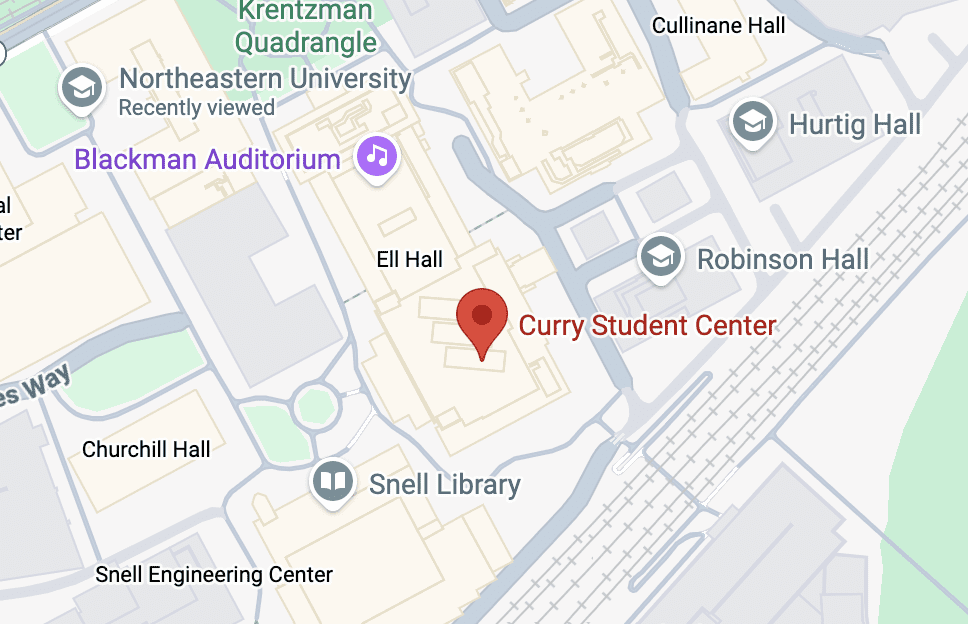
Sponsors