
by Xiaolin Shi, Associate Teaching Professor and MS Graduate Program Director, Economics
To help students interested in China and economics gain a deeper understanding of China’s macroeconomic development, and how businesses survive and grow in the Chinese market, I led 18 undergraduates through four Chinese cities this past May and June as part of the Northeastern’s Dialogue of Civilizations program.
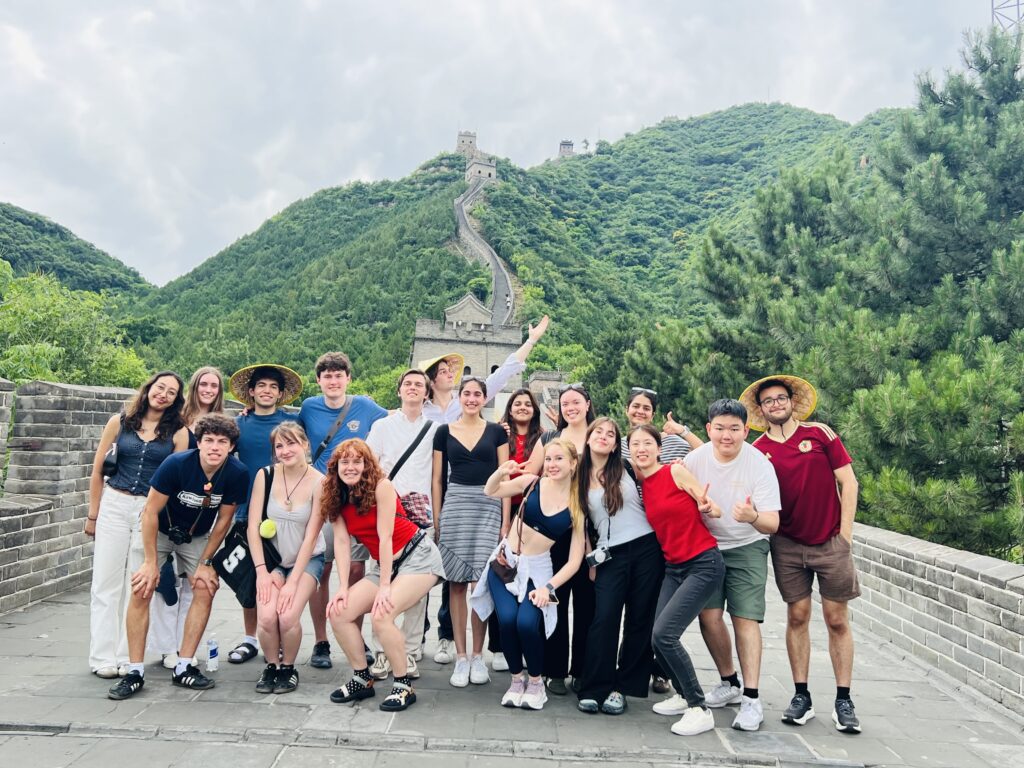
In Shenzhen, students learned how the city transformed in just four decades from a small fishing village into one of China’s most dynamic technology and innovation centers. In Shanghai, they saw how geography, history, and economic opening have shaped regional development. In Yantai, they explored how a coastal city built on natural resources and geographic advantages developed a large and diverse manufacturing base. In Beijing, they climbed the Great Wall and visited the Forbidden City and the Temple of Heaven, gaining a deeper understanding of modern China through the history and cultural heritage of its ancient capital.
Throughout the journey, I wanted students to recognize that macroeconomics is more than deriving equations, drawing graphs, and discussing theories in the classroom. We also need to step into the world and use economic thinking as a lens through which to observe, question, reflect, critique, imagine, and create. Using International Economics as an academic framework, I hoped to offer students a new perspective on the development of a country, city, or region.
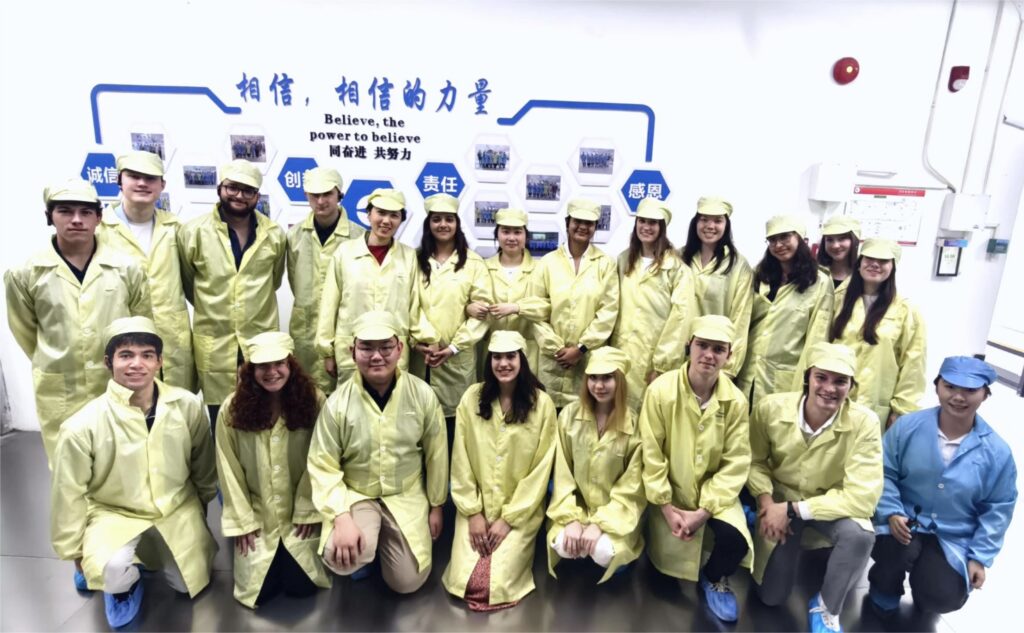
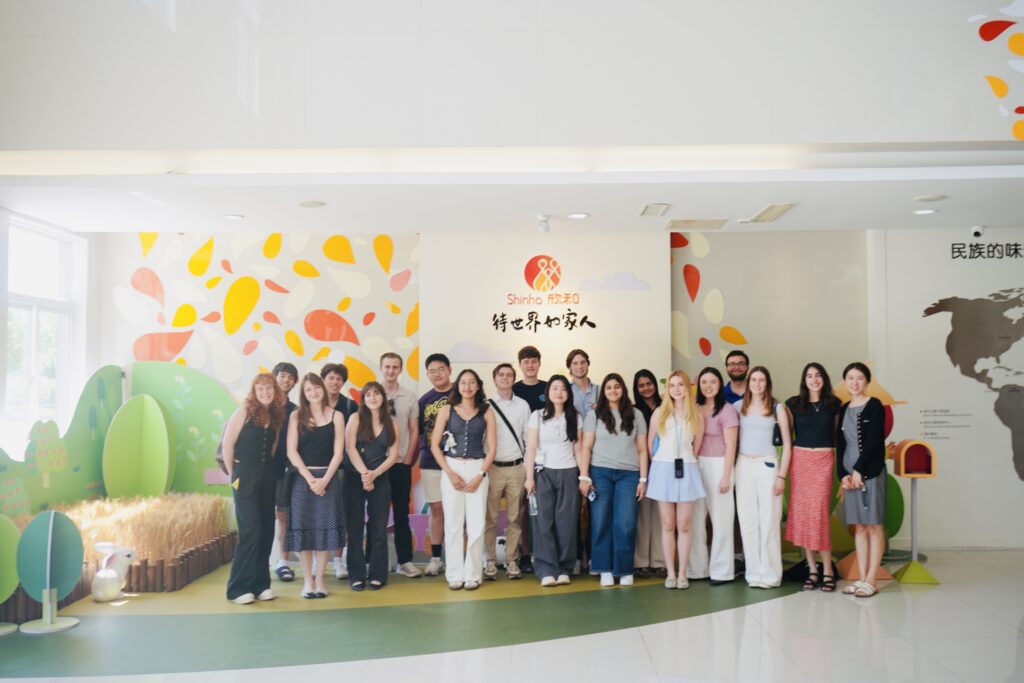
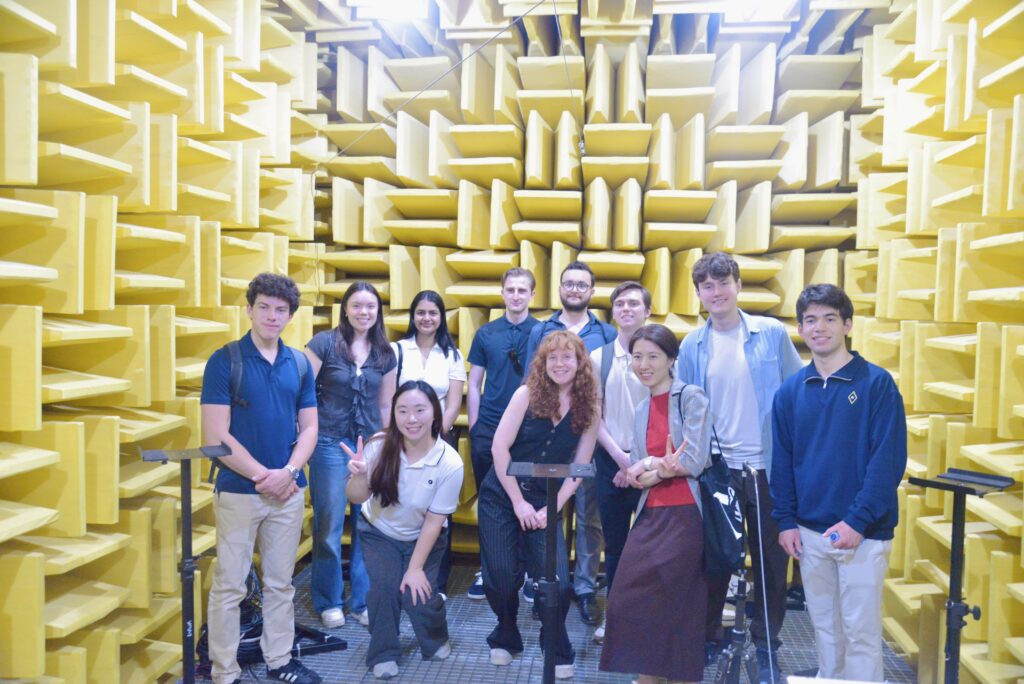
The program’s other major theme was business. We visited 20 companies and institutions, including publicly traded companies, manufacturers, consulting firms, food-processing companies, AI and robotics firms, venture capital organizations, start-up incubators, American companies operating in China, state-owned enterprises, and government agencies.
What mattered most was not simply what students saw, but their direct conversations with business leaders. Some discussions lasted nearly two hours and featured persistent questions, lively debate, and genuine exchanges of ideas. Our students were eager to understand how companies actually survive, compete, and grow in China. They asked difficult questions, challenged assumptions, and demonstrated impressive critical thinking. Many later said that these face-to-face conversations were the most valuable part of the entire program.
I regularly teach microeconomic theory, and deriving equations, explaining models, and solving constrained optimization problems have become a kind of muscle memory. Yet the distance between theory and reality can only be fully appreciated by stepping into the real world. Using Intermediate-level Selected Topics: Microeconomics as a second academic framework, I asked students to consider: How do companies respond to costs, competition, policy, and changing markets? How do managers make decisions with incomplete information? Which textbook theories hold in practice, and which need to be reconsidered?
For many students, after this trip, economic growth and business strategy were no longer abstract concepts or mathematical formulas. They became vivid cases unfolding before their eyes, shaped by conversations with entrepreneurs, managers, and CEOs.
Many students described the journey as “life-changing.” Looking back, I realize that for me, as the faculty leader, it was also a life-changing experience.
I am deeply grateful to the Department of Economics and the Global Experience Office—and to the many colleagues who contributed their time, guidance, and support—for making this program possible.
I’d also like to share this program’s social media accounts:
- Instagram: https://www.instagram.com/neu_dialogue_china
- LinkedIn page: https://www.linkedin.com/company/112960044