
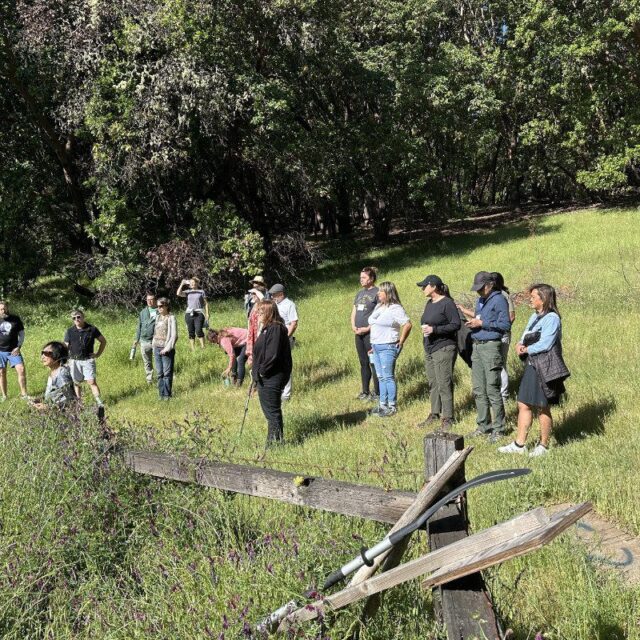
In October 2017, the Tubbs Fire in Northern California burned more than 36,000 acres and a large part of suburban Santa Rosa, forcing around 100,000 people toevacuate their homes. Grocery stores, restaurants, and farmers’ markets had to close, and because farmers were unable to get their crops to these vendors, the produce languished on their farms. Meanwhile, displaced residents who had lost their homes and jobs suddenly found themselves struggling to find food.
The local food system was not set up for emergencies. This realization was catalyzing for Julia Van Soelen Kim, a social scientist and food systems advisor for the University of California Cooperative Extension in Napa County, who saw the great abundance available yet no systems to get it to people in need.
“The event magnified and intensified the inequalities in food access and the abundance that our local food system could provide in emergencies,” Van Soelen Kim says.
In typical emergency response larger relief organizations—such as the Federal Emergency Management Agency (FEMA), Red Cross, Salvation Army, and state entities—take charge of large-scale feeding. They will use food that might be locally or regionally available from larger chains, but not food sourced directly from area farmers—and there’s no set way for these farmers to get their food to people in their communities.
Read more here


