PhD Spotlight: Alaina Kinol

Pathways to a Just Future
My research sees the potential for a climate-just future and considers how we get there. I have studied smaller-scale, incremental approaches, such as nature-based solutions, and broader transformational proposals, notably Green New Deals. With excellent colleagues in the Policy School and beyond, I have worked on multiple projects with a variety of methods to better understand the potential of these policy approaches to meet climate, social, and economic goals.
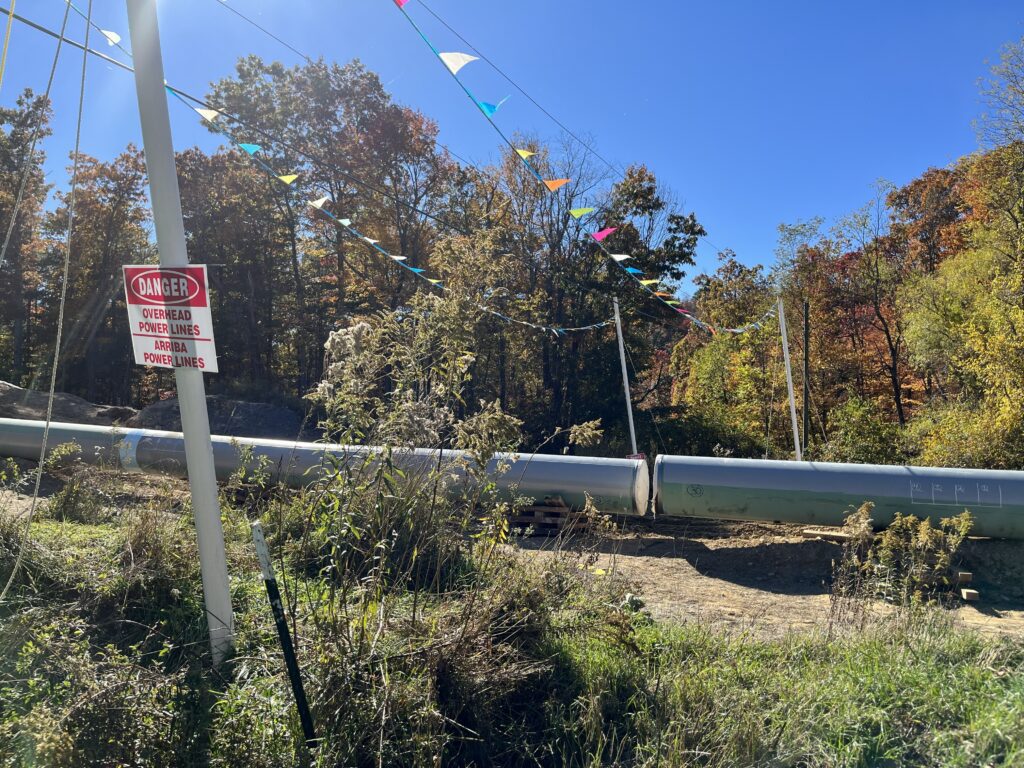
I also research strategic opposition to climate policy, known as climate obstruction. In my dissertation, I look at the case of the Mountain Valley Pipeline to examine how regulators, a fossil fuel corporation, and frontline communities navigate the contested policy process of fossil infrastructure construction.
“Climate change is most harming the groups of people who have least contributed to it, while polluters continue to profit. This is a clear injustice and this is what drives me.”
Harm reduction
The climate crisis has already caused catastrophic harm in many communities with the potential to become much worse, but these harms are reduced by every action to mitigate and adapt. At the same time, climate change is most harming the groups of people who have least contributed to it, while polluters continue to profit. This is a clear injustice and this is what drives me. I have been fortunate to benefit from the care and support of innumerable people and in turn I hope to contribute to a more just and healthy world for others.
In practice, this has looked like working on the Climate Smart Communities program at the New York State Department of Environmental Conservation’s Office of Climate Change, contributing to evaluations of the fare-free public transit proposal and Green New Deal for Boston Public Schools with then-city councilor Michelle Wu’s office, and project managing at a non-profit to support states implementing cost-benefit analysis for proposed renewable energy projects that includes difficult-to-quantify (but important!) impacts like resilience and health. I also supported and advocated for survivors of sexual violence for ten years, an effort to redress harm that parallels climate action.
A better climate future
After the PhD, I plan to continue researching policy opportunities for energy transition and climate action. I am currently developing a new dimension of my research agenda that intersects climate and energy policy with key issues in public health, inspired by my colleagues in the Social Science and Environmental Health Research Institute (SSEHRI). In the long term, I aspire to contribute to policy environments that reduce environmental, health, and wealth inequalities, where everyone has what they need to thrive.