PhD Spotlight: Carmella Uwineza
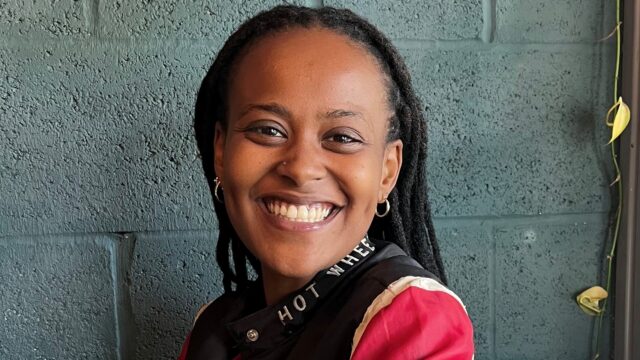
Exploring international finance and energy transitions in Africa
My research examines the tensions between national/local priorities and models of energy transitions in Africa, juxtaposed with the objectives of international climate and energy finance. I am interested in understanding how power dynamics operate across multiple scales, from global financial institutions that support energy transitions in Africa, to the ways in which countries and local communities navigate these dynamics. I explore how competing energy priorities across these scales interact, as well as their implications for just and anti-colonial energy transition pathways and the development of alternative models.
I was drawn to the Policy School because of its faculty and its approach to interdisciplinary and experiential policy research, which encourages us to apply an equity lens to policy problems and actively engage affected communities.
“My work has been deeply influenced by the Pan-African orientation of my upbringing and the Rwandan cultural values of solidarity, dignity, and collective well-being.”
Embracing social and climate justice challenges
My work has been deeply influenced by the Pan-African orientation of my upbringing and the Rwandan cultural values of solidarity, dignity, and collective well-being. These principles definitely shaped my initial curiosity and concern for environmental issues, and particularly their impact on communities. During my undergraduate studies in political science and international development, I began developing the language and frameworks to critically engage with these issues. The experience allowed me to explore diverse perspectives on both social and climate justice issues, and to consider how those ideas might manifest in practice.
Several works have influenced my thinking and research trajectory. Wangari Maathai’s model of community-centered organizing and grassroots environmental mobilization has been particularly influential. Additionally, Black sci-fi and Afrofuturist literature, by writers such as Octavia Butler and Nnedi Okorafor, broadened my perspective on imagining alternative and more equitable futures. James Baldwin’s politics of empathy and love shaped my understanding of our shared humanity and responsibility to one another. Finally, the anti-imperial ideas of Thomas Sankara have helped ground my work in questions of power, sovereignty, and economic autonomy.
Navigating the intersection of climate and energy policy and finance
After completing my PhD, I see myself working at the intersection of climate and energy policy and finance. I aim to make meaningful contributions to the governance of energy projects in African countries through policy research and program development, always with the goal of advancing equity. Additionally, I want to continue engaging and collaborating with scholars and practitioners working on climate and energy issues, particularly in Global South countries.
I also want to explore new questions that have emerged during my fieldwork in Kenya and Senegal by bridging engaged scientific research and multimedia arts. Using creative methods such as Photovoice in my research has pushed me to rethink how knowledge is produced and shared. I have always been drawn to the visual arts, particularly for their ability to shape conversations around complex problems and to reflect the sociopolitical realities of our time. In the future, I hope to experiment further with photo and film documentaries to create visually engaging, collaborative, and accessible work that invites a broader range of voices and perspectives into these critical conversations.
