PhD Spotlight: Josh Rosen

Exploring human mobility and spatial inequality
My doctoral research focuses on using computational and quantitative methods to study how social systems shape—and are shaped by—public policy. I draw on tools from complex systems science, applied economics, and network science to model cities as dynamic systems, with particular attention to human mobility, access to opportunity, and spatial inequality. I am motivated by the idea that many policy-relevant social processes—such as segregation, access to work, or exposure to resources—emerge from large numbers of individual decisions interacting over space and time. These systems are difficult to study with traditional methods alone, but can be rigorously modeled using computational approaches similar to those used in physical, biological, and ecological sciences.
I was originally drawn to the Policy School due to its interdisciplinary culture. I do not believe a traditional, disciplinary PhD program would have given me the methodological freedom to pursue the questions that I have made the core of my agenda.
“I am motivated each day by the beautiful complexity and emergent structures that characterize the systems around us, and by our shared, human need to understand the challenges that face us.”
Modeling the social world
I grew up in the suburbs of Boston, in a small coastal town designed explicitly with an eye towards exclusion. My earliest memories of policy are of exclusionary zoning, and my earliest memories of exclusionary zoning are of my friends and family fighting on its behalf. Bewildered by this dynamic, I began to study policy.
At each step of my career, I learned new pieces of the vocabulary that I would need to study social systems and public policy. From economics, I learned the language of causality. From data science, I learned the tools to work with empirical data. From physics, I learned about complexity and emergence. Together, these tools motivate my work to build rigorous models about the (social) world around us.
I look around me and see a world where everything rhymes. Where local rules do not account for global structures, and where many systems–across many disciplines–can be described by shared dynamics and universal patterns. I am motivated each day by the beautiful complexity and emergent structures that characterize the systems around us, and by our shared, human need to understand the challenges that face us.
Untangling complex systems
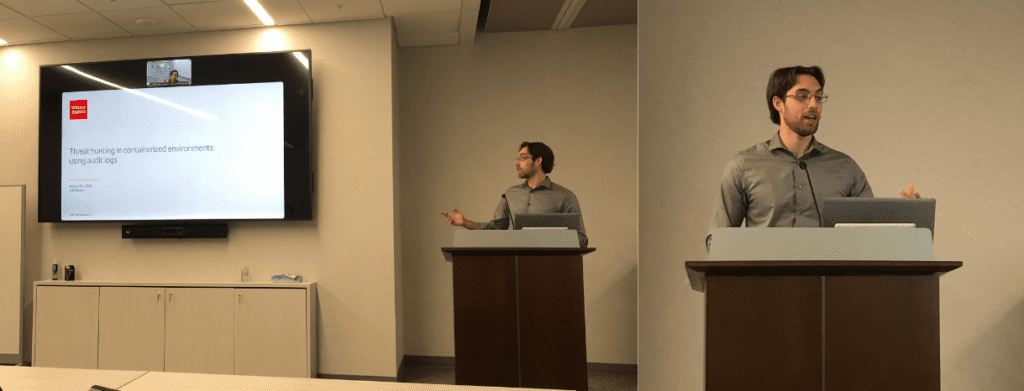
After my PhD, I hope to continue my career applying computational methods to understand both simple and complex systems. I continue to learn how to model these systems, how to extract insight from empirical data, and how to use those insights to guide decisions. During my PhD, I have been grateful to complement my training in academic science with applied experience alongside industry leaders at organizations such as Pinterest and Wells Fargo. These experiences have strengthened my ability to translate analytical work into practical insight, and have reinforced my interest in applying rigorous computational thinking in many settings. While I will always be a scientist at heart, and I will likely leave my PhD with far more questions than when I started, I am excited to apply the lessons from my PhD to new problems.