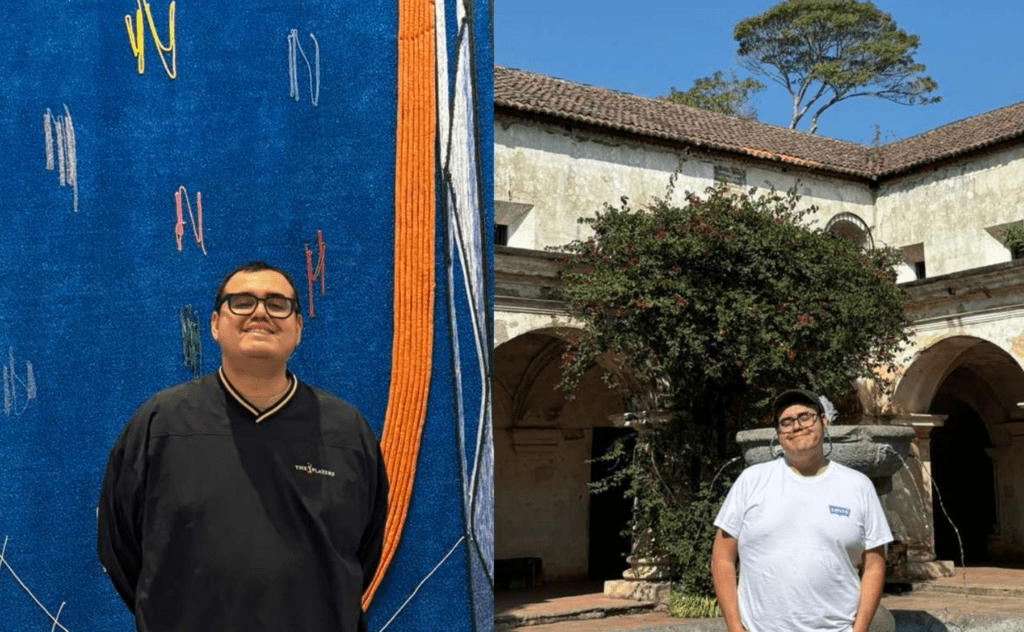
PhD Spotlight: Sebastián Ramirez

Exploring economics and gender
My PhD trajectory is driven by an interest in understanding how public policies operate in practice and how rigorous empirical evidence can improve policy design and implementation. At the Policy School, my work lies at the intersection of applied microeconomics, behavioral economics, education policy, and gender economics, with a growing focus on how climate change and environmental shocks affect human capital outcomes.
My research agenda has been shaped by academic training and applied research experience across Latin America and the United States. Prior to and during my doctoral studies, I worked with the World Bank, the Inter-American Development Bank, and the International Organization for Migration, contributing to policy evaluations and data-driven research on education, migration, labor markets, and institutional design. I have also worked as a research assistant at Princeton University and at Universidad del Rosario, where I was affiliated with the Rosario Experimental and Behavioral Economics Lab (REBEL). Across these roles, I have focused on producing policy-relevant evidence using large administrative datasets and experimental or quasi-experimental methods.
“Ultimately, I see my role as producing research that strengthens the empirical foundations of public policy, enabling decision-makers to move from intuition to evidence when addressing complex economic and social challenges.”
Examining climate-related disruptions
My PhD research examines how gender dynamics and institutional features shape responses to policy interventions and external shocks, particularly in education and labor markets. I am especially interested in how climate-related disruptions interact with existing constraints to influence schooling decisions, youth outcomes, and long-run human capital accumulation.
Current projects study child marriage and early unions, teacher compensation reforms, youth employment programs, and behavioral responses to institutional incentives. Across these projects, education plays a central role both as an outcome of interest and as a channel through which policy interventions generate persistent effects.
Methodologically, my work relies on quasi-experimental designs, including difference-in-differences and event-study approaches, combined with behavioral frameworks that help interpret observed responses to incentives and constraints.
Producing evidence-based policies around education, gender, and climate
A central objective of my work is to generate evidence-based insights that inform policy design, targeting, and scale-up. Rather than treating policy as a static intervention, I analyze how individuals and institutions respond to incentives, information, and constraints, and how these responses shape program effectiveness.
By combining rigorous causal inference with behavioral insights, my research aims to clarify when policies achieve their intended goals, when unintended effects arise, and how design features can be improved to enhance impact.
Looking forward, I aim to continue developing an applied research agenda focused on evidence-based policy evaluation in education, gender, and climate-related contexts. Whether in academia, government, or international organizations, my goal is to contribute high-quality empirical evidence that supports better policy decisions under real-world constraints.
Ultimately, I see my role as producing research that strengthens the empirical foundations of public policy, enabling decision-makers to move from intuition to evidence when addressing complex economic and social challenges.