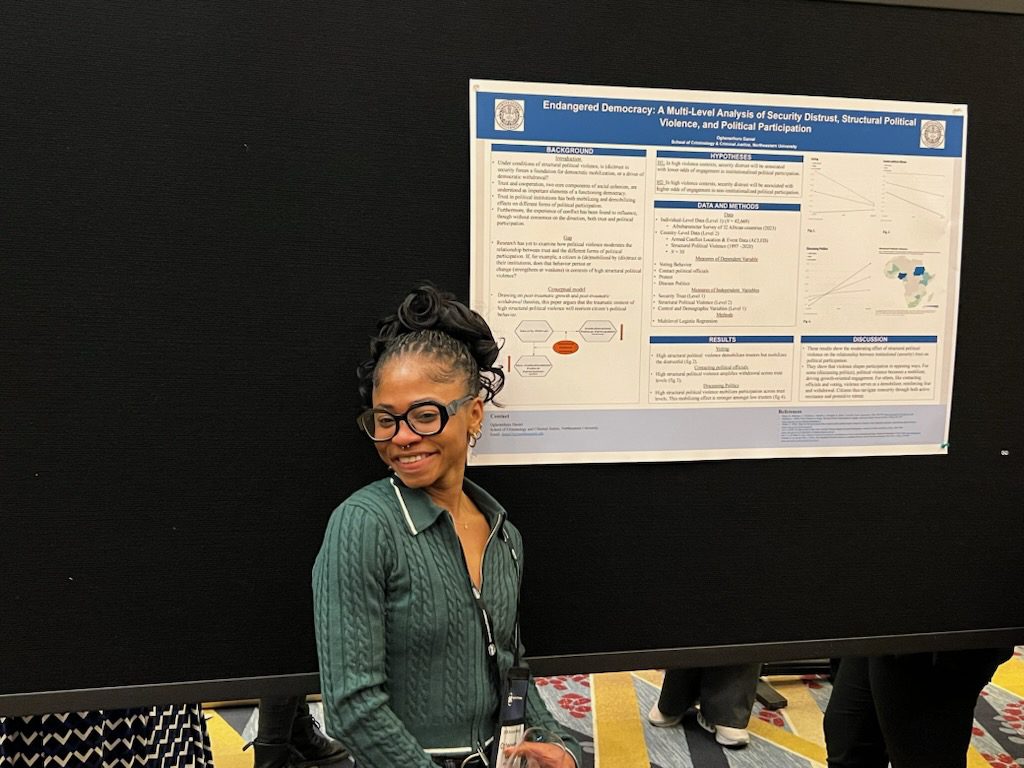
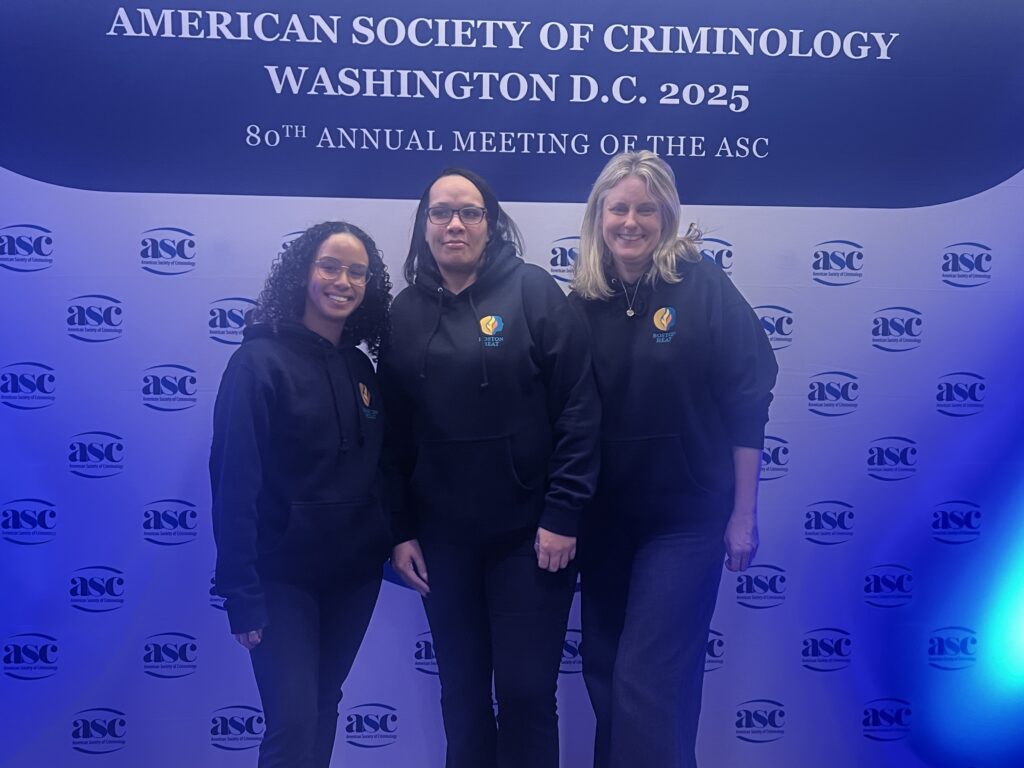
The School of Criminology and Criminal Justice (SCCJ) had a strong and meaningful presence at the 80th Annual Meeting of the American Society of Criminology in Washington, D.C. Faculty, students, and research collaborators contributed to panels, presented new work, received competitive awards, and supported major leadership roles within the ASC community. SCCJ continues to build a national presence through thoughtful research, engaged teaching, and active participation in the field’s most important conversations.
Leadership Highlights
Professor Katheryn Russell-Brown served as the President of the American Society of Criminology for the 2024-25 term.

Professor Kevin Drakulich served as Program Co-Chair for ASC 2025. He helped guide the conference agenda, supported session development, and contributed to shaping the scholarly direction of this year’s meeting. Thanks to Professor Drakulich for co-leading a great annual meeting!

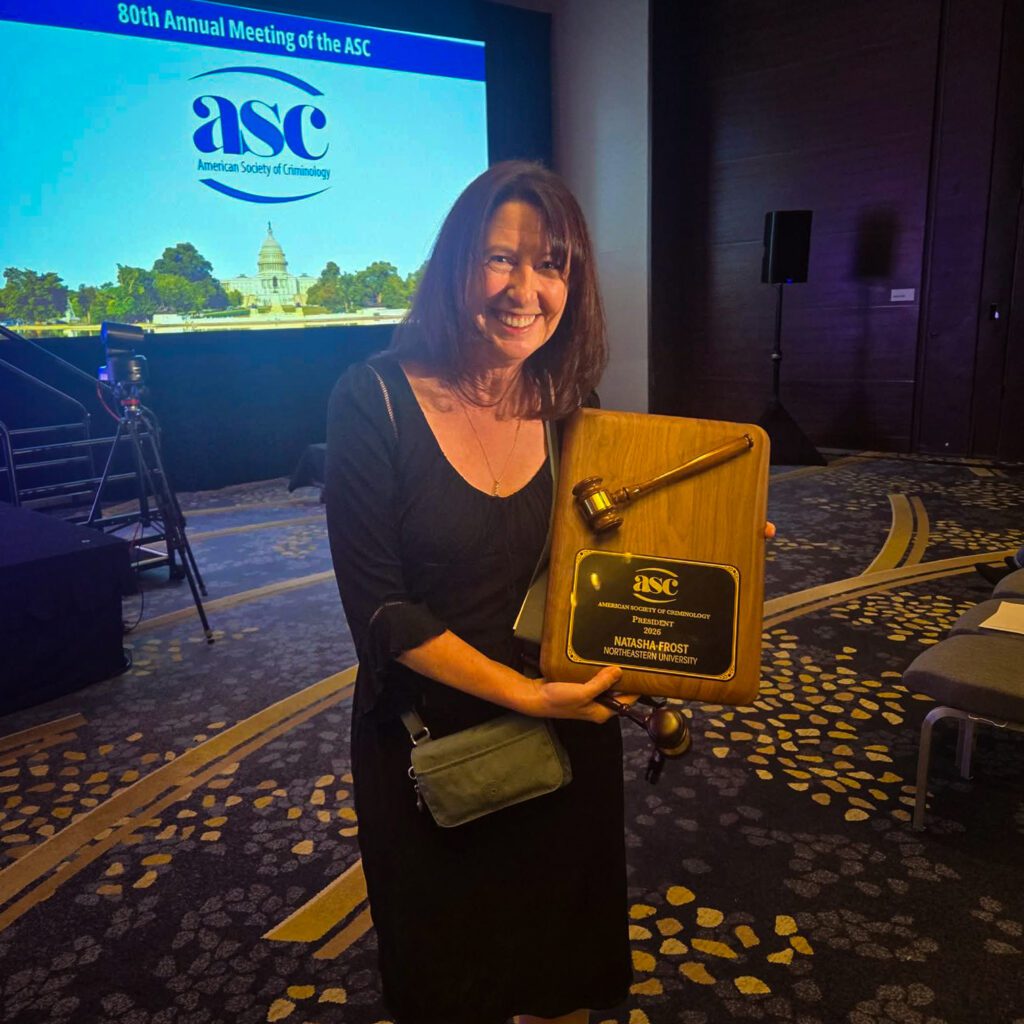
Professor Natasha Frost assumes the ASC presidency in November of 2025 for the 2025-26 term – back-to-back NU SCCJ Presidents of ASC!
SCCJ Doctoral Student Achievements
SCCJ doctoral students earned significant recognition at this year’s annual meetings.
- Rhuru Daniel and Jillian Reeves won first place in the ASC student poster competition for their project, “Endangered Democracy: A Multi-Level Multinational Analysis of Institutional and Societal Trust on Political Participation.” Their work demonstrated strong analytical skills and addressed a timely and global issue.
- Christian Law received the Helen Taylor Greene & Vernetta D. Young Graduate Fellowship from the Division of People of Color and Crime (DPCC) for his strong work on race and crime. His research advances the DPCC mission by centering the experiences and challenges faced by people of color in the justice system.
- Cassidy Pereira and Christian Law were recognized by the Association of Doctoral Programs in Criminology and Criminal Justice (ADPCCJ) for their contributions to research excellence.
- Dr. Brandon Craig (class of 2025) won the Division of Queer Criminology’s student paper award.